Online tools · Bike selection
Bike Selection Calculator Type, size and budget in a few clicks
This bike selection calculator recommends a bike type, frame size and approximate budget based on your height, terrain, experience and ride length. Answer a few questions and instantly get the three best bike types, from city and gravel to MTB and electric, with the reasons why.
By Marko Ristivojević, master mechanic and Bosch eBike Expert, MTB Evolution, East Sarajevo · Updated November 9, 2026.
In short: what bike should I buy
- Choose the bike type by the terrain you ride most, and the frame size by your height and inseam.
- For pavement and city riding a city or trekking bike is best, for gravel roads a gravel bike, and for forest trails an MTB.
- A rider of 172 cm usually fits an M mountain bike, a 54 cm road frame and an M city bike.
- Up to about 2,500 KM, a quality hardtail is a smarter choice than a cheap full suspension bike.
- An electric bike makes sense for steep climbs and longer rides, but it also needs motor and battery service.
Bike Selection Calculator
The result updates instantly as you change your answers. Everything is approximate, so confirm your final choice with a test ride.
Your recommendation
The result is a guide and does not replace a test ride. Frame sizes differ by manufacturer, so check the geometry (reach and stack) of the specific model.
How the bike selection calculator works
The bike selection calculator compares your answers with nine bike types: city, trekking, road, gravel, MTB hardtail, MTB full suspension, enduro, electric trekking and electric MTB. Each type has a base score for each terrain, and the score then goes up or down based on your experience, ride length, hills, budget and special needs.
- Terrain: the most important factor. A city bike on a mountain trail or an enduro bike in the city always scores low.
- Experience: a simpler bike is recommended to a beginner, and enduro and expensive full suspension bikes move down the list.
- Budget: each type has an approximate minimum for a new bike. Below that amount the score drops and the calculator suggests a more affordable alternative.
- Electric assist: if you ask for it, or ride steep climbs and long distances, electric types get a bonus.
- Size: calculated from your height, and if you enter your inseam you also get an approximate saddle height.
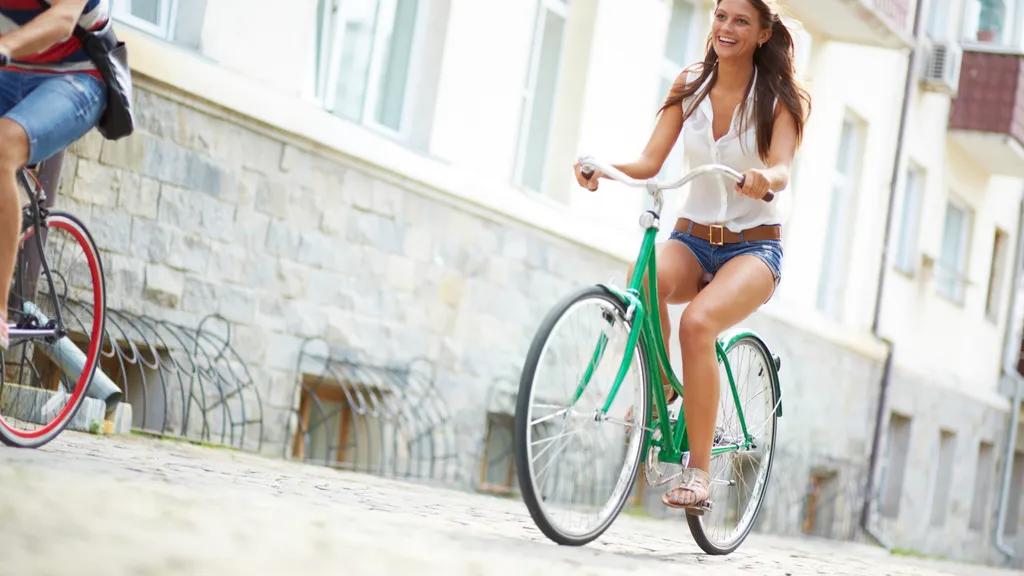
Bike type by terrain: which bike for which terrain
The most common mistake when buying is choosing a bike by looks or by discount instead of by terrain. That is why bike type by terrain is the first question to settle. The table shows how the types differ, and for a wider overview read our guide on how to choose the right bike for you or the types of cycling and gear guide.
| Bike type | Best terrain | Strength | Weakness | Who it is for |
|---|---|---|---|---|
| City | Pavement, city | Comfortable, with fenders, rack and lights | Heavy, not for gravel or steep climbs | Daily commuting to work and school |
| Trekking | Pavement and gravel | All-round, carries luggage | Neither fast nor off-road capable | Recreation, tours, travel |
| Road | Pavement, speed | Fast and light | Sensitive to gravel, aggressive position | Training and long fast rides |
| Gravel | Gravel, mixed terrain | Blend of speed and off-road ability | Weaker on technical trails | Gravel rides and bikepacking |
| MTB hardtail | Forest trails, XC | Lighter, simple, cheaper to maintain | Less comfortable on rough ground | Beginners and XC riders |
| MTB full suspension | Trail, rough tracks | Control and comfort downhill | Heavier, costlier, more service | Serious trail riding |
| Enduro and bike park | Downhill, bike park | Maximum control on descents | Heavy on climbs | Bike park riders |
| Electric | Hills, long rides, daily use | Assist on climbs | Weight, price, motor service | Steep climbs and longer rides |
If you ride mostly gravel roads and pavement, a gravel or trekking bike gives the most for the money. For forest trails and climbs choose an MTB, and for descents in Bike Park Evolution you need a bike with longer suspension travel and stronger brakes. See also gravel cycling in Bosnia.
Bike size by height: quick chart
A wrong frame size cannot be fixed by any upgrade: on a bike that is too big you are stretched out and steer poorly, and on one that is too small your knees and back suffer. The chart is approximate because geometry differs by manufacturer. For detailed measuring and explanation see the bike frame size chart.
| Height | MTB (letter and inches) | Road and gravel | City and trekking |
|---|---|---|---|
| 150–160 cm | XS (14–15") | 47–49 cm | S (46–48 cm) |
| 160–165 cm | S (15.5–16.5") | 50 cm | S (46–48 cm) |
| 165–170 cm | S (15.5–16.5") | 52 cm | M (50–52 cm) |
| 170–175 cm | M (17–18") | 54 cm | M (50–52 cm) |
| 175–182 cm | M (17–18") | 56 cm | L (54–56 cm) |
| 182–185 cm | L (18.5–19.5") | 58 cm | L (54–56 cm) |
| 185–188 cm | L (18.5–19.5") | 58 cm | XL (58–60 cm) |
| 188–190 cm | L (18.5–19.5") | 60 cm | XL (58–60 cm) |
| 190–194 cm | XL (20–21") | 60 cm | XL (58–60 cm) |
| 194–195 cm | XL (20–21") | 62 cm | XL (58–60 cm) |
| 195–200 cm | XL (20–21") | 62 cm | XXL (62 cm) |
| 200+ cm | XXL (22") | 62 cm | XXL (62 cm) |
If you are between two sizes, a smaller frame is more agile and better for playing on the trail, while a larger one is more stable at higher speeds. The most reliable approach is to try both. On an MTB, riders up to 160 cm usually use 27.5 inch wheels and from about 172 cm 29 inch wheels, while for middle heights a mullet setup (29 inch front, 27.5 inch rear) is also possible.
Kids bike: wheel size by height
For children, a bike is chosen by wheel size, not by frame. The values are approximate, and you should always sit the child on the bike before buying. More in our guide how to choose a kids bike.
| Child height | Wheel size |
|---|---|
| 85–97 cm | 12" |
| 97–108 cm | 14" |
| 108–118 cm | 16" |
| 118–128 cm | 20" |
| 128–146 cm | 24" |
| 146–150 cm | 26" (XS frame) |
Choosing a bike by budget (approximate, in KM)
Choosing a bike by budget is a compromise: for the same money you get either better components or a more complex bike. That is why, on a lower budget, a quality hardtail is smarter than a cheap full suspension, and a used bike from a known brand is often a better buy than a new bike with weak parts. The amounts in the table are approximate for a new bike and vary by model and market.
| Budget (new bike) | What to realistically expect |
|---|---|
| Up to 800 KM (about 410 EUR) | The best value is usually a used bike from a known brand or a basic model without suspension. |
| 800–1,500 KM | A reliable city, trekking or entry-level hardtail bike with hydraulic disc brakes. |
| 1,500–3,000 KM | A quality hardtail, gravel or road bike, and an entry-level full suspension at the top of the range. |
| 3,000–6,000 KM | A quality full suspension, enduro or mid-range electric bike. |
| Over 6,000 KM | Top-tier components and light frames. Size and geometry matter more than the extra price. |
When the budget allows more, invest first in brakes, fork and wheels, not in color or brand. After buying, plan for maintenance too, and read our bike maintenance schedule.
MTB or gravel bike: how to decide
MTB or gravel is the most common dilemma when you ride gravel roads. A gravel bike is faster and more efficient on pavement and gravel, has less rolling resistance and carries bags more easily, so it suits long rides and bikepacking. An MTB is better if you ride roots, rocks and steeper forest trails, because it has wider tires, stronger brakes and suspension.
If 80 percent of your riding is gravel and pavement, take a gravel bike. If you ride mountain trails and descents, take an MTB. If you ride both, a trekking bike or an MTB hardtail with two sets of tires covers most cases. To get started in mountain biking, also read our guide to cross country (XC) riding and the comparison of hardtail vs full suspension.
Bike for beginners: what to look for
A beginner gains the most from a bike that is reliable, simple and the right size. That is why we recommend hydraulic disc brakes, a basic but quality drivetrain and tires suited to the terrain you will ride. For the first seasons in the forest a hardtail is usually enough, and for the city and gravel a trekking or gravel bike. Skip aggressive enduro models until you master the basic technique, and if you want to learn it, see our cycling school.
Electric bike: when it makes sense
Electric assist makes sense if you ride steep climbs, long distances, commute daily, or need help because of fitness. Price is not the only cost: consider the weight, the battery and the motor service, and check who services the system before you buy. At the MTB Evolution workshop we service e-bikes with Bosch and Shimano STEPS diagnostics. More about choosing, laws and maintenance is in the guide electric bike 2026: choosing, servicing and laws in Bosnia, and for riding see how to extend e-bike range. For technical details see also Bosch eBike Systems.
Before you buy: a 10-minute check
- Test ride: sit on the bike, check that you reach the pedals and handlebar without strain and that you have clearance between your crotch and the top tube when you stand over it.
- Brakes: hydraulic disc brakes are the standard for every terrain except city riding, and the lever must not feel spongy.
- Frame and fork: look for cracks, dents and oil leaks, especially on a used bike.
- Drivetrain: a stretched chain and worn cassette mean extra cost, so read the bike component wear guide.
- Tires: width and tread must match the terrain, and our guide on how to choose bike tires helps.
- Origin: for a used bike ask for a receipt or proof of ownership, and read buying a used bike.

Picked your bike? Set it up properly
If you bought your bike in a box, see our guide to bike assembly from a box. For adjustment, service and diagnostics, book online or call +387 66 902 418. The workshop is at Riste Anđića 20, East Sarajevo, and the service is run by Marko Ristivojević, Bosch eBike Expert and Master Bike Mechanic.
Frequently asked questions about choosing a bike
What bike should I buy as a beginner?
Choose by the terrain you will ride most: a city or trekking bike for pavement, a gravel bike for dirt roads and mixed surfaces, and an MTB hardtail for forest trails. For a beginner on trails, a hardtail with hydraulic disc brakes is usually the smartest pick because it is lighter and simpler to maintain than a bike with a rear shock.
How do I find my bike size by height?
Frame size depends on your height and inseam. A rider around 172 cm usually fits a size M mountain bike, a 54 cm road frame and a size M city bike. The tables on this page are approximate, and if you fall between two sizes it is best to test ride both.
MTB or gravel bike: which is better?
A gravel bike is faster and more efficient on pavement and dirt roads and suits longer rides. An MTB is better if you ride roots, rocks and steeper forest trails. If most of your riding is gravel roads and asphalt, take a gravel bike; if you ride mountain trails, take an MTB.
How much should I spend on a good bike?
As a rough guide, a reliable city, trekking or entry-level hardtail bike costs about 800 to 1,500 KM (roughly 410 to 770 EUR). A quality hardtail, gravel or road bike usually costs 1,500 to 3,000 KM, a full suspension bike from about 2,500 KM, and an electric MTB from about 4,500 KM upward. Prices vary by model and market, so it is worth comparing used bikes too.
Hardtail or full suspension for a beginner?
A hardtail is usually the better choice for a beginner: it is lighter, simpler and cheaper to maintain, and for the same money you get better components than on a full suspension bike. Full suspension makes sense when you ride rough trails and descents and your budget allows a quality rear shock.
Do I need an electric bike?
An electric bike makes sense for steep climbs, longer rides and daily commuting when you want less fatigue. Consider the extra weight, the higher price and the motor and battery service, and check who can service the system before you buy.
Is a used bike a good option?
Yes, especially on a lower budget, but check the frame for cracks, the chain and cassette for wear, the brakes, and the bearings for play. If you are unsure, take the bike to a workshop for an inspection before buying.
How accurate is the bike selection calculator?
The calculator is a guide: it combines your answers with the rules we use in the workshop, but it does not replace a test ride. Always confirm the final size and riding position on the bike itself.
Does the calculator work for kids?
For heights under 150 cm the calculator recommends a wheel size. For children, also read our guide on how to choose a kids bike by age and height.