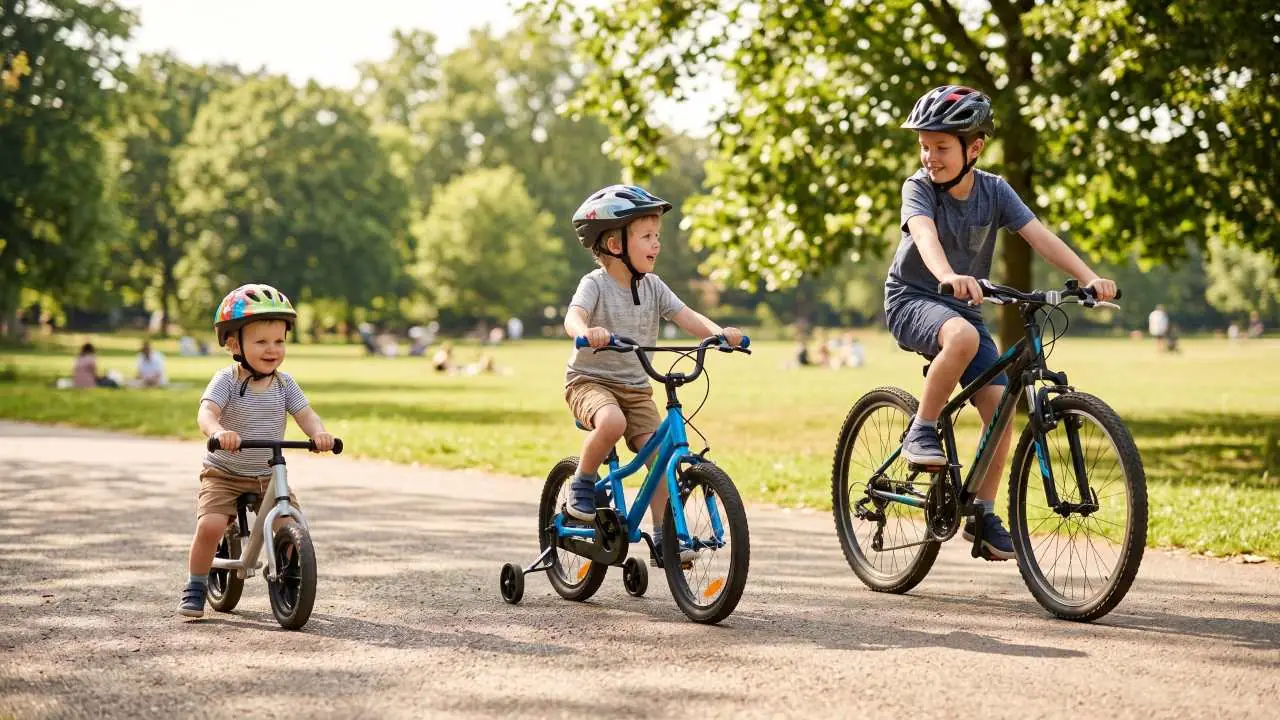
How to choose a kids bike is the question parents ask me most often in the workshop, and they almost always start with the wrong criterion: they ask about age. Age is only a rough guide. The right size is determined by the child's height and leg length, and only then by age, weight and riding experience. In this guide I've put together what I've applied for years as a mechanic when helping families get their child onto a bike that really fits.
In short:
- How to choose a kids bike: size is determined by the child's height, not the number of birthdays. A child 100–115 cm tall usually rides a 16-inch wheel, and 115–130 cm a 20-inch wheel.
- Sitting on the saddle, the child should touch the ground with their tiptoes (with the whole foot on a first bike), and standing over the frame there should be 2–3 cm of clearance between the child and the top tube.
- Don't buy a bike to “grow into”: an oversized bike is less safe and takes away a child's confidence.
- Keep the bike as light as possible, roughly up to 40% of the child's weight; two hand brakes with adjustable lever reach are a must.
- Before the first ride, check tire pressure, brakes and bolt tightness, and the helmet goes on from day one.
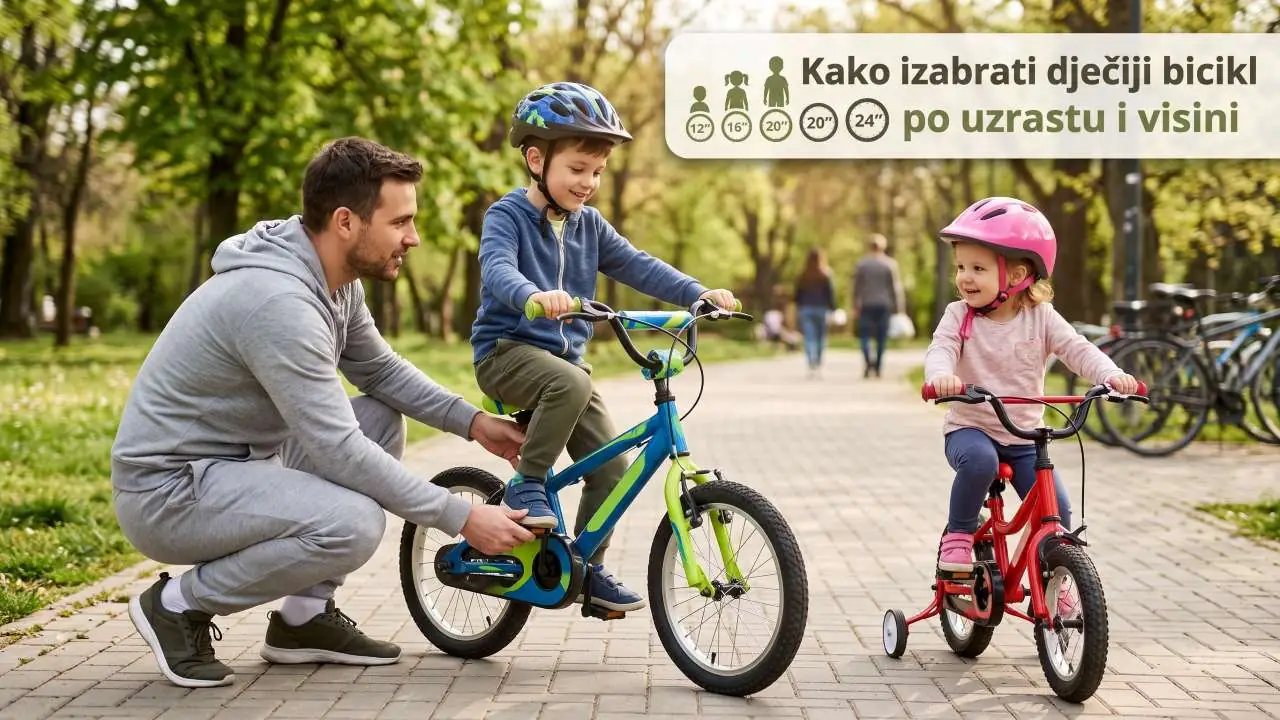
How to Choose a Kids Bike: Height Matters More Than Age
Two six-year-olds can differ in height by fifteen centimeters or so. That's why manufacturers sort kids' bikes by wheel diameter (12, 14, 16, 20 and 24 inches) and not by age. The age on the box is only a rough measure, and it means nothing if your child is far from average.
If you need a quick test in the shop or at home, do this:
- Stand the child against a wall without shoes and measure their height.
- Measure the inside leg length (from the crotch to the floor), because it determines saddle and frame height.
- Compare the measurements with the table below, and always put the child on the bike before buying.
Table: Kids Bike Size by Height and Age
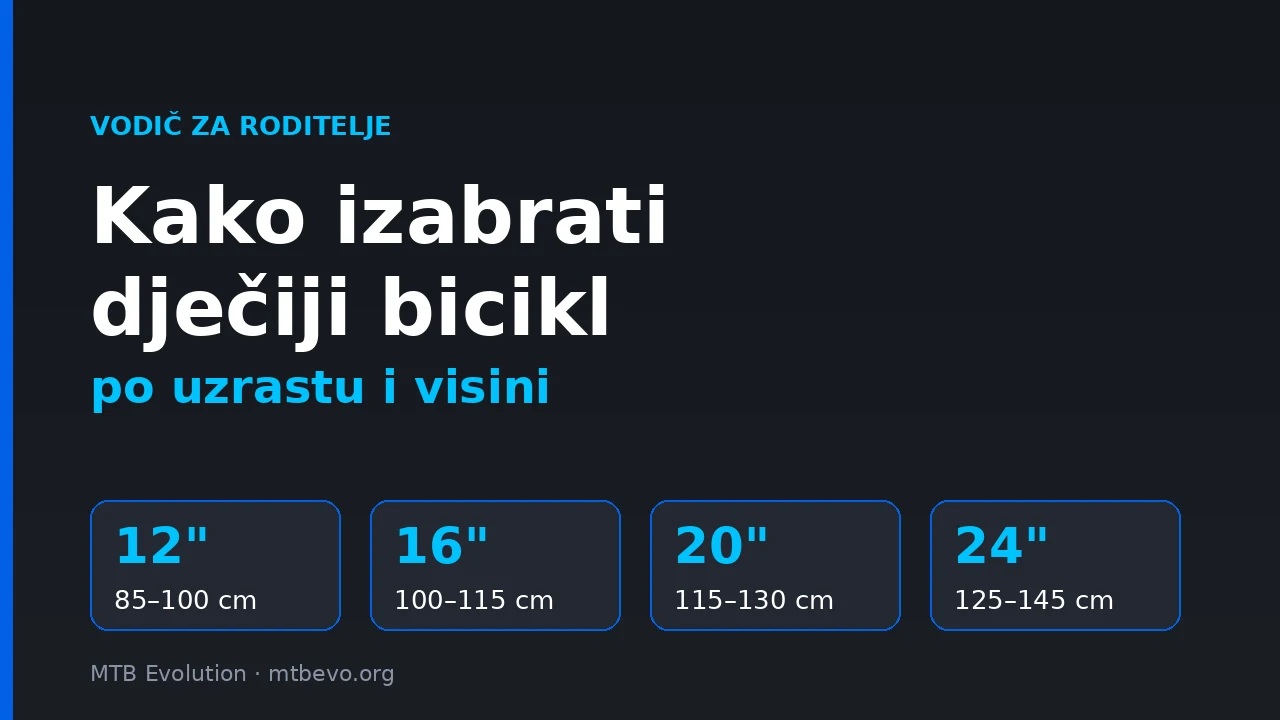
Values are approximate and differ from one manufacturer to another. This kids bike size chart works best as a starting point: if your child is between two sizes, take the smaller one until they sit on it and feel in control.
| Child's height | Age (approx.) | Wheel size | Bike type |
|---|---|---|---|
| 85–100 cm | 2–4 years | 12 inch | Balance bike or small bike |
| 95–110 cm | 3–5 years | 14 inch | First bike, often with training wheels |
| 100–115 cm | 4–6 years | 16 inch | Single speed, two brakes |
| 110–120 cm | 5–7 years | 18 inch | Transitional size, not available everywhere |
| 115–130 cm | 6–9 years | 20 inch | 1–7 speeds, lightweight frame |
| 125–145 cm | 8–11 years | 24 inch | First real MTB, 7–21 speeds |
| from 140 cm | from 10–11 years | 26 inch or small 27.5-inch frame | Youth MTB, like a small adult bike |
Kids Bike by Height or by Age: Which Is More Accurate?
When parents ask how to choose a kids bike, they usually expect a simple answer in years. Still, a kids bike by height is the more accurate criterion, because children's growth is measured in centimeters, not birthdays. Age is only useful as a first filter for the type of bike (balance bike, bike with training wheels, first bike with gears), while you always pick the kids bike wheel size according to height and leg length. If your child grows faster or slower than their friends, the height chart will guide you better than the age printed on the box.
How to Check Whether a Kids Bike Fits Your Child
The chart gets you to the right size, but only a test ride confirms that the bike fits. Check three things.
Sitting on the saddle
When the child sits down, they should reach the ground with their tiptoes, and on a first bike with the whole foot, so they can stop without fear. If they can't reach even with their toes, the bike is too big or the saddle is too high. A saddle can be lowered in a few seconds, but you can't change the frame. For the basics, see our guide to bike seat adjustment.
Standing over the frame
The child stands over the top tube with both feet on the ground. There should be 2–3 cm of clearance between them and the tube, and a bit more on an MTB frame with a sloping top tube. Less than that means a painful hit every time they come off the saddle suddenly.
Reach to the handlebar and brakes
Elbows are slightly bent and the back is not hunched. Fingers must easily wrap around the brake lever and pull it through its full travel. Most kids' levers have a reach adjustment screw, and you should use it. If you're curious how this looks on adult bikes, also read our guide to bike frame size.
The most common mistake I see in the workshop is a bike bought “to last longer”. The child is afraid on it, rides unsteadily and often gives up before they've even started. A bike should fit the child today, not in two years.
— Marko Ristivojević
How to Choose a Kids Bike by Age: From Balance Bike to Youth MTB
How do you choose a kids bike at each age? Here is an overview by stage, from the first glide to the first ride on a trail.
Up to 4 years: balance bike or small bike
A balance bike has no pedals, so the child learns the most important skill: balance. Once they learn to glide and hold their balance, moving to a pedal bike usually takes a single afternoon, without training wheels.
4–7 years: 14 and 16-inch wheels
This is the age of the first bike. One gear is enough, but the bike should have a hand brake, preferably two. A coaster (backpedal) brake is fine as an extra, but the child must learn to brake with their hand, because that's how they'll brake on every bike afterwards. When it's time to take the training wheels off, our guide to riding without training wheels shows the first steps.
6–9 years: 20-inch wheel and first gears
The first gears arrive on a 20-inch bike (usually 1–7). In our conditions in East Sarajevo, where even the gentlest rides are full of climbs, gears matter a lot. A child who doesn't have to push the bike uphill enjoys riding and picks it up more often.
8–12 years: 24-inch wheel and youth MTB
With a 24-inch wheel, a kid's bike becomes a real mountain bike: front suspension fork, hydraulic or good mechanical disc brakes and 7–21 speeds. If your child trains or is preparing for the trail, also take a look at the cycling school for kids at our club.
How to Choose a Kids Bike: Weight, Brakes and Gear
Bike weight
How do you choose a kids bike that isn't too heavy? Cheap kids' bikes are often heavy steel giants. A child who weighs 20 kg and rides an 11–12 kg bike is effectively pushing more than half of their own weight. The rule of thumb is that the bike shouldn't exceed about 40% of the child's weight. An aluminum frame and light wheels make a big difference here, especially on climbs.
Brakes
How do you choose a kids bike with the right brakes? Children's hands are weak, so levers with a small reach and a light pull are a must. The lever has to be pulled with the fingers, without straining the whole hand. If the brake is too stiff or the lever too far away, the child will brake late or not at all. In our guide to adjusting brakes I show how to set them up at home.
Pedals, chain and protection
How do you choose a kids bike that is safe for trouser legs and fingers? The chain should have a chain case or at least a guard so the child's trousers don't get caught. Pedals are best wide, plastic or aluminum with good grip, not clipless ones, which beginners don't need. Pedals set too far apart (a wide Q-factor) force the child to ride with knees splayed, which tires them quickly.
Helmet and gear
Once you know how to choose a kids bike, the helmet is not optional. It must sit firmly, without wobbling, and cover the forehead rather than perch on the back of the head. Fingerless gloves and sturdy shoes are the next step, and later knee and elbow pads if the child starts riding trails. We cover the basics of road behavior in our kids bike safety and road education program.
A kid's bike, like any other, needs a service before the season: brake and gear adjustment, a tire check and bolt tightness. Tire pressure for kids' bikes is specific and depends on the child's weight, so take a look at our tire pressure guide.
How to Choose a Kids Bike: New or Used?
Children grow fast, so a kids' bike often lasts only two or three seasons. That makes a used kids bike a reasonable option, as long as it's in good working order. If you wonder how to choose a kids bike on a limited budget, a sound used bike from a known manufacturer is better than a new bike of unproven quality.
Before buying a used kids' bike, check the following:
- Frame: no cracks, dents or fresh welds.
- Wheels: straight, no wobble and with intact spokes.
- Headset: the handlebar turns smoothly and has no play.
- Brakes: both systems work, and the pads and cables are not worn out.
- Chain and pedals: no corrosion and no snagging.
You'll find more in the article buying a used bike. If you're unsure about its condition, an inspection at a bike service before buying can save you unnecessary costs later.
Most Common Mistakes When Buying a Kids Bike
Most mistakes repeat year after year. If you know how to choose a kids bike, you'll avoid them easily:
- An oversized bike “to grow into”: the child can't reach the ground and can't stop safely.
- A bike that's too heavy: the child tires quickly and stops riding.
- Coaster brake only: hand brakes are a must on any bike the child rides outside the yard.
- Choosing by age: the age on the box doesn't replace measuring height and leg length.
- An unadjusted saddle and handlebar: even the right bike size is pointless if the saddle height isn't set.
- No helmet: the helmet is bought together with the bike, not later.
Before the First Ride: A Quick Safety Check
Whether you choose a kids bike new, used or handed down from an older brother, do the same check I do in the workshop before the first outing. You'll find a more detailed list in the article basic service before every ride.
- Tires: firm, no cracks, at the recommended pressure.
- Brakes: the lever doesn't touch the handlebar and the wheel stops.
- Bolts: saddle, handlebar and wheels tight, with no play.
- Chain: lubricated and not snagging.
- Reflectors and bell: fitted, if the child rides outside the yard.
If you're unsure about the size or the condition of the bike, bring the child and the bike to the workshop and we'll check together whether everything fits. For more on choosing a bike in general, also see the article how to choose the right bike for yourself.
How to Teach Your Child to Ride After Choosing a Bike
Once you choose a kids bike and set it up properly, learning is easier than parents expect. Pick a flat, smooth and empty surface, for example a quiet path or a car park early on a Sunday morning.
- Keep sessions short, about 10 to 15 minutes, so the child doesn't lose interest.
- Don't hold the child by the saddle for too long: they have to feel the balance themselves.
- The helmet goes on every time, without exception.
- Praise every bit of progress, and don't make a drama out of the first fall.
Conclusion: how to choose a kids bike comes down to three steps. Measure height and leg length, pick the wheel size from the table, and check sitting, standing over the frame and brake reach. If the bike fits the child today, not in two years, they will ride safely and happily.
Need help to choose a kids bike, adjust it or service it? Book an appointment in our workshop.
Book an appointmentFrequently Asked Questions: How to Choose a Kids Bike
What bike for a 5-year-old?
For a 5-year-old, a bike with 16-inch wheels is usually the right choice, and if the child is taller than 115 cm, an 18 or 20-inch bike is also possible. Height still decides, not age: the child should reach the ground with their tiptoes while sitting on the saddle.
What bike size for a child who is 120 cm tall?
A child who is 120 cm tall most often rides a 20-inch wheel. If they are 125 cm or taller and have longer legs, they can try a 24-inch, but the bike should be tested first, because a bike that is too big makes braking and steering harder.
Should a kids bike be bought “to grow into”?
No. A bike one size too big is hard to handle, and the child feels unsure on it. It's better to buy a bike that fits today and, when the child grows, pass it on to a younger child or sell it.