Cycling School Methodology: Development Through Science and Play
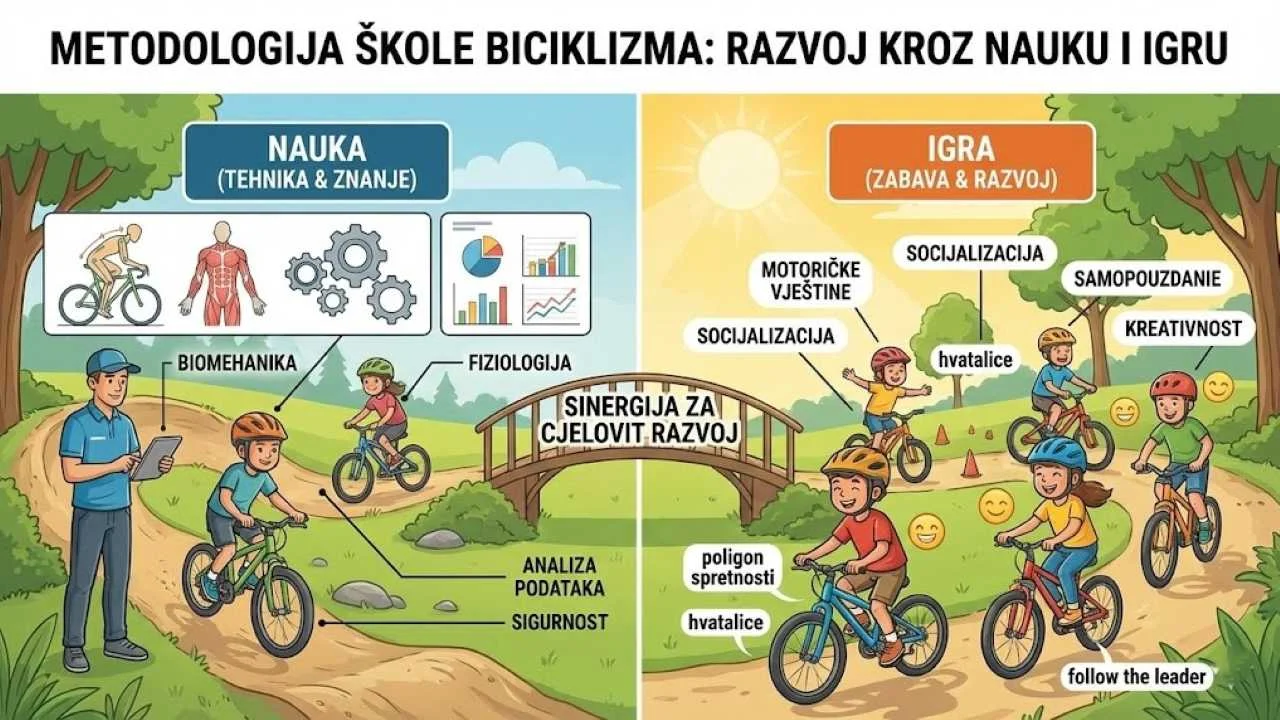
"Athlete first, cyclist second."
When it comes to the cycling school methodology at MTB Evolution, our goal is not just to teach riders to turn the pedals. Our mission is to raise healthy, agile and confident people. Everything we do is built on strict respect for a child's developmental stages and on the recommendations of the World Health Organization (WHO).
1. Focus group: Early development (children aged 4 to 8)
This is the key period when the foundations for a lifetime are laid. For this age group, our cycling school methodology is purely educational and developmental, never competitive. Children learn through movement, and the bike is simply a tool for play.
Health over results: Why we don't run fitness training
We want to draw parents' attention to a common and dangerous mistake in unqualified schools: introducing conditioning drills and high-intensity interval training for children under 10-12 years old.
- Physiological limits: The heart and metabolic system of a 4-8-year-old are not biologically ready for anaerobic loads.
- Thermoregulation: Children overheat faster than adults, which raises the risk of heat stress.
- Burnout prevention: Pressure that comes too early leads to mental fatigue and kids quitting the sport.
What our approach looks like for the youngest riders:
- Learning through play (gamification): Cone courses, "snake" tracks and fun challenges develop proprioception without it ever feeling like a chore.
- Balance above all: The focus is on "balance" skills, the foundation of every technique that follows.
- Hand-eye coordination: Braking and obstacle-avoidance drills build the reflexes that are essential for traffic safety.
2. Development stage: Primary school riders (9 to 12 years)
At this age, the cycling school methodology evolves. We move from pure play to technical literacy, because kids are now cognitively ready for more complex instructions and for understanding the physics of movement.
Proper gear shifting and body position on climbs and descents (the so-called "attack position") become standard.
We simulate real situations on the trail to build confidence and independence out riding.
Riding in a group, communicating with hand signals and respecting other riders and nature.
3. Advanced skills and specialization (13+ and adults)
For teenagers and adult riders, the program expands into functional training and specific disciplines (MTB Enduro, XC or road). Here the cycling school methodology becomes personalized.
- Cardiovascular development: Endurance training in line with WHO recommendations for young people and adults (150–300 minutes of aerobic activity per week).
- Advanced mechanics: Understanding how suspension and braking systems work, plus basic bike maintenance.
4. Tracking progress without pressure
What makes our cycling school methodology unique is the way we evaluate. We don't use a stopwatch as the only yardstick.
Progress is measured through:
- Technical competence: Does the child perform maneuvers correctly?
- Social intelligence: How do they behave in a group and toward nature?
- Confidence: Do they tackle new obstacles with a smile?
This approach keeps children in the sport for the long term and builds healthy habits for life.
Why choose MTB Evolution?
We believe parents should know the difference between "coaches" who wear kids out and educators who teach them real skills.
| Feature | Our professional approach | Unqualified practice |
|---|---|---|
| Method | Play and motor development | Stopwatch and conditioning drills |
| Health aspect | Respect for WHO norms | Risk of early injuries |
| Goal | A lasting love of the sport | Short-term results and exhaustion |
| Main tool | Specialized skills courses | Endless repetition of track sections |