Kids Bike Training Plan: First Week of Balance and Coordination
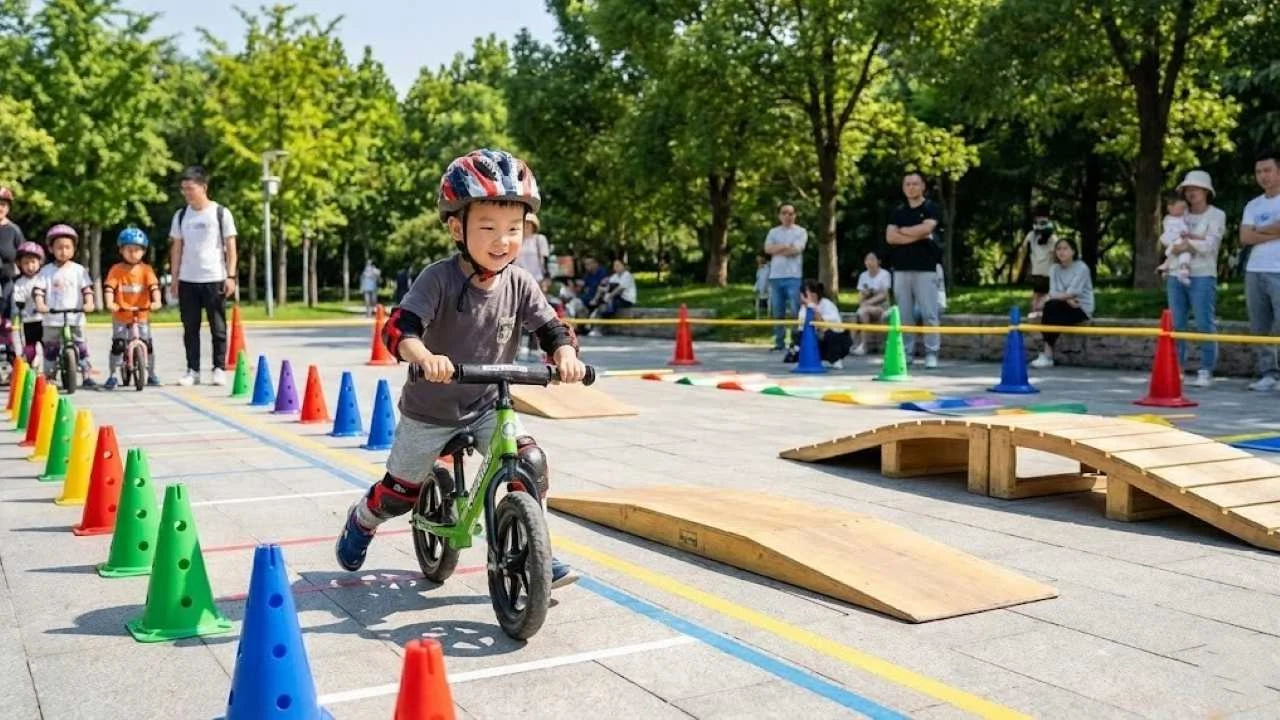
This kids bike training plan helps children automate dynamic balance, develop proprioception and add pedaling through structured play.
5 sessions of 20-30 minutes each.
Key terms explained
Protocol overview
| Day | Exercise name | Duration / Repetitions | Key technical goal |
|---|---|---|---|
| 1 | Long glide (The Glider) | 10 x 20 meters | Reaching a speed of 8-10 km/h without touching the ground. |
| 2 | Slalom through gates | 15 minutes | Building coordination and learning to control direction with lean. |
| 3 | Stop-on-the-line | 12 repetitions | Synchronized braking without skidding. |
| 4 | Power Start | 15-20 starts | Dominant foot at the "2 o'clock" position for max torque. |
| 5 | Infinity loop (8) | 10 laps | Balance at low speed with a constant lean. |
Detailed kids bike training plan protocols
Focus on the "Long Glide"
The child uses the bike as a balance bike (pedals removed or ignored).
Goal: Overcoming the fear of losing contact with the ground. Speed must be high enough to activate the gyroscopic effect of the wheels.
Focus on Slalom
Set up 5-6 markers (cones or small stones) in a straight line (2 m apart).
Biomechanics: Stress that the child should not look at the marker they are passing, but at the next one. Where the eyes look, the body goes.
Focus on braking (Deceleration)
Draw a line with chalk or mark a clear boundary.
Technical goal: Understanding progressive brake modulation. Avoid locking up the rear wheel.
Adding the pedals (First revolution)
The pedals are fitted. The saddle is still low (flat-foot touch).
Metric: Success is when the child completes 3 full pedal rotations without putting a foot down.
Figure 8
Draw two large circles that touch each other.
Goal: Controlling cadence (RPM) and balance through changing turning angles.
Nutrition and Microclimate
While learning new motor skills, the brain uses a significant amount of glucose.
- Fueling (During): A sip of water with electrolytes every 15 minutes (if the temperature is above 25°C).
- Reward System: End the session before cognitive fatigue sets in. A tired brain makes mistakes and creates negative associations.
Pro Tips for Parents
- Adjusting the gaze: If your child looks at the pedals, raise your hand with some fingers up and ask them to count the fingers out loud. This forces the head up.
- Surface: Concrete/asphalt > Grass. Resistance on grass is 30-40% higher and causes frustration.
- Feedback: Avoid a generic "Well done". Be specific: "Great job keeping your elbows out".