Online tools · Gear ratio and speed
Cadence and speed calculator Compare gearing, cassette and wheel size
The cadence and speed calculator works out your bike speed from cadence for every gear and shows the cadence you need for a target speed. Compare the gear ratios of two setups, with different cassettes, chainrings, wheels and tires, before you buy or swap parts.
Author: Marko Ristivojević, master mechanic, MTB Evolution service, East Sarajevo
Cadence and speed at a glance
- The cadence and speed calculator compares two setups and shows the speed for every cassette gear.
- Bike speed from cadence = wheel circumference × cadence × (chainring teeth ÷ sprocket teeth).
- Cadence is the number of pedal revolutions per minute (RPM), and recreational riding is usually between 80 and 100 RPM.
- A larger chainring or a smaller rear sprocket gives more speed at the same cadence, but needs more power.
- The calculator works out wheel circumference from the standard rim diameter (ETRTO) and tire width, and you can check circumference in the table below.
Speed, cadence and gear ratio calculator
Set up two combinations in the cadence and speed calculator. The result, chart and recommended gears update instantly.
The same cadence is used for both setups so the comparison is fair.
For this speed the calculator finds the gears with the most suitable cadence.
Speeds are theoretical: real wheel circumference depends on the tire, pressure and load, and drivetrain losses are not included.
How to use the cadence and speed calculator
- Set the first setup: wheel size and tire width, chainrings and cassette, or enter the teeth of your own cassette.
- Set the second setup you want to compare with the first.
- Set the cadence and the target speed.
- Read the result: the cadence and speed calculator shows the speed for each gear, the difference between the setups and the gears with the most suitable cadence.
Bike speed from cadence: how it is calculated
The cadence and speed calculator uses a simple formula for bike speed from cadence. Wheel circumference multiplied by cadence gives the distance the bike covers per minute at a 1:1 ratio, and the gear ratio increases or decreases that distance.
Example: an MTB with a 29-inch wheel and a 61 mm tire has a circumference of about 2.3 m. With a 32×16 gear and a cadence of 90 RPM, the speed is about 25 km/h. The cadence and speed calculator does the same calculation for every cassette gear. It works out wheel circumference from the standard rim diameter (ETRTO) and tire width, and the table shows approximate values for common combinations.
| Wheel and tire | Approx. circumference |
|---|---|
| 26" × 57 mm (2.25") | about 2093 mm |
| 27.5" × 61 mm (2.4") | about 2195 mm |
| 29" × 61 mm (2.4") | about 2315 mm |
| 28" (700c) × 28 mm, road | about 2119 mm |
| 28" (700c) × 40 mm, gravel | about 2190 mm |
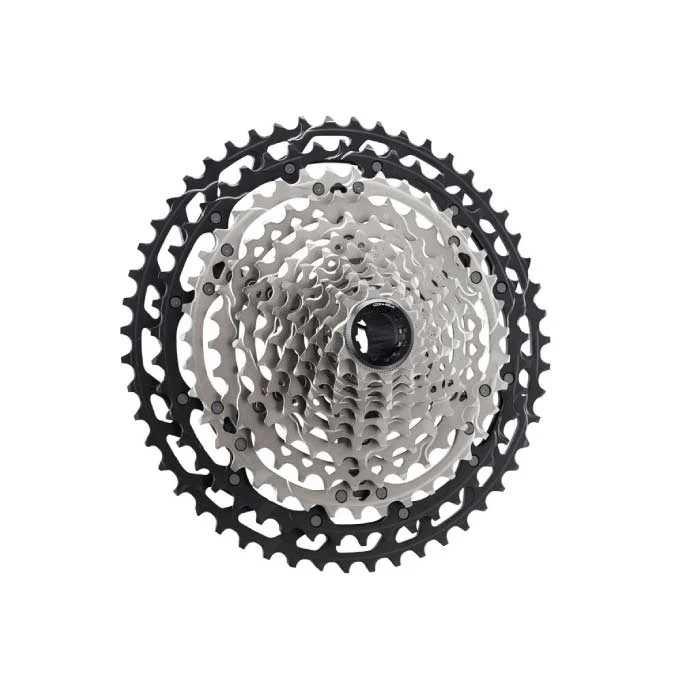
Cassette and chainring: how to choose a bike gear ratio
The cassette and chainring set your gear ratio, that is, how hard a climb feels and how fast you can go on the flat. Here is what to look at:
- Chainring size: going from 32 to 34 teeth raises the gear ratio by about 6%, so every gear is that much harder and faster at the same cadence.
- Cassette range: a 10–51 cassette has a range of 510%, and an 11–42 about 382%. A wider range gives an easier easiest gear and a harder hardest gear, but bigger jumps between gears.
- 1× or 2×: a single chainring is simpler and easier to maintain, while two chainrings give closer gear steps, which is useful on road and gravel bikes.
- Average step: a smaller step between gears means a more even cadence when you shift.
For an extra reference on gear ratios, also see Sheldon Brown on gear ratios.
Cadence, e-bikes and drivetrain condition
A cadence of 80 to 100 RPM is the most comfortable for most recreational riders, and it naturally drops on steep climbs. That is why the cadence and speed calculator also shows the cadence needed for your target speed. If your cadence on the flat always feels too high or too low, the gearing does not suit you and it is worth considering a different chainring.
On an e-bike the calculator only counts speed from pedaling and gearing. In the European Union the motor stops assisting at 25 km/h, and above that speed you ride on your own power.
Before changing sprockets, check the condition of the drivetrain. A stretched chain and a worn cassette shift poorly and shorten the life of new parts. See chain and cassette service, and work out how often to service your bike in the bike service calculator.


Changing your gearing or cassette?
You can bring the results of the cadence and speed calculator to the workshop. A mechanic at our service can replace chainrings, the cassette and the chain and adjust the derailleur, and before any work you get a diagnosis and a price estimate.
Cadence and speed FAQ
What is cadence in cycling?
Cadence is the number of pedal revolutions per minute (RPM - Revolutions Per Minute). Keeping an optimal cadence (usually between 80 and 100 RPM) helps you ride more efficiently and reduces muscle fatigue and pressure on the knees.
How do you calculate bike speed from cadence?
Multiply wheel circumference, cadence and gear ratio (front divided by rear), then convert the result to km/h. A circumference of about 2.3 m, a 32×16 gear and a cadence of 90 RPM give about 25 km/h. The calculator does this for every gear.
How do wheel and tire size affect speed?
A bigger wheel or a wider tire increases the overall outer circumference of the wheel. That means that for every pedal revolution (at the same gear) you cover a greater distance, which gives higher speed but needs more power to accelerate.
Why is it important to compare gear ratios?
Comparing helps you understand how changing the front (chainring) or rear (cassette) sprocket will affect your final speed and effort. A smaller chainring makes climbs easier, while a larger one allows more speed on the flat.
What is the circumference of a 29-inch wheel?
For a 61 mm (2.4") tire the circumference is about 2.3 m, or about 2315 mm. The exact value depends on the tire, pressure and load, and the calculator works it out from the rim diameter and tire width.
What is cassette range and why does it matter?
Range is the ratio of the largest to the smallest cassette sprocket, for example a 10–51 cassette has a range of 510%. A wider range gives an easier easiest gear and a harder hardest gear, but bigger jumps between gears.
Does the calculator work for e-bikes too?
It calculates speed from pedaling and gearing, without the motor. In the European Union an e-bike motor stops assisting at 25 km/h, and above that speed you ride on your own power.