Tech tips · Lubricants
Bike grease and oil:
how to choose the right lubricant
Not all bike grease is the same. The wrong lubricant can ruin bearings, seals and even a carbon frame. Here is what goes on the chain, bearings, threads, suspension and carbon.
Written by Marko Ristivojević, Master Bike Mechanic
In short
Lubricate the chain with a bike chain lube suited to the conditions, bearings with waterproof grease, threads with anti-seize paste, suspension with dedicated oils, and carbon parts with carbon assembly paste.
Chain
Dry, Wet or wax
Bearings
Waterproof grease
Carbon
Assembly paste
Fork
OEM oils
Author: Marko Ristivojević, Master Bike Mechanic · BK MTB Evolution, East Sarajevo
Why lubricant choice matters
The chain is the part most exposed to dirt and moisture, bearings face water and corrosion, and fork seals don't tolerate just any grease. That's why each part needs its own lubricant.
The good news is that you only need a few products. Below is an overview of what goes where and what to watch out for.
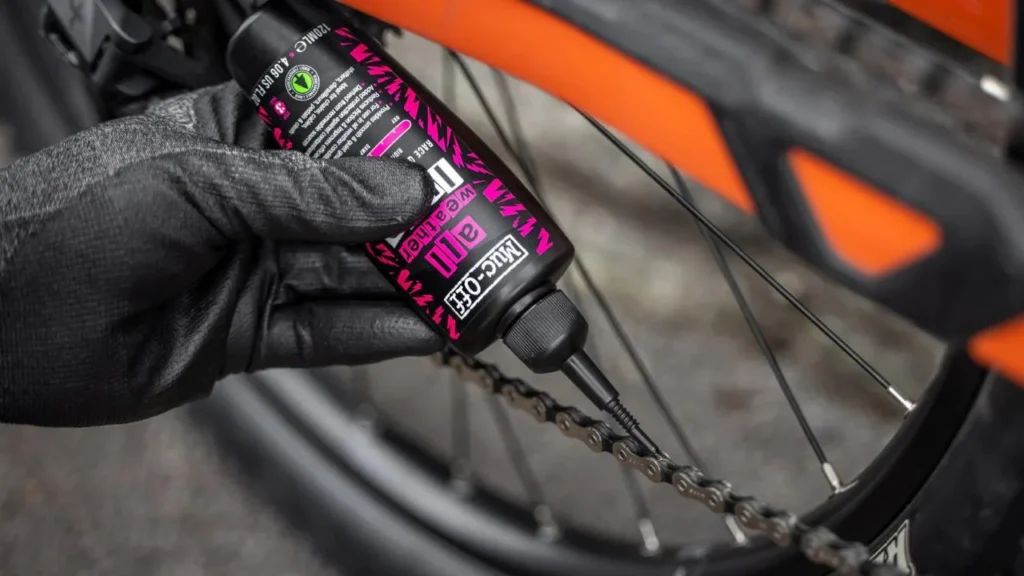
Bike grease and oil: chain lubes (dry, wet and wax)
Dry lube. For dry and dusty conditions. It doesn't attract much dirt, but you need to apply it more often.
Wet lube. For mud, rain and wet conditions. It offers the best protection, but the chain needs cleaning more often.
Wax lube. Repels dirt and keeps the drivetrain cleanest. Increasingly popular for all conditions, but the chain needs preparation.
Grease for bearings and threads
Bearing grease. Thick and waterproof, lithium or calcium sulfonate based. Used for wheel bearings, drivetrain axles and the headset.
Anti-seize paste. A barrier against seizing, corrosion and creaking. It is not a lubricating grease.
Where anti-seize goes. Pedal threads, bottom bracket axles, disc brake bolts and the seatpost-to-frame joint.
Don't mix them up. Don't use bearing grease on threads, and don't put anti-seize inside bearings.
Suspension oils and greases
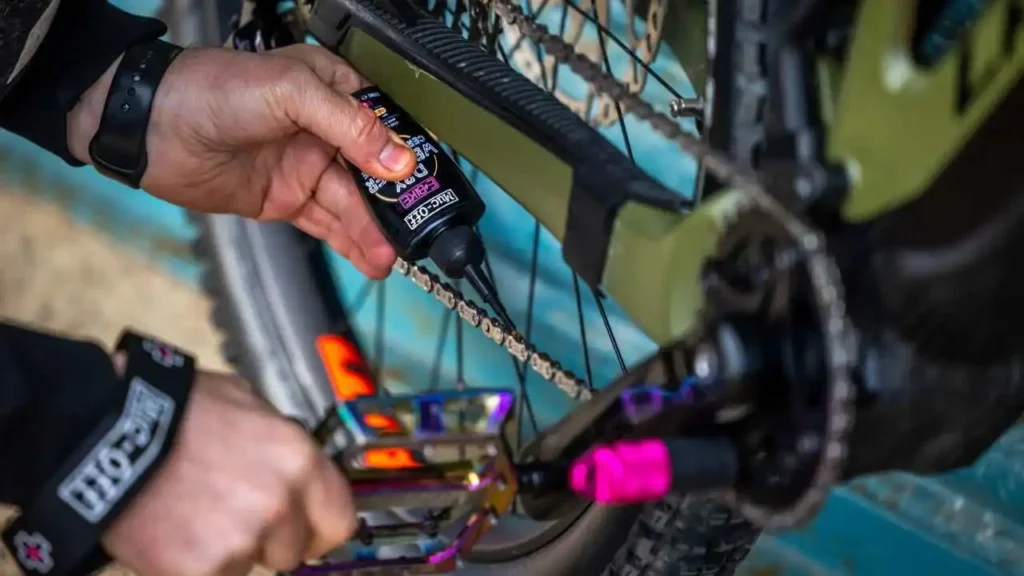
Lower leg oil. Low viscosity, for lubricating sliding surfaces. For FOX use the original oil, and for RockShox the matching Suspension Fluid.
Damper oil. Determines compression and rebound speed. The manufacturer specifies the exact viscosity, and you should stick to it.
Seal grease. A special low-viscosity, silicone or PTFE based grease that won't damage rubber seals. Slick Honey and SRAM Butter are well-known examples.
Never ordinary grease. Don't use bearing grease in a fork or shock, as it damages the seals and disrupts suspension performance.
Carbon assembly paste
Why paste. It contains fine particles that increase friction, so parts don't slip and can be tightened to a lower torque.
Where to use it. Carbon seatpost, handlebar and stem. It is essential for the seatpost.
No grease. Ordinary bike grease on carbon reduces friction and parts slip, so always choose a dedicated paste.
Lubrication rules
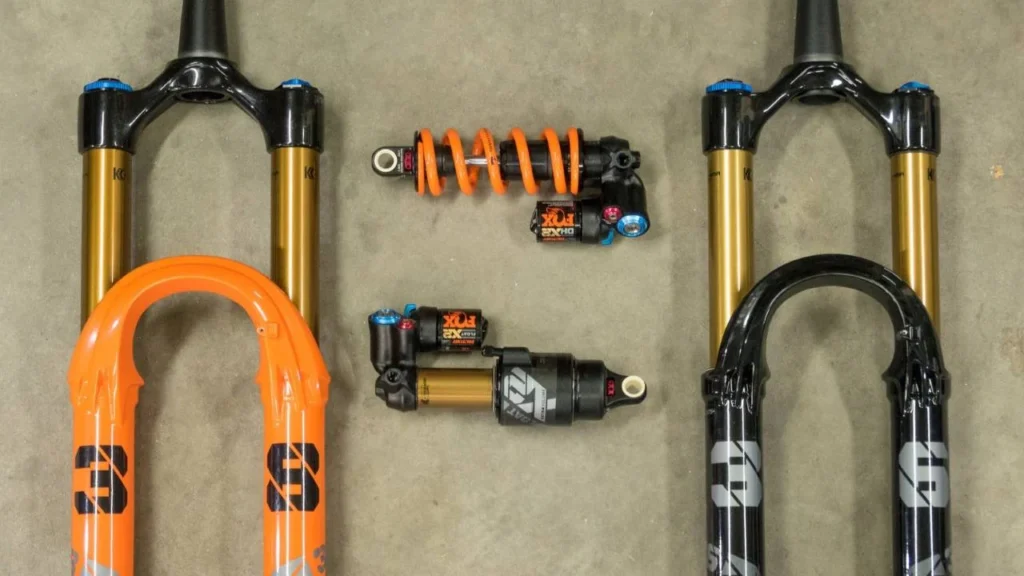
Clean first. Never apply new oil to a dirty chain. Clean it with a degreaser first.
Less is more. Apply oil drop by drop to each roller, let it penetrate and wipe off the excess with a dry cloth.
Torque wrench. Overtightening cancels the benefit of the paste, especially on carbon.
Tip: WD-40 is not a chain lubricant. It is a solvent and strips the protective grease from the chain and bearings. In the MTB Evolution suspension service we use original FOX and RockShox oils. Before choosing your grease, also read Park Tool's maintenance tips.
FAQ
When should I lubricate the chain?
Every 150–300 km in dry conditions, and after every ride in rain and mud when you use wet lube. Regularity matters, not quantity.
Can I use WD-40 on the chain?
No. WD-40 is primarily a solvent and degreaser. It strips protective grease and speeds up wear on the chain and bearings.
How often should I service the fork and shock?
A lower leg service about every 50 riding hours, and a full service once a year or around every 200 riding hours.
Should I use grease on a carbon seatpost?
No. Only carbon assembly paste goes on carbon, as it increases friction and prevents slipping.