Tech Tips · Brakes
Squeaky Bike Brakes
How to Stop Brake Squeal
Squeaky bike brakes are most often caused by grease or oil on the rotor or pads, and the fix is cleaning, sanding the pads and aligning the caliper properly. If the noise stays, the Evolution workshop in East Sarajevo will diagnose and adjust your brakes.
By Marko Ristivojević, Master Bike Mechanic
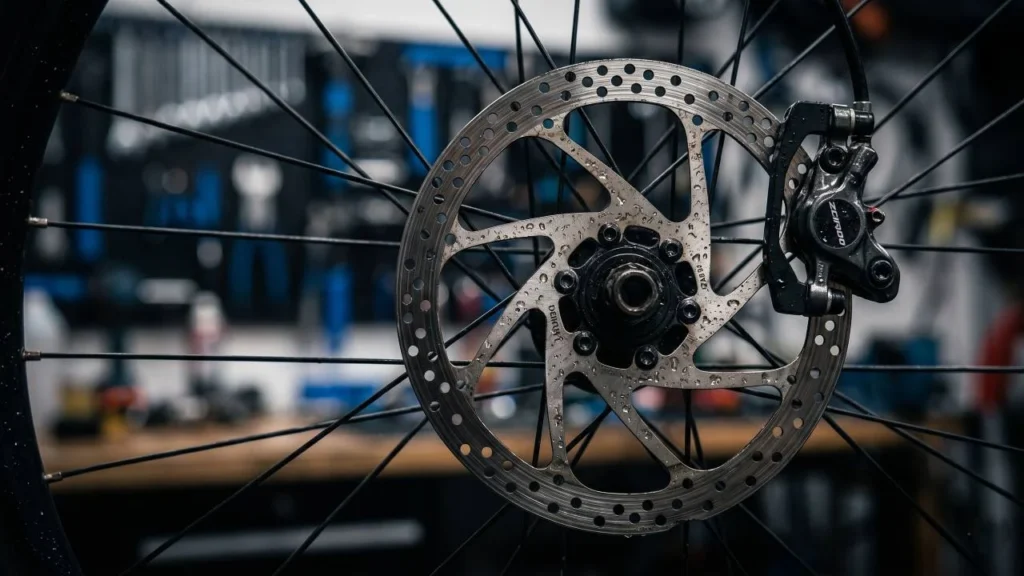
In Short
Squeaky bike brakes (squealing, howling or the infamous “turkey gobble”) are a sign that your braking system is working at only 20–30% of its capacity. The most common causes are oil on the rotor and pads, glazed brake pads, moisture, a poorly centered caliper and new brakes that haven't been bedded in.
Cause #1
Grease or Oil on the Rotor or Pads
What You Can Do Yourself
Clean the rotor, sand the pads, center the caliper
Replacement
Pads that have soaked up oil need to be replaced
Goes to the Workshop
If the squeal remains after these steps
Author: Marko Ristivojević, Master Bike Mechanic · BK MTB Evolution, East Sarajevo
Squeaky Bike Brakes: Causes and Solutions
There's nothing worse than squeezing the brake lever for the first time and having your bike sound like a freight train coming to a stop. Squeaky bike brakes don't just annoy you – they're a warning that your brakes are working at only 20–30% of their capacity.
Squeaky bike brakes have five common causes, and the guide below gives you the steps to fix them at home. If the disc brake noise doesn't go away even after that, bring the bike to our workshop.
Contaminated Rotors and Pads: Cause #1
The main culprit – contamination with oil or grease. Brake pads, especially organic ones, are as porous as a sponge, so even a microscopic amount of oil changes the friction and causes vibrations that you hear as squealing.
Clean the rotor – remove the wheel and wipe the rotor with a clean cloth soaked in isopropyl alcohol or brake cleaner spray. Never touch the rotor with bare fingers; the natural oils on your skin are enough to ruin your braking.
Replace the pads – if the pads have soaked up oil (WD-40, chain lube or a leak from the caliper), the only reliable fix is a new set of pads. Our guide on which brake pads to choose will help you pick.
Pro tip: Metallic pads can sometimes be saved by soaking them in alcohol and burning the oil off briefly with a torch, but this isn't recommended for beginners and doesn't work on organic pads.
Glazed Brake Pads and Rotors
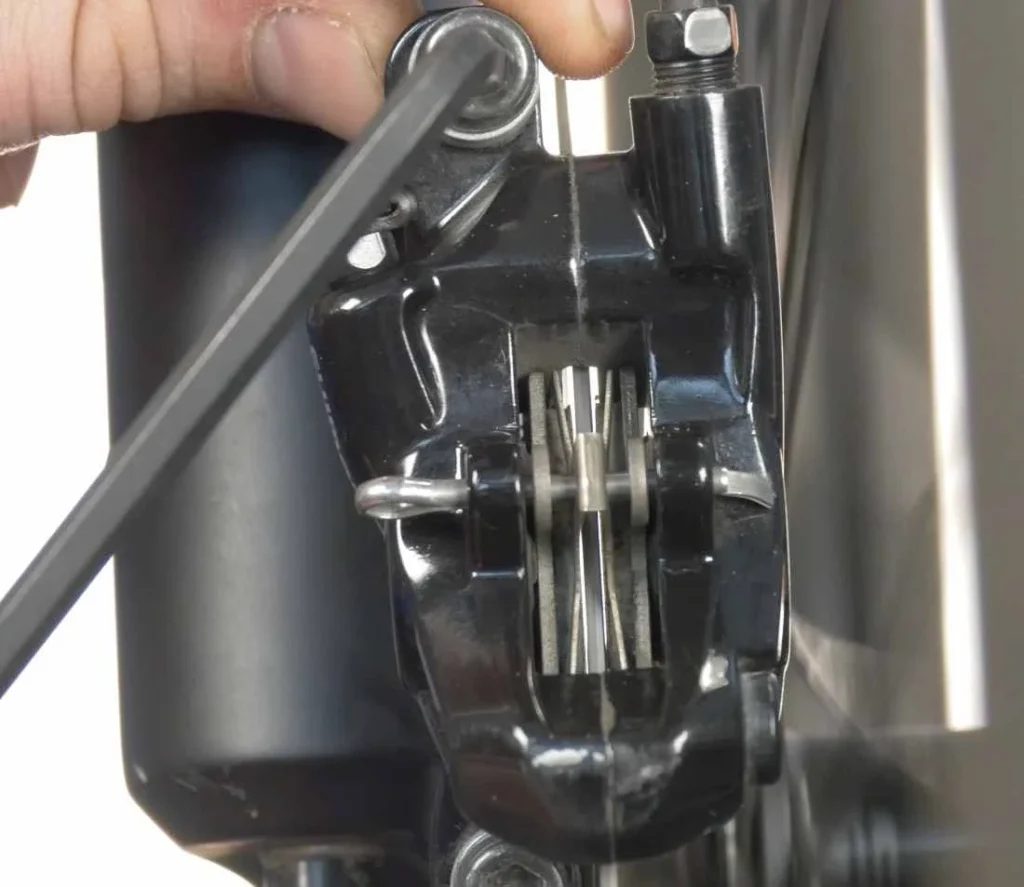
On long descents with the brake lightly dragged, the pad material overheats. The surface becomes extremely hard and smooth, shiny as glass, so the pad slides over the rotor instead of creating friction, which causes squealing.
Removing the glaze: take the pads out of the caliper and place fine sandpaper (400 grit or finer) on a perfectly flat surface.
Rub the pad over the paper in a figure-eight motion until the shiny layer is gone and the surface is evenly matte again.
Lightly sand the rotor with sandpaper as well, then wipe everything down with alcohol.
Water, Moisture and Pad Type (Sintered vs. Resin)
If your brakes squeal only in the rain or after riding through a puddle, that's often unavoidable: water forms a film that causes resonance.
Metallic (sintered) pads – they contain metal particles, handle heat better on descents and last longer, but they squeal a lot more when wet or cold.
Organic (resin) pads – they're quieter and squeal less often, bite better when cold, but wear out faster. If you don't ride heavy downhill, switching to organic pads often solves the noise.
Misaligned Caliper and Loose Bolts
If the caliper isn't parallel to the rotor, the pads rub the rotor at an angle, and the vibrations travel through the entire frame (the so-called “turkey gobble” effect).
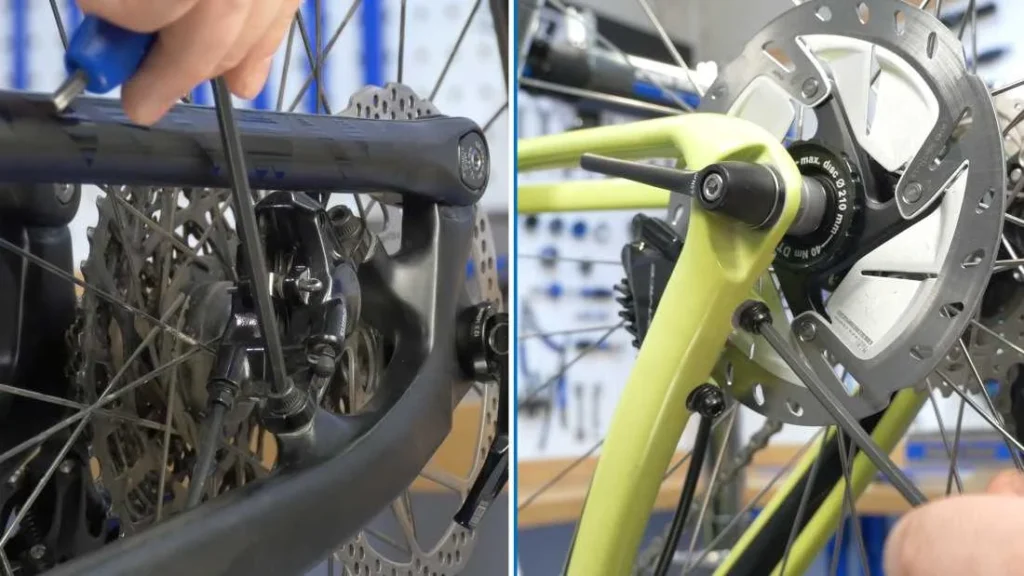
Check that the bolts on the caliper, the adapter and the rotor itself (6-bolt or Centerlock) are fully tightened. A loose rotor squeals unbelievably.
Centering: loosen the caliper bolts just enough so it can move, then squeeze the brake lever, which centers the caliper over the rotor.
While holding the lever firmly squeezed, tighten the bolts alternately. The detailed procedure is in our guide to centering disc brakes.
Poor Bed-In of New Brakes
New pads or rotors that go straight onto the trail will brake poorly and start howling unless you bed in new brake pads first – a process that transfers a thin layer of material from the pad to the rotor, giving a smooth and quiet surface.
On flat asphalt, accelerate to about 25 km/h and brake firmly, shifting your weight back, down to walking speed. Don't let the wheel lock up completely or bring the bike to a full stop.
Release the brake, accelerate again and repeat 15–20 times. The brake becomes noticeably stronger and quieter.
Quick Checklist for Quiet Brakes
Are they wet? If so, brake a few times to dry them out.
Clean the rotor – alcohol and a clean cloth.
Check the pads – if they're glazed, sand them; if they're greasy, replace them.
Tighten everything – caliper and rotor bolts.
Center the caliper so the rotor doesn't rub at an angle. If nothing helps, a brake service restores quiet and power.
External Resources and Manufacturer Instructions
Park Tool – guide to replacing and cleaning brake pads (a global leader in cycling education)
Shimano technical manuals (official manufacturer documentation)
Squeaky Bike Brakes FAQ
Why do my bike brakes suddenly start squeaking?
The most common cause is oil contamination (for example, chain spray that got onto the rotor) or touching the rotor with greasy fingers. Oil soaks into the porous pads and causes noise along with a loss of power.
Why do brakes squeal when it rains?
This is normal, especially with metallic (sintered) pads. Water forms a thin film between the pad and the rotor that causes vibrations. The noise usually stops after a few hard stops, once the heat dries the water.
Can oiled brake pads be saved?
Organic pads that have soaked up oil usually have to be thrown away. Metallic ones can sometimes be saved by thorough degreasing and burning the oil off with a torch, but replacement is the safest option.