Tech tips · Suspension
FOX GRIP2 setup:
compression and rebound
A FOX GRIP2 setup gives you four-way adjustment: LSC, HSC, LSR and HSR. Here is what each control does and the order in which to tune them.
By Marko Ristivojević, Master Bike Mechanic
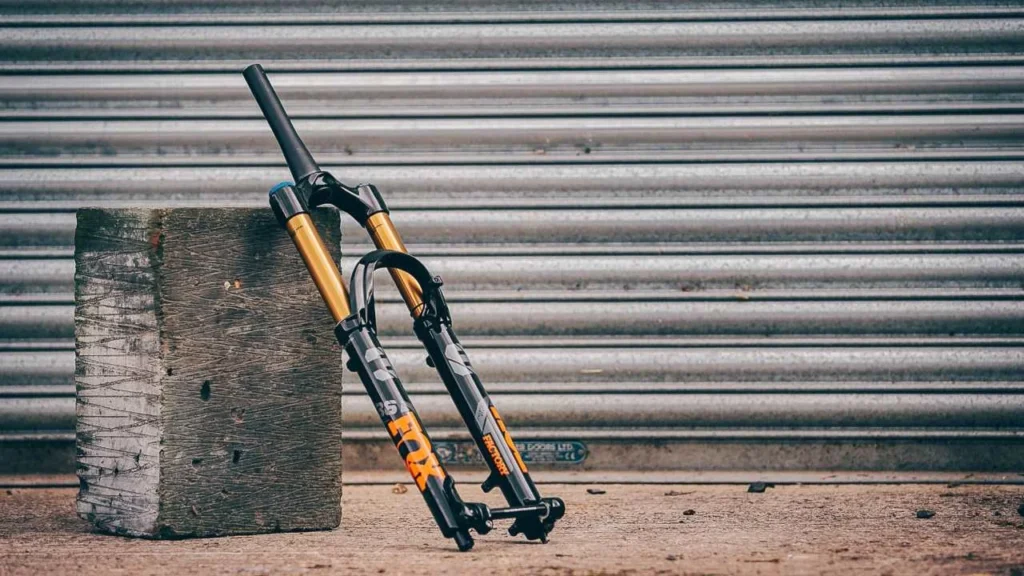
In short
Start your FOX GRIP2 setup with 15–20% sag, then set rebound (HSR and LSR), then LSC, and finally HSC. Change one control per ride and write down your clicks.
Sag
15–20%
Rebound
8–10 clicks
Controls
LSC, HSC, LSR, HSR
Rule
One change at a time
Author: Marko Ristivojević, Master Bike Mechanic · BK MTB Evolution, Istočno Sarajevo
How the GRIP2 damper works
A proper FOX GRIP2 setup unlocks the full potential of the FOX FIT GRIP2 fork and gives you control over every millimeter of travel.
To get there, you need to understand how oil flows through the high-speed and low-speed circuits. Four-way adjustment calls for a precise approach to MTB suspension tuning.
FOX GRIP2 setup: compression and rebound
Damping. The resistance to oil flow that converts the kinetic energy of an impact into heat. GRIP2 splits both compression and rebound into low and high speed.
Compression (C). Controls how fast the fork compresses under impact. It is adjusted with the top, blue and gold dials.
Rebound (R). Controls how fast the fork returns to its extended position. It is adjusted with the lower, red and black dials.
Compression controls (LSC and HSC)
LSC, what it does. It regulates oil flow during slow movements. It controls body input when braking and cornering, prevents brake dive and improves sensitivity to small bumps.
LSC, adjustment. More LSC gives a firmer feel but reduces comfort. Start from the factory settings and add 2–3 clicks if the fork dives too much. This kind of fork compression damping tweak is the easiest to feel on the trail.
HSC, what it does. It regulates oil flow during fast impacts, such as landing a jump. It controls bottom-out resistance and the absorption of large, sharp hits.
HSC, adjustment. Use it sparingly. Too little HSC feels harsh on landings, and too much "locks up" the fork on fast hits. Careful LSC HSC adjustment is about balance, not extremes.
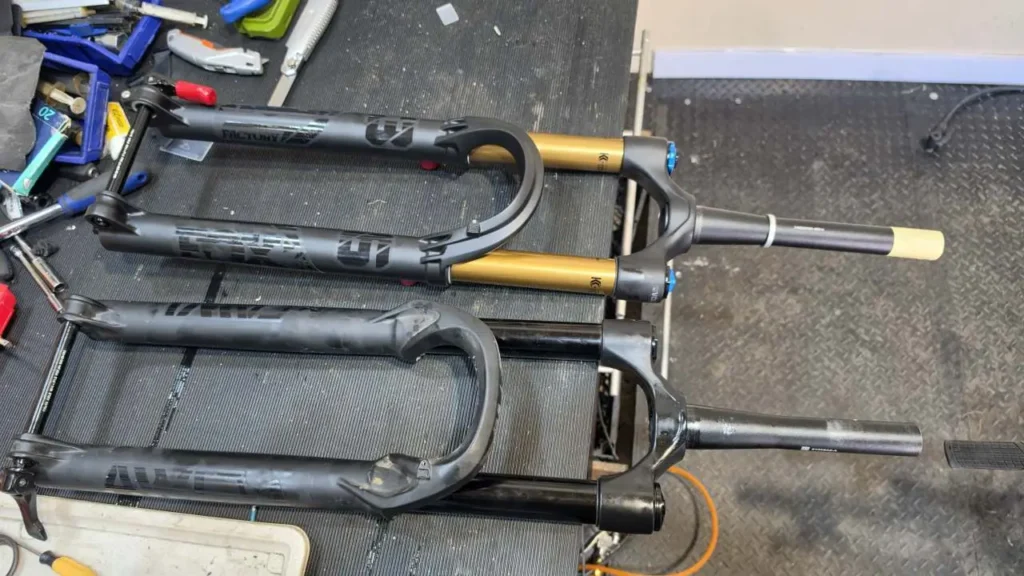
Rebound controls (LSR and HSR)
LSR, what it does. It controls the return after slow and medium compressions, such as exiting a corner. It is key for traction.
LSR, adjustment. Start fast, then slow it down. Rebound that is too slow means packing down, and rebound that is too fast feels like the fork is kicking you out.
HSR, what it does. It controls the return after deep, fast compression, such as a big jump, and prevents the fork from catapulting you.
HSR, adjustment. Keep it as fast as is still safe. More HSC calls for slightly faster HSR, and HSR that is too slow causes the fork to sink on repeated hits. Good fork rebound settings keep the wheel in contact with the ground.
FOX GRIP2 setup protocol
Sag and rebound. First set sag to 15–20% for aggressive trails, then set HSR and LSR to the FOX baseline, usually 8–10 clicks from fully closed.
LSC. Ride and brake deliberately. Add LSC (turn clockwise to close) until excessive dive under braking is gone.
HSC. Ride your hardest trail. If you feel a harsh bottom-out, close HSC by one or two clicks.
Tuning tips
One change per ride. Changing several controls at once makes it impossible to track the effect.
Write down your clicks. Record your settings so you can return to what works.
Check the models too. The differences between FOX dampers and shocks are covered in our guide FOX shocks for bikes.
Tip: for fine damping calibration and service, contact the MTB Evolution workshop. We are certified for the most demanding suspension work. You can find the manufacturer's technical documentation on the Fox website.
FAQ
What are LSC and HSC?
LSC controls slow movements, such as braking and cornering, while HSC controls fast impacts, such as jump landings and rocks.
In what order should I set up GRIP2?
Sag first, then rebound (HSR and LSR), then LSC, and finally HSC. Rebound is set before compression.
How much sag should I aim for?
For aggressive trails, aim for 15–20% of fork travel as your baseline spring setting.
How do I recognize rebound that is too slow?
The fork cannot return before the next bump and sinks into its travel (packing down). Speed up the rebound by a few clicks.