Fox suspension is the most common choice on trail, enduro and downhill bikes, but labels such as 34, 36, 38, Performance Elite, Factory, GRIP X2 or Float X2 confuse even experienced riders. This guide separates the front fork from the rear shock, explains the differences between the series and shows how to pick the right model for your discipline. Fox forks and rear shocks pass through the MTB Evolution workshop all the time, so I finish with concrete service intervals, because even the most expensive Fox shock does not work well without maintenance.
In short:
- Fox suspension splits into the front fork (32, 34, 36, 38, 40, named after stanchion diameter) and the rear shock (Float SL, Float X, Float X2, DHX, DHX2).
- It is built in series from Rhythm and Performance through Performance Elite to Factory. The difference is in the damper, the coating on the legs and the number of adjustments, not in the basic construction.
- For trail, choose a Fox 34 or 36 with a Float X; for enduro, a Fox 36 or 38 with a Float X2 or DHX2; for XC, a Fox 32 or 34 SL with a Float SL.
- Service guideline: lower leg service every 30 to 50 hours, full service around 100 to 125 hours or once a year.
- For 2027, Fox brings the GlideCore air spring to its forks and completely new Float X and DHX shocks.
Fox Suspension for Bikes: Front Fork and Rear Shock
In everyday talk the word "shock" gets used for everything, but Fox suspension for bikes covers two different groups of products. The front shock is the fork, which slides into the head tube and carries the front wheel. The rear shock is mounted between the frame and the rear swingarm on a full suspension bike. Anyone searching for a Fox rear shock or a Fox shock for a hardtail is really looking for a fork only, because a hardtail has no rear shock.
The same principle applies at both ends: a spring (air or steel) carries the rider's weight, and a damper controls how fast the suspension compresses and returns. That is why servicing and setup on the fork and the shock rely on the same terms: SAG, rebound and compression.
What the numbers 32, 34, 36, 38 and 40 mean
On forks, the number in the name is the diameter of the upper tubes (stanchions) in millimetres. A larger diameter means more stiffness and more travel, but also more weight. The figures in the table are indicative, because travel and weight vary by model year.
| Model | Stanchion diameter | Typical travel | Use |
|---|---|---|---|
| Fox 32 Step-Cast | 32 mm | 100 to 120 mm | XC racing and marathons |
| Fox 34 / 34 SL | 34 mm | 120 to 140 mm | Light trail and XC |
| Fox 36 | 36 mm | 140 to 160 mm | Trail and lighter enduro |
| Fox 38 | 38 mm | 160 to 180 mm | Enduro, bike park, e-bike |
| Fox 40 | 40 mm, dual crown | around 200 mm | Downhill |
To compare it with a rival brand, also read the guide FOX vs RockShox: which MTB fork is better, where both families are lined up by level and purpose.
Fox Forks: Differences Between the Series
Every Fox suspension fork comes in several equipment tiers. The order is the same across all models: Rhythm, Performance, Performance Elite and Factory. When a customer asks what separates two Fox forks of the same diameter, the answer is almost always three things: the damper, the coating on the legs and the number of external adjustments.
| Series | Damper | Fork legs | Who it is for |
|---|---|---|---|
| Rhythm | GRIP, basic adjustment | Black anodized finish | Entry level and recreation |
| Performance | GRIP, basic adjustment | Black anodized finish | Regular trail riders |
| Performance Elite | GRIP X or GRIP X2 | Black anodized finish | Serious enduro and trail riding |
| Factory | GRIP X or GRIP X2 | Gold Kashima coating | Maximum smoothness and adjustability |
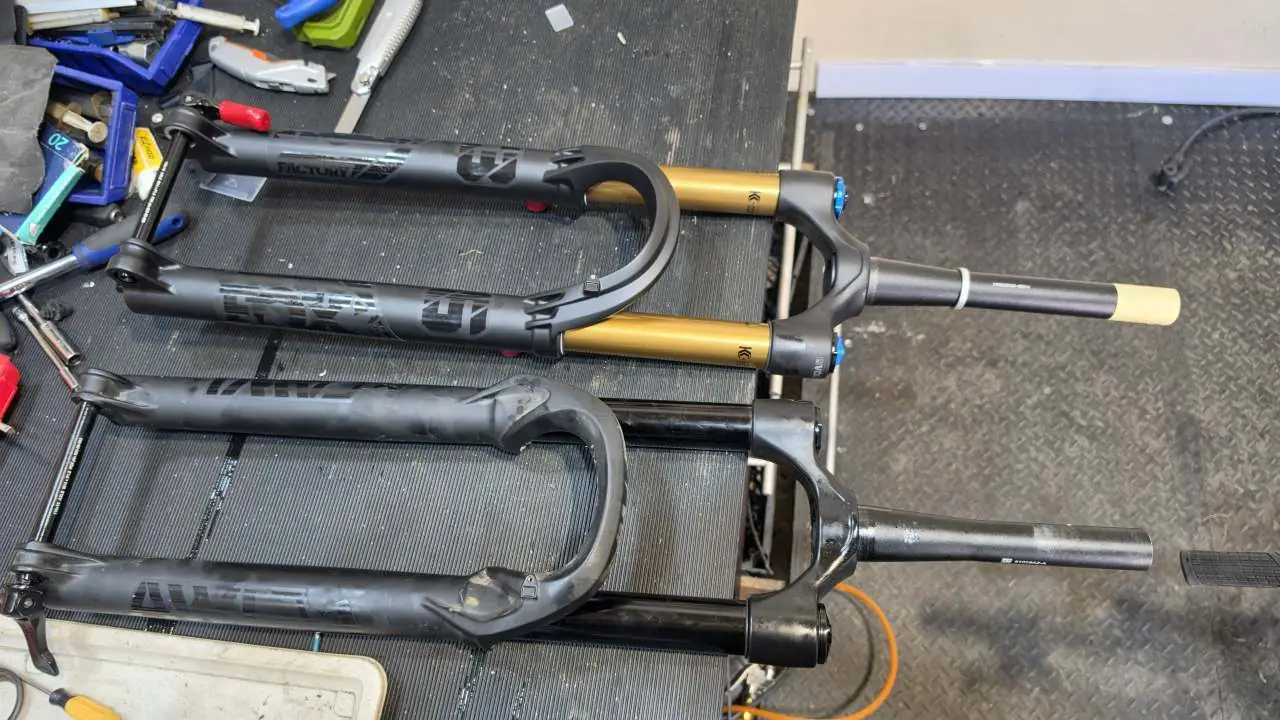
The exact damper designation depends on the model and year, so the safest way is to read the sticker on the lower part of the fork and compare it with the manufacturer's page. A Fox fork with Kashima coating is recognisable by the gold colour you can see in the photo below: the coating reduces friction and improves sensitivity on small bumps, which a rider notices most on long descents.
GRIP, GRIP X and GRIP X2: which damper is for whom
The GRIP damper offers compression and rebound adjustment without separating fast and slow impacts. The X and X2 versions add finer control: GRIP X2 separates high and low compression and rebound into four independent controls (4-way). If you have this version, the step-by-step procedure is in the guide Fox GRIP2 fork setup: HSC, LSC, HSR and LSR.
What is new on Fox forks for 2027
For 2027, Fox has reworked its entire fork family. What they share is the new FLOAT GlideCore air spring, which reduces friction and bind. The Fox 38 gets a longer bushing overlap (140 mm instead of 120 mm), a standard 200 mm rotor mount and a revised GRIP X2 damper. The Fox 36 now tops out at 160 mm of travel, and alongside it Fox introduced the Fox Podium, a single-crown upside-down fork in 160 and 170 mm travel.
Fox Rear Shock: Float SL, Float X, Float X2 and DHX
A Fox rear shock is chosen by three things: the spring type (air or steel coil), the amount of adjustment and, as is often forgotten, the dimensions and mounting type on the frame. Fox suspension for the rear end splits into clear families.
| Model | Spring | Adjustment | Use |
|---|---|---|---|
| Float SL | Air | Basic, no extra controls | XC and marathons |
| Float X | Air | Rebound and compression, 2-position or 3-position lever | Trail and all-mountain |
| Float X2 | Air | 4-way: high and low compression and rebound | Enduro and aggressive trail |
| DHX | Steel coil | Low compression and rebound | Trail and enduro |
| DHX2 | Steel coil | 4-way with external adjustment | Enduro and downhill |
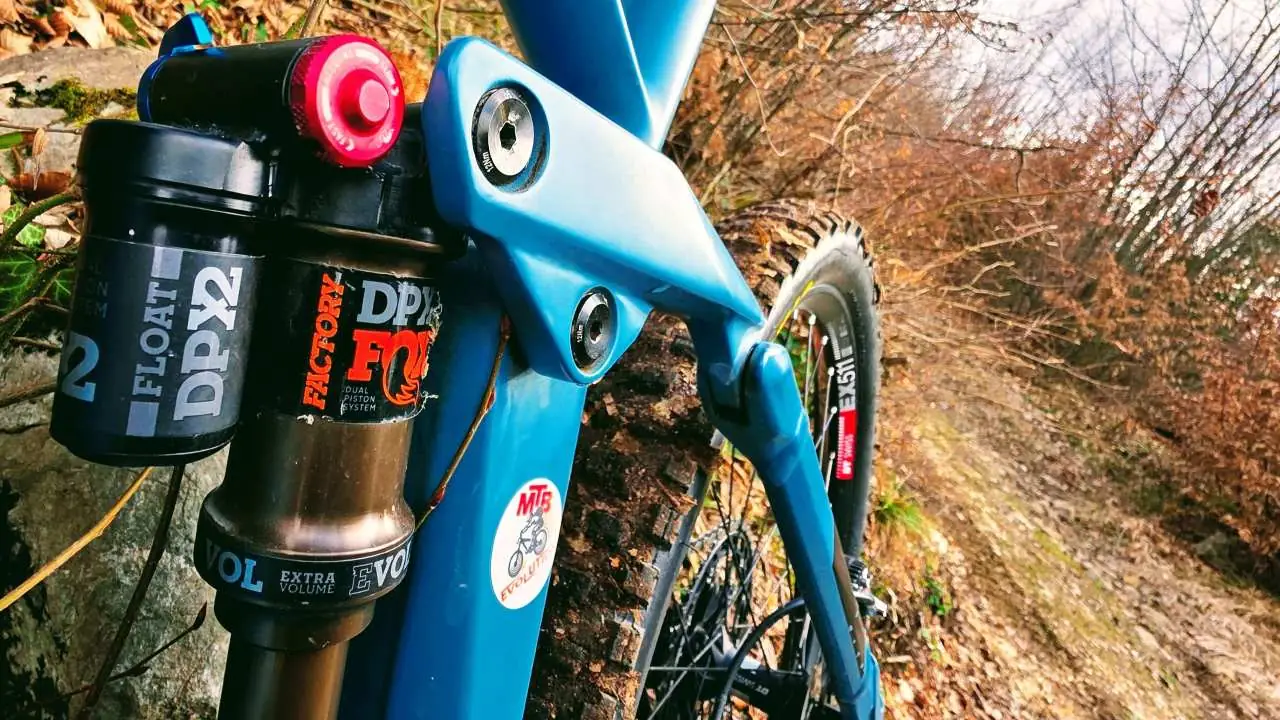
On older full suspension bikes you will often come across the Float DPX2, a shock with a three-position lever that was the standard on trail bikes for years. The photo below shows the Factory version with an Extra Volume chamber.
Metric or Trunnion and shock dimensions
Before replacing a rear shock, check two numbers: the eye-to-eye length and the stroke, for example 210 x 55 mm, plus the mounting type. The 2027 Fox Float X, DHX and Float X2 come in Metric and Trunnion versions, and without the right one it cannot be fitted. Do not change dimensions without checking with the frame manufacturer, because a longer shock changes the geometry and can hit the frame.
What is new on the Float X and DHX shocks
The new Fox Float X and DHX have a reshaped main piston and base valve, more shims and higher oil flow. Externally they look identical to the previous ones, and Fox is aiming to give the trail shock the feel of an X2 with less weight. They do not have high-speed compression adjustment, which makes them simpler to set up. For those who want electronics, there are also Live Valve Neo versions.
Choosing by Discipline: Trail, Enduro and XC
The most common mistake is buying the most expensive model instead of the one that suits your riding. Fox suspension is chosen by frame travel, rider weight and terrain, and only then by equipment level.
Trail (120 to 150 mm)
For trail, a Fox 34 or 36 in Performance or Performance Elite spec with a Float X rear shock covers most recreational and amateur riding. A well-set SAG matters more here than the most expensive damper.
Enduro (150 to 180 mm)
For enduro, a Fox 36 or 38 with a GRIP X2 damper and a Float X2 or DHX2 rear shock gives full control on long, rough descents. On enduro bikes 4-way adjustment makes sense, because high and low compression are really felt on the trail.
XC (100 to 120 mm)
For XC, a Fox 32 Step-Cast or 34 SL with a Float SL targets low weight and climbing efficiency. A lockout or firm setting matters more than extreme sensitivity.
E-bike
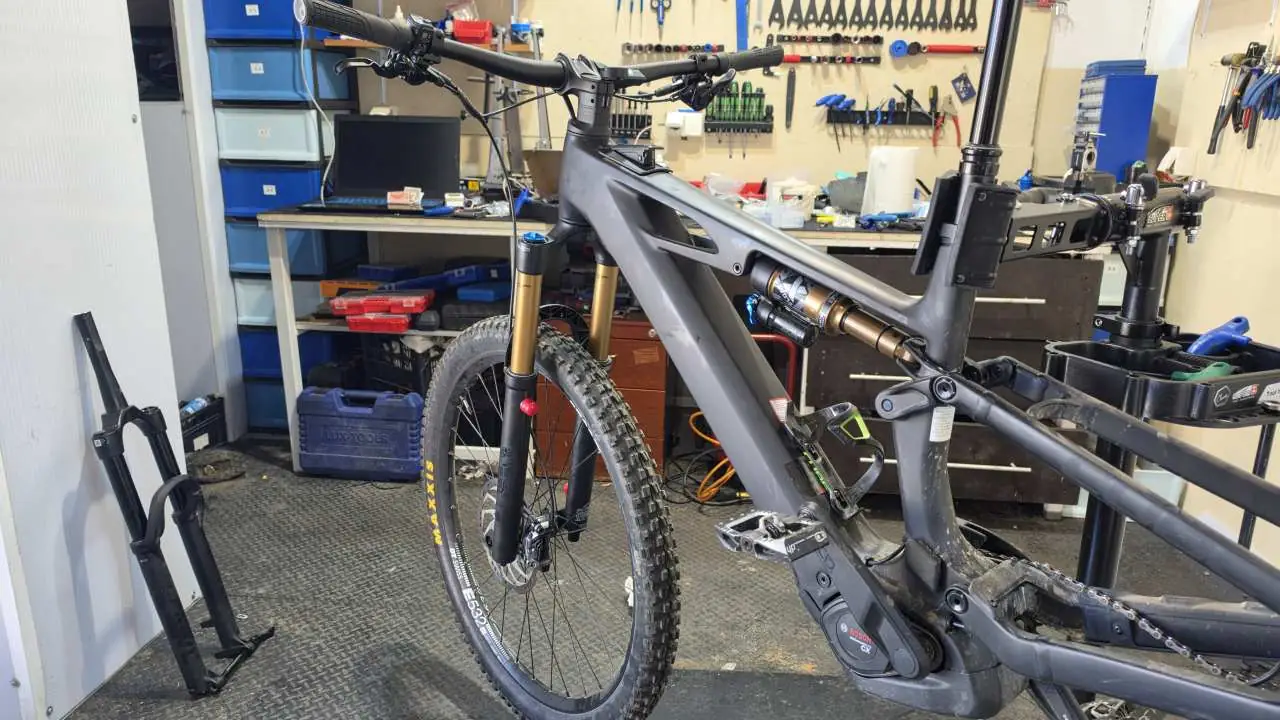
E-bikes are heavier and load the fork harder under braking, so riders most often choose stiffer, larger-diameter forks (36 or 38). The bike in the photo at the top of this article has a Bosch motor, and on such bikes regular suspension service is especially important because of the extra mass and braking load. Read more about it in our e-bike service page, or see the Bosch ebike service we offer.
Fox Suspension Setup: SAG, Rebound and Compression
New gear is worth nothing if it is not set up. All Fox suspension is adjusted in the same order, on the fork and on the rear shock: set SAG first, then rebound, and only then compression. A good starting point is around 15 to 20 percent SAG for the fork and usually 25 to 30 percent for the rear shock, adjusted to your riding style.
- Set SAG in full riding gear, not without your backpack and protection.
- Set rebound as fast as you can without the bike feeling like it throws you off.
- Change compression one click per ride and write the changes down.
I describe the detailed procedure with all parameters in the guide MTB suspension tuning: fork and shock setup, and for a quick estimate of starting values use the MTB suspension calculator. If you want a shorter walkthrough, try FOX suspension setup in 5 steps, or browse the full MTB suspension guide.
When to Service Fox Suspension
Service is the only thing that directly determines how long Fox suspension keeps working properly. Oil gets dirty, seals lose elasticity and the air chamber loses lubrication. Use the following intervals as a guideline, and for exact values for your model check the Fox tech page with service procedures.
| Service | Indicative interval | What is done |
|---|---|---|
| Lower leg (fork) | Every 30 to 50 hours | Cleaning, replacing the lower leg oil, foam rings and seals |
| Full fork service | 100 to 125 hours or once a year | Replacing the damper oil, air spring, seals and O-rings |
| Minor rear shock service | 50 to 100 hours | Cleaning, replacing the oil and air chamber seals |
Signs that a service is overdue: oil on the fork legs, squeaking or slow return, loss of pressure in the air chamber and noticeably weaker rebound. You can see the lower leg procedure in our Fox fork service guide, and the minor fork service in the guide minor fork service. For more complex work, the full service is described on the bike suspension service page. Fox suspension service costs 80 KM, and if parts or additional work are needed, you get an estimate before any work starts.
Need a service or setup for your Fox fork and shock? Book a slot at the workshop in East Sarajevo.
Book a slotConclusion: How to Choose Fox Suspension
In short, Fox suspension is chosen by discipline, frame travel and budget. First determine how much travel your bike can take, then pick the fork diameter and rear shock type, and only at the end the equipment level. Performance Elite covers most riders, while Factory pays off when you really use every adjustment. Regular service and correct setup make a bigger difference to your ride than moving up a series, because only then does the suspension work the way it was designed. If you are torn between brands, also check the comparison in the guide on FOX and RockShox forks. The author of this guide, Marko Ristivojević, has been servicing bikes since 2015.
Frequently Asked Questions
Which Fox rear shock should I choose for a trail bike?
For most trail bikes with 120 to 150 mm of travel, the Fox Float X gives the best balance: a lighter air shock with simpler setup. If you ride more aggressively or have an enduro bike, the Float X2 offers separate adjustment of high and low compression and rebound. Before buying, check the shock length, stroke and mounting type (Metric or Trunnion), because it must match your frame.
How often should Fox suspension be serviced?
As a guideline, the lower part of a Fox fork (lower leg service) is done every 30 to 50 hours of riding, and a full service of the damper and air spring every 100 to 125 hours or once a year. Because it holds less oil, the rear shock needs a minor service every 50 to 100 hours. Riding in mud and dust shortens these intervals, and the exact values for your model are on the Fox tech page.
What is the difference between Fox Performance and Fox Factory?
The basic construction is the same, and the difference is in the details: Factory has a Kashima coating on the fork legs or shock body, better finishing and the most advanced damper (GRIP X2 or Float X2 with more external adjustments). Performance has a black anodized finish and a simpler damper. For recreational riding the difference is small, and Factory pays off for riders who really use all the adjustments.