Tech Tips · Suspension
MTB suspension:
forks, shocks and maintenance
Suspension isn't a luxury. It's control and speed. Here's how a fork and rear shock work, how to set your sag, and how often to service them.
By Marko Ristivojević, Master Bike Mechanic
In brief
For Trail and Enduro, aim for suspension sag of 25–35% of travel. Service your fork about every 50 hours, and do a full service every 100–200 hours or once a year.
Sag
25–35% of travel
Lower leg service
About 50 hours
Full service
100–200 hours
Pressure
Check monthly
Author: Marko Ristivojević, Master Bike Mechanic · BK MTB Evolution, Istočno Sarajevo
Why proper suspension matters
MTB suspension lets your wheels follow the terrain instead of bouncing off it. A well-tuned MTB suspension setup directly affects traction, comfort and safety on the trail.
If you don't look after your suspension, it won't look after you. Regular, professional servicing of your fork and shock is the only way to keep performance high.
MTB suspension: fork, spring and damping
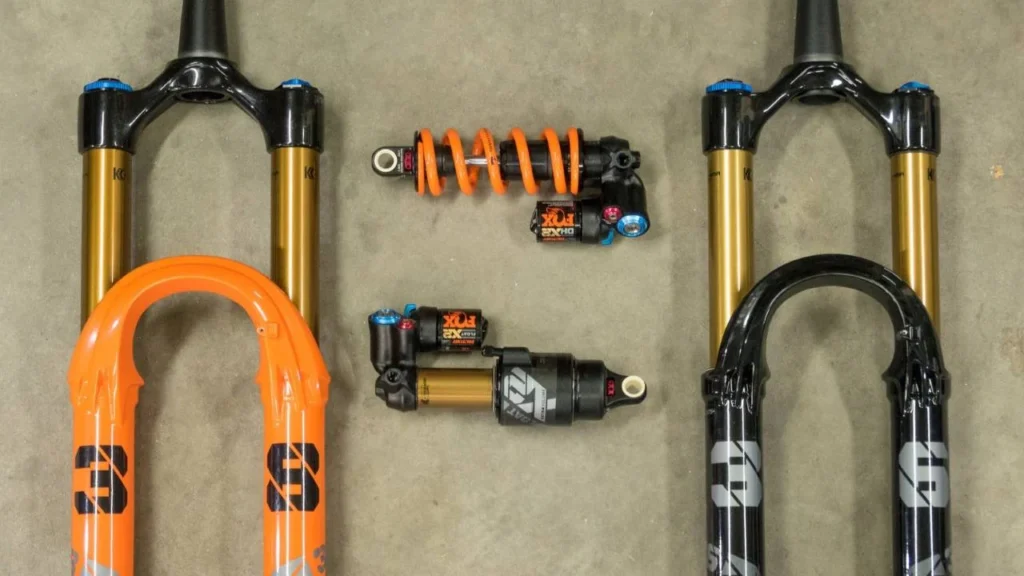
Air fork. Uses compressed air as the spring. A light, highly adjustable mountain bike fork (just change the pressure), but servicing costs more.
Coil fork. A metal coil spring that's extremely reliable, with a linear feel and better traction, but it's heavier and harder to adjust for stiffness.
Damping mechanism. Controls rebound and compression. Rebound that's too fast catapults you, while rebound that's too slow makes the suspension "pack down" on repeated hits.
Rear shock: air or coil
Air shock. The standard choice for Trail and Enduro. Great progressiveness that prevents bottom-out, plus low weight.
Coil shock. Preferred for Downhill and tough Enduro conditions. Linear stroke, better control and traction at high speeds.
Frame kinematics. The rear shock works under a higher load than the fork and has to match the frame design, such as Horst-link, single pivot or VPP.
Choose by riding style. Pick your rear shock type based on your riding style and frame design. For more on head angle and kinematics, see the kinematics guide.
Sag and setup
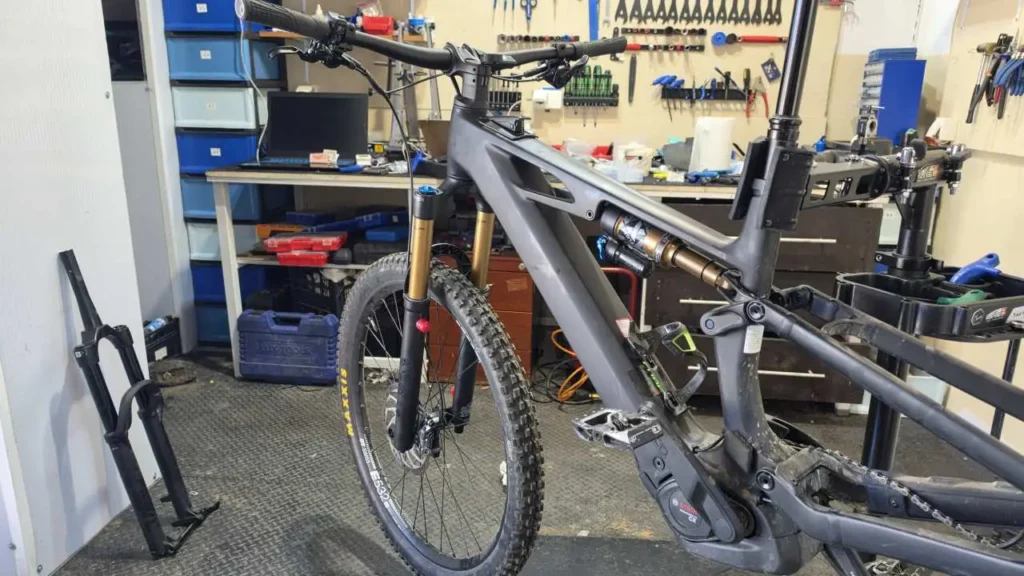
Sag. For most Trail and Enduro riding, aim for suspension sag of 25–35% of travel. Measure it accurately, in your full riding kit.
Rebound. Controls how fast the suspension returns after compression. Set it so it returns quickly, but without bouncing.
Compression. Split into low-speed (climbing, light braking) and high-speed (big hits).
In-depth guide. A step-by-step walkthrough of setting sag is in our suspension tuning guide.
Everyday maintenance
Clean the stanchions. After every ride, wipe dust and mud off the stanchions and seals with mild soap and water.
Never use a pressure washer. Don't aim a high-pressure jet at the seals.
Air pressure. Once a month, check the pressure in the fork and shock air chambers with a dedicated suspension pump.
Service intervals
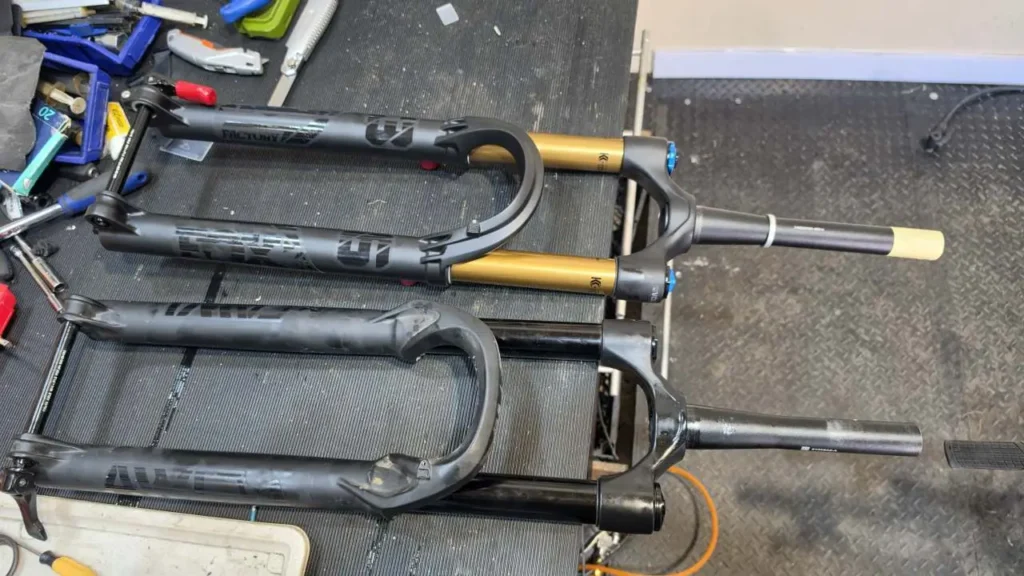
Lower leg service. Replacing the lower leg oil and foam rings. The usual fork service interval for this is about every 50 hours of riding or six months.
Full service. Complete disassembly, cleaning and replacement of all oils and seals every 100–200 hours or once a year. A job for a professional.
For RockShox. The lower leg service procedure is described in the RockShox lower leg service guide.
Tip: don't wait for small faults to turn into expensive failures. Leave fork and shock servicing to the certified technicians at the MTB Evolution workshop, and check the manufacturer's recommendations on the Fox website.
FAQ
What's the right sag?
For most Trail and Enduro riding, aim for 25–35% of travel. Downhill conditions usually call for a little more.
Air or coil?
Air is light and adjustable, coil is reliable and linear. Air suits Trail and Enduro, while coil suits Downhill and rough conditions.
How often should I service my suspension?
A lower leg service about every 50 hours or six months, and a full service every 100–200 hours or once a year.
Can I wash my suspension with a pressure washer?
No. The high-pressure jet gets behind the seals and flushes out the lubrication. Use mild soap, water and a soft cloth.