Tech tips · Drivetrain and chain
Bike cables and housing
Types, symptoms and replacement
Bike cables and housing are the “nervous system” of your bike. If they are dirty or worn, even the most expensive derailleur won't run smoothly. Here is how they differ, when to replace them and what you should never mix up.
Written by Marko Ristivojević, Master Bike Mechanic
In short
When should you replace bike cables and housing? When the brake lever feels stiff, the shifting is hesitant, the cable is rusty or the outer housing is cracked. Brake and shift housing are not interchangeable.
When to replace
Stiff lever, hesitant shifting, damage
Brake cables
Around 1.5–1.6 mm thick
Shift cables
Around 1.1–1.2 mm thick
Goes to the workshop
Internal cable routing, combined replacement, safety-related faults
Author: Marko Ristivojević, Master Bike Mechanic · BK MTB Evolution, Istočno Sarajevo
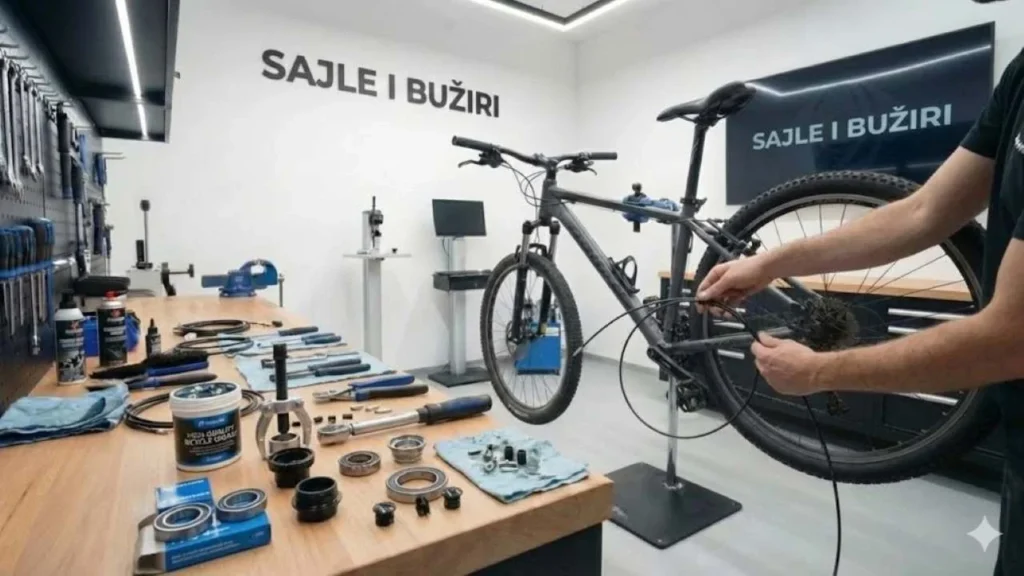
Evolution mini workshop: cables and housing
Cables and housing are often overlooked, yet both your braking and shifting depend on them. Understanding bike cables and housing can save your ride and cut your maintenance costs.
For replacement and adjustment, our cable and housing replacement service in Istočno Sarajevo is here for you.
Why bike cables and housing are an inseparable team
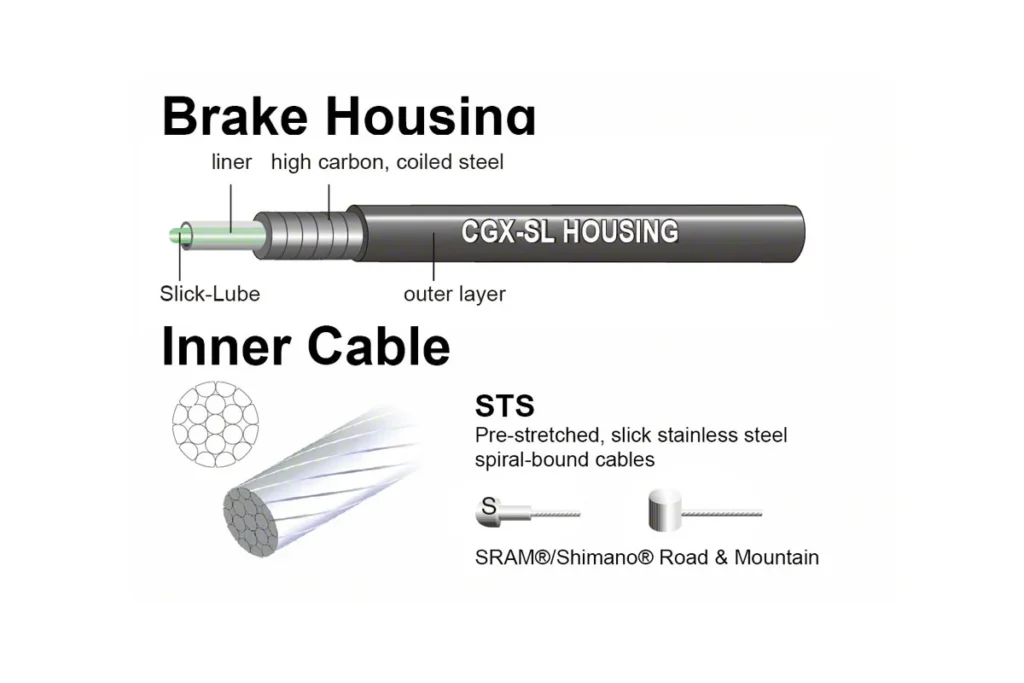
The inner steel wire (cable) transmits the pull from the lever to the brake or derailleur
The outer sleeve (housing) absorbs the compression force and guides the cable along the frame
No compression – quality housing doesn't squash, so every movement of your hand goes straight to the derailleur or brake caliper
Brake and shift cables: what's the difference?
Brake cables are thicker (usually 1.5–1.6 mm) because they have to withstand the force of a sudden stop
Brake cable housing has a spiral steel structure and is flexible and resistant to bursting under pressure
Shift cables are thinner (around 1.1–1.2 mm) so they move more easily through the derailleur
Shift housing uses longitudinal steel wires that eliminate compression, so shifting is precise with no lag
Safety trap: never mix up housing
Shift housing on a brake is a dangerous mistake that often leads to brake failure
The longitudinal wires spread apart under braking force, and the cable can punch through the plastic
Check what the housing is made for before installing it; don't rely on looks
If you're not sure, it's better to visit a workshop than to take a risk on a descent

Internal cable routing through the frame
It protects against mud and rain and looks cleaner, but replacement is considerably more complicated
A magnet or some patience – it can sometimes be hard to feed the cable through the narrow channels of a carbon or aluminium frame
Use a liner (a thin plastic tube) when replacing to make the job easier and stop the cables rattling against the frame
How to tell when bike cables and housing need replacing
Stiff brake lever – you need more finger effort
Hesitant shifting – the derailleur skips or is slow to drop to an easier gear
Physical damage – a rusty cable or cracked outer housing means replacing it right away
Pro tip: shift cable replacement and housing renewal is the quickest service that instantly changes how your bike feels. You can book an appointment for cable and housing replacement, and for the basics of working with cables, check out the Park Tool repair help library.
FAQ: Common questions about cables and housing
Can I lubricate old cables and housing?
Partly, but it's only a temporary fix. Oil can damage the inner liner of the housing and attract dirt, so a new cable and housing is always the better option.
What's the difference between regular and Teflon cables?
Teflon (PTFE) cables have a coating that drastically reduces friction. They cost more, but give a smoother feel at the levers.
Can I use shift housing on a brake?
No. The longitudinal wires of shift housing aren't built to withstand braking force and can spread apart.
When to replace bike cables?
When the brake lever is stiff, shifting is hesitant, or the cable or housing is physically damaged.