When your MTB wheels roll off a mountain trail and onto hot city asphalt, the rules of the game change drastically. Cycling in traffic is no toy activity. Your bike is a legally recognized vehicle, and it demands full concentration, knowledge of the rules and a defensive riding style.
Your machine may be worth more than the used cars around you, but in a collision with steel, you always lose. That's why it's crucial to understand how to survive the "urban jungle" on the way to your favorite trail.
Basic rules for cycling in traffic
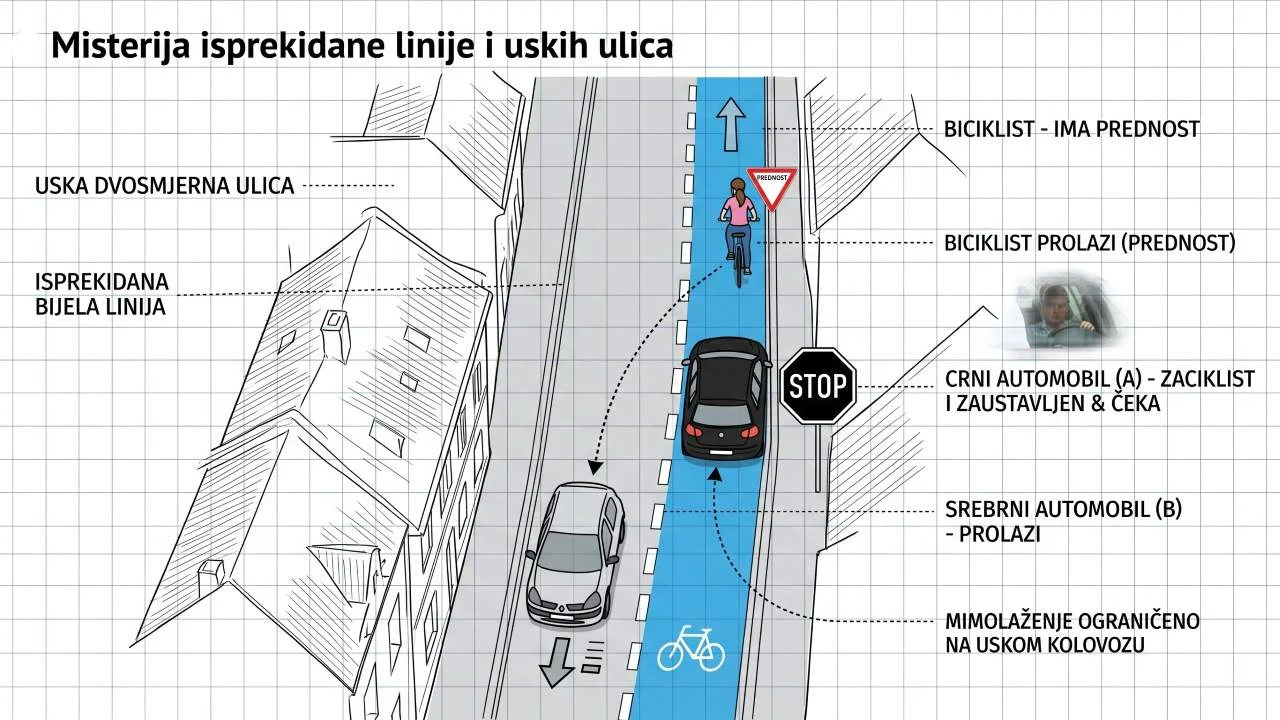
The Law on Road Traffic Safety in BiH is clear: cyclists are equal road users. That means running a red light or riding against the flow of traffic isn't "street smarts". It's breaking the law, and it ruins the reputation of the entire MTB community.
- Ride on the right: Stay as close to the right edge of the carriageway as is safe, but not right on top of the drain (manhole).
- No sidewalks: If there is no bike path, a cyclist belongs on the road, not on the sidewalk among pedestrians.
- Obey signals: A stop sign applies to you exactly as it does to a semi truck.

Defensive riding and road positioning
The biggest mistake MTB riders make on asphalt is hugging the curb too tightly. It invites drivers to make risky overtakes without changing lanes.
The door zone ("dooring")
When you pass parked cars, always leave at least one meter of clearance. A suddenly opened door is one of the most common causes of serious injuries when you're out cycling in traffic.
Visibility and communication on the road
Being invisible means being in danger. Your "stealth" black MTB kit is great for the forest, but dangerous in the city.

- Hand signals: Always announce your turn. Left arm extended means left, right arm means right. Be predictable.
- Eye contact: At intersections, try to catch the driver's eye. If they aren't looking at you, assume they can't see you.
- Lighting: A white light at the front and a red one at the back are a legal requirement at night and in low visibility.
Gear and visibility: ride to be seen
Most accidents happen because drivers don't see the cyclist in time. That's why, when cycling in traffic, your gear matters as much as your skills.
- Front and rear lights. Use a white front light and a red rear light in poor visibility during the day too, in rain or at dusk.
- Reflective elements. Reflectors on pedals, wheels and clothing make you visible from the side.
- Helmet. It won't protect you from a collision with a car, but it reduces the severity of head injuries in a fall.
- Bell. A short ring warns pedestrians and other cyclists without raising your voice.
- Working brakes. Check both brakes before every city ride, because braking distance in traffic leaves no margin for error.
Hand signals and communication
Announce a turn with your arm extended toward the side you're turning to, and a stop with a raised arm or your palm facing backward. Make eye contact with drivers at intersections and never assume they see you. When you ride in a group, call out obstacles, potholes and parked cars loudly and clearly.
Preparing your bike for city riding
When you head from the trail into town, run through a basic check: tire pressure, brakes, lights and chain. Take a look at our guide to the basic service before every ride, and if something isn't right, book a bike service. Check the current regulations in the official sources for your entity or canton, because the rules can change. Cycling in traffic is only as safe as we are careful.
Sources and further reading
- Bicycle lighting (Wikipedia) – types of lights and visibility
- Bicycle helmet (Wikipedia) – why a helmet matters
Frequently Asked Questions (FAQ)
A helmet is recommended for everyone and legally required for children. As a responsible MTB rider, you should never head out on the road without one.
No. By law, a cyclist must dismount and walk the bike across a pedestrian crossing (the "zebra"), unless there is a marked bike path across the carriageway.
The same speed limits apply to a bike as to other vehicles on that section of road, except in traffic-calmed zones.
Respect the law, protect your head
Knowing the rules isn't just bureaucracy, it's your shield on the asphalt.
For all the details, consult the official Law on the Basics of Road Traffic Safety in BiH.
See you on the trail – safe and responsible!