Road Safety and Education for Children (Level 1)
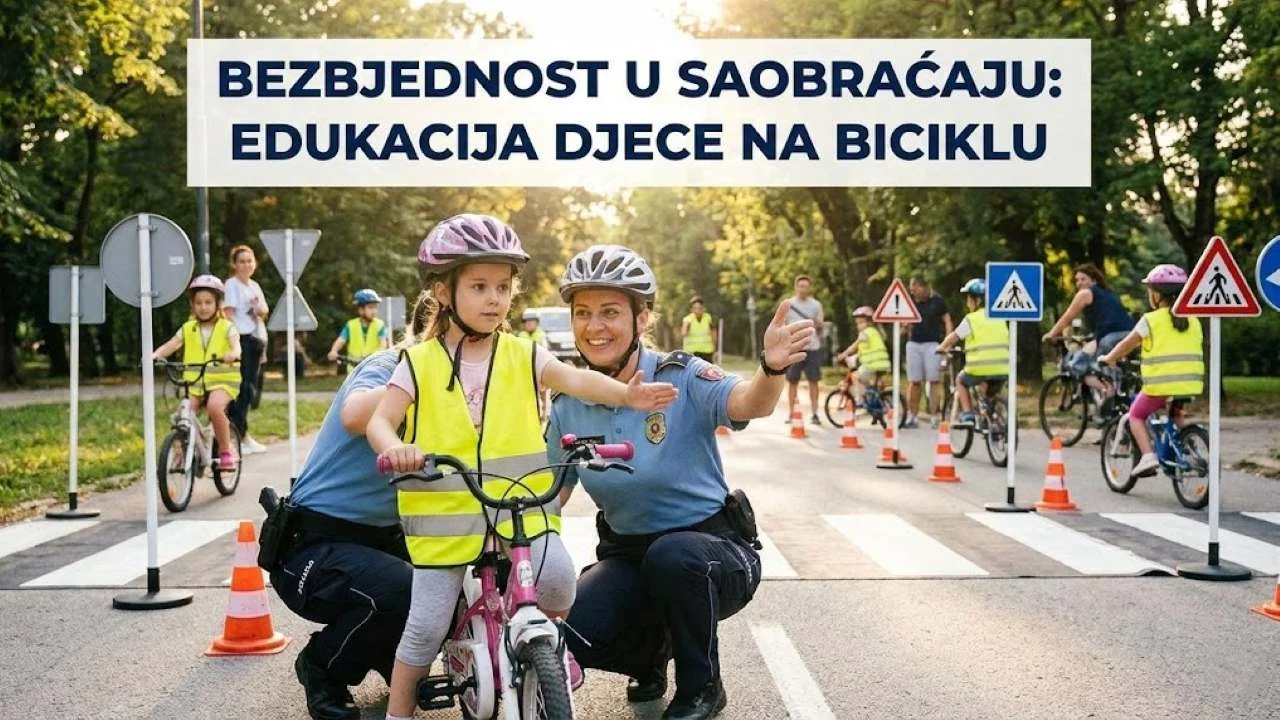
Goal: Full compliance with Bosnia and Herzegovina's legislation and maximum kids bike safety on the road.
This protocol builds children's road safety through education about the rules, anticipating danger and using protective gear. We teach children to be visible, predictable and never to assume that a car driver has seen them.
Glossary for Young Cyclists
1. Legal Framework and Kids Bike Safety (ZOOBS BiH)
These are the basic conditions a cyclist must meet to ensure kids bike safety in traffic:
| Rule | Legal provision (BiH) | Note |
|---|---|---|
| Age | A person who has turned 12 years old may ride a bicycle on a public road (Article 99). | Children from 9 years old may ride when accompanied by a person older than 16. |
| Where to ride | On a bike path/lane or as close as possible to the right edge of the roadway (Article 99). | The sidewalk is for pedestrians, unless it is marked as a bike path. |
| Group riding | Riders must travel one behind the other (single file). | Riding side by side is prohibited (Article 99). |
| Speed | The maximum speed on a bike path is 25 km/h. | Article 46 of ZOOBS. |
2. Protective Gear and Visibility
The law is very strict about visibility and protection. Don't be invisible!
Mandatory for children under 18! Recommended for everyone, for greater kids bike safety and a safer ride overall.
Vest: Mandatory at night.
Lights: White at the front, red at the rear (Article 102).
3. Child-Specific Rules (Carrying and Riding)
| Situation | Rule |
|---|---|
| Carrying a child | A rider older than 18 may carry a child up to 8 years of age. |
| Seat | A special seat must be fitted, firmly attached to the bike and suitable for the child's age. |
| Child's helmet | A child who is carried or rides independently MUST wear a fastened helmet. |
| Pedestrian areas | Playing and riding a child's bike on the roadway is prohibited (Article 106). |
BANS & PENALTIES (ZOOBS BiH)
These are the violations that most often put kids bike safety at risk. The law expressly prohibits:
- Headphones: Using headphones in both ears is prohibited. (One is allowed.)
- Phone: Using a phone is prohibited (except hands-free).
- Hands and feet: Letting go of the handlebars or taking your feet off the pedals is prohibited.
- Towing: Holding on to another vehicle or towing other vehicles/animals is prohibited.
- Zebra crossing: Riding across a pedestrian crossing is prohibited! (You must dismount and walk the bike.)
4. Penalty Provisions (Fines)
Breaking these rules brings not only the risk of injury, but also a hit to the parents' wallet.
| Violation | Fine (BAM) |
|---|---|
| Riding without lights or a reflective vest (night/fog) | 40.00 KM |
| Using a mobile phone / headphones in both ears | 40.00 KM |
| Riding without holding the handlebars (both hands) | 40.00 KM |
| A child under 12 riding on a public road (unaccompanied) | 40.00 KM (Parent) |
| Failing to respect right of way | 50.00 - 250.00 KM |
5. Skills Course: Drills for Riding in Traffic
Knowing the law is not enough. A child must have the skills.
Practise turning your head back without turning the handlebars. Key for changing lanes.
Essential for giving hand signals when turning. Practise riding while holding the handlebars with one hand.
If a child wobbles, a car can't safely pass them.
Reacting to sudden danger (a car, a dog).
6. The Parent's Role: "Wingman"
Child in FRONT, Parent BEHIND.
This is the best formation for kids bike safety. The parent can see the child, can guide them by voice ("Stop!", "Right!") and uses their own bike as a "shield" against cars approaching from behind.
7. Communication (Signals)
A child must learn three basic hand signals:
- Left: Left arm extended straight out.
- Right: Right arm extended straight out.
- Stop: Arm raised up, palm open.
Checklist for parents:
Pro Tips for Parents
- Never with headphones: Hearing is a second pair of eyes. A child must be able to hear a car.
- Lead by example: If you don't wear a helmet, neither will your child. If you run a red light, your child will think it's fine.
- Nutrition: Don't ride hungry. A drop in blood sugar makes children lose focus.