Bicycle history begins in 1817 with a wooden "running machine" without pedals, and today it reaches carbon mountain bikes and e-bikes with smart software. The bicycle is an essential part of modern life, used for recreation, sport, transport and adventure, but its development is much longer and more interesting than most people assume.
Bicycle history in brief:
- In 1817 Karl von Drais introduced the draisine (laufmaschine), a wooden two-wheeler without pedals.
- In the 1860s Pierre and Ernest Michaux added pedals to the front wheel, creating the velocipede.
- In the late 1880s the "safety bicycle" with equal-sized wheels and a chain became the basis of every bike we ride today.
- The mountain bike (MTB) was born in California in the 1970s, and e-bikes define the 21st century.
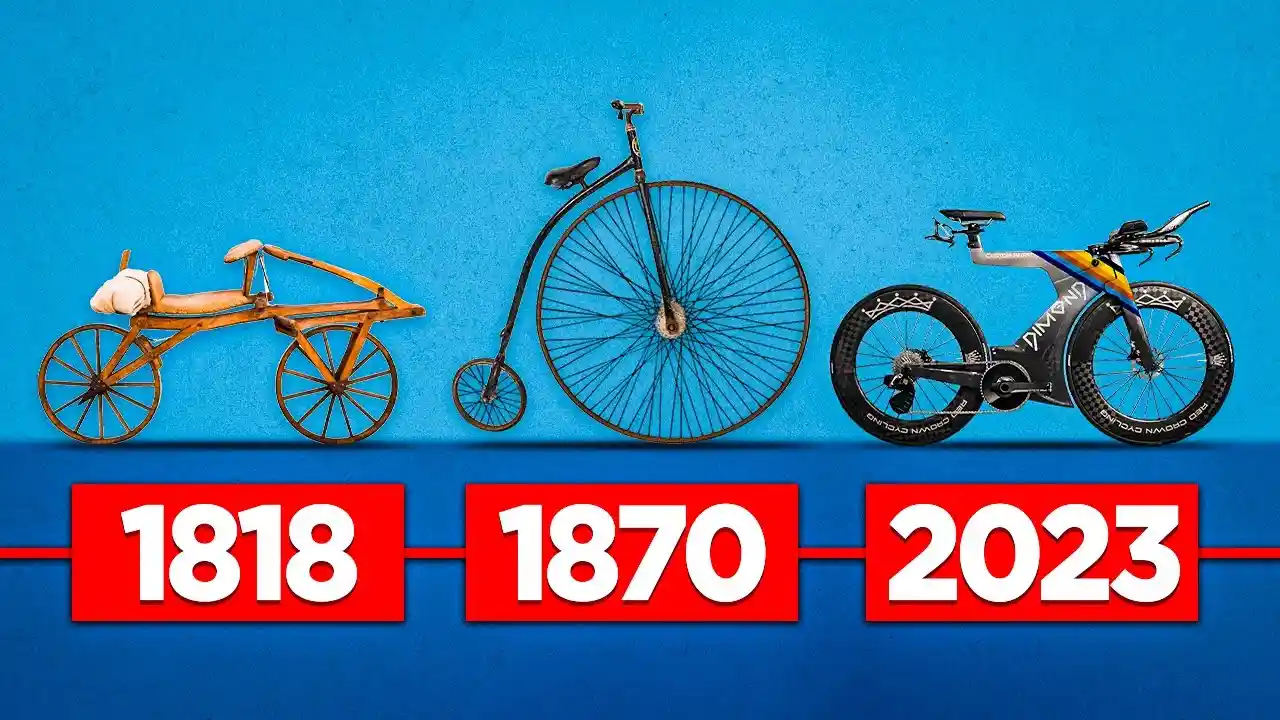
Bicycle History: The First Steps and the "Walking Machine"
It all started in the early 19th century, when the German baron Karl von Drais introduced the laufmaschine, or draisine, in 1817: a wooden invention without pedals that you moved by pushing off the ground with your feet. The draisine is considered the direct ancestor of today's bicycle, because it showed for the first time that you can keep your balance on two wheels in a line while moving.
The Velocipede: The First Bike with Pedals
During the 1860s the French inventors Pierre Michaux and his son Ernest added pedals to the front wheel of the draisine. The result was the velocipede, also known as the "boneshaker" because of its wooden wheels and uncomfortable ride. Crude as it was, it was the first bicycle where the rider turned the wheel with pedals.
High-Wheelers and the Safety Bicycle
In the second half of the 19th century, bikes with an enormous front wheel appeared, the so-called penny-farthing. A bigger wheel meant more speed per pedal turn, but these bikes were unstable and falls over the handlebars were common. They became popular with wealthier and braver riders.
The real revolution came in the late 1880s with the safety bicycle: two wheels of equal size, a chain and power transfer to the rear wheel. Air-filled tires soon followed and made riding far more comfortable. That design is still the basis of every bicycle today.
| Period | Milestone | What it brought |
|---|---|---|
| 1817 | Draisine (Karl von Drais) | Balance on two wheels, no pedals |
| 1860s | Velocipede (Michaux) | Pedals on the front wheel |
| 1870s | Penny-farthing | Higher speed, but poor stability |
| Late 1880s | Safety bicycle | Equal wheels, chain, rear-wheel drive |
| 20th century | Gears, lighter frames | Specialization: road, MTB, BMX, gravel |
| 1970s | Mountain bike (California) | Wide tires, strong brakes, off-road riding |
| 21st century | E-bike | Electric assistance while pedaling |
Technical Innovations Through the 20th Century
Over the 20th century the bicycle became a global presence. Gear shifters, lighter aluminum and carbon fiber frames, and progress in tires and brakes led to specialization: MTB (mountain), road, gravel, BMX, trekking, city and many others. The bike grew from a means of transport into sports equipment and a tool for recreation. If you are wondering which type suits you, our guide on how to choose the right bike is a good place to start.

Off-Road: The Birth of the MTB
The history of mountain biking begins in the 1970s in California, when enthusiasts modified old bikes with wide tires to race down mountain roads. Purpose-built frames, multi-speed drivetrains and, in the early 1990s, front suspension forks soon followed. Today mountain bikes also have rear suspension, which we cover in our article on full suspension bikes, and our MTB terminology guide explains the jargon of that world. To see where it all leads in practice, check out the best MTB trails in East Sarajevo.
Electric Bikes: A New Era of Mobility
The newest chapter of bicycle history is electric. In the 21st century e-bikes have become hugely popular, with an electric motor assisting the rider as they pedal. They are especially useful in the city and on longer rides, and in the mountains they have changed the way riders tackle climbs. We describe the pros and cons of e-bikes in a separate article.

Conclusion
Bicycle history is a story of innovation, the need for mobility and constant development. From wooden models without pedals to today's smart e-bikes, the bicycle has kept its charm, its practicality and its ability to connect us with nature and freedom.
Whether you ride a classic or the latest e-MTB, a bike in good shape is a safe ride.
Book a bike serviceFrequently Asked Questions
Who invented the bicycle?
The forerunner of the bicycle, the pedal-less draisine, was introduced by the German baron Karl von Drais in 1817. Pedals were added in the 1860s by Pierre and Ernest Michaux.
When did the bicycle as we know it appear?
In the late 1880s, with the safety bicycle, which had two wheels of equal size and chain drive to the rear wheel. That design is the basis of every bike today.
When was the mountain bike invented?
The mountain bike (MTB) was born in California in the 1970s, when riders modified bikes with wide tires to ride on mountain roads.