Cold weather MTB clothing isn't about one thick jacket. It's about a system of layers you add and remove as your effort and the temperature change. On a climb you're sweating within ten minutes, and on a descent the wind chills you in two. As someone who rides and maintains the trails on Ilinjača even when mornings are below freezing, I can tell you that most bad autumn rides don't happen because of the cold. They happen because of the wrong clothes: too much on at the start, too little at the top and a wet shirt on the descent.
In short, from this guide:
- The MTB layering rule: the base layer wicks sweat, the mid layer keeps you warm, the outer layer blocks wind and rain.
- You should feel slightly cold at the start of the ride; if you're warm in the parking lot, you'll overheat on the first climb.
- Don't wear cotton, not even as a base layer: once it soaks up sweat, it chills you on the climb and on the descent.
- Hands, feet and ears lose heat first; below 5 °C you need long-finger gloves with a membrane, shoe covers and a headband or cap under your helmet.
- Always carry one dry layer in your pack for the top of the climb or the descent, in autumn and in winter.
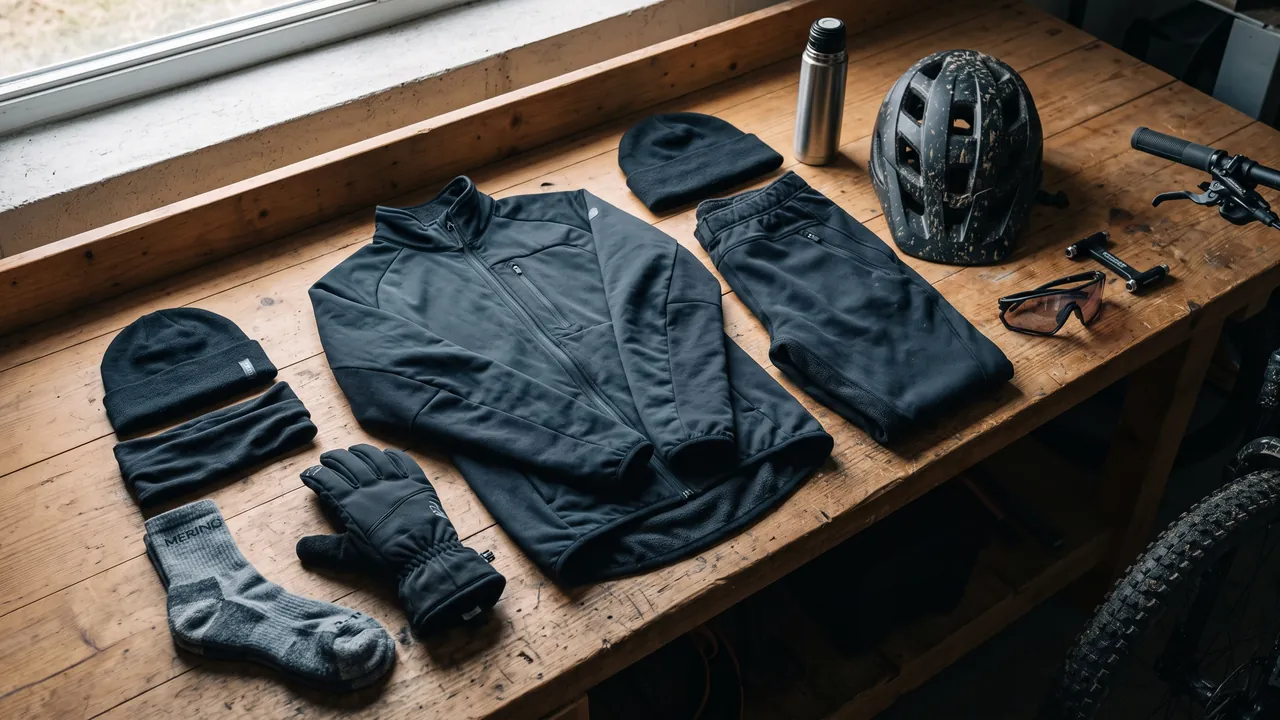
Why Cold Weather MTB Clothing Is a Different Story
On a road bike the effort is fairly even. On a mountain bike you alternate between steep, slow climbs and fast descents through the forest. On the climb your body produces a lot of heat, but you're moving too slowly for the wind to cool you. On the descent it's the opposite: you hardly pedal, and the wind and cold forest air hit your damp clothes. That is why cold weather MTB clothing has to wick sweat first of all and let you regulate heat quickly: a chest zipper, a layer that fits in your pack, gloves you can swap.
Layering wasn't invented for cycling. Hikers and mountaineers use the same approach, and there's a good general overview in the REI layering guide. On a mountain bike you just have to adapt it to bigger and faster changes in effort. If you're wondering what to wear mountain biking in cold weather, start with the system below.
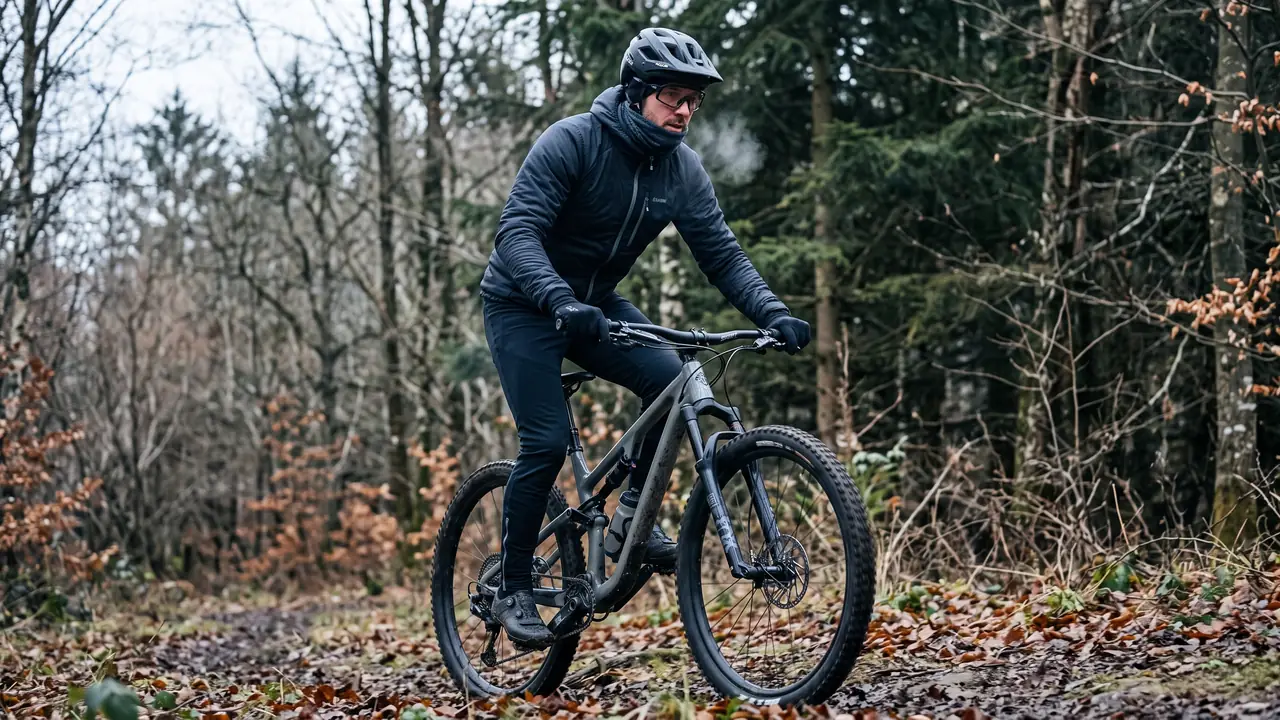
The Layering System: Base, Mid and Outer Layer
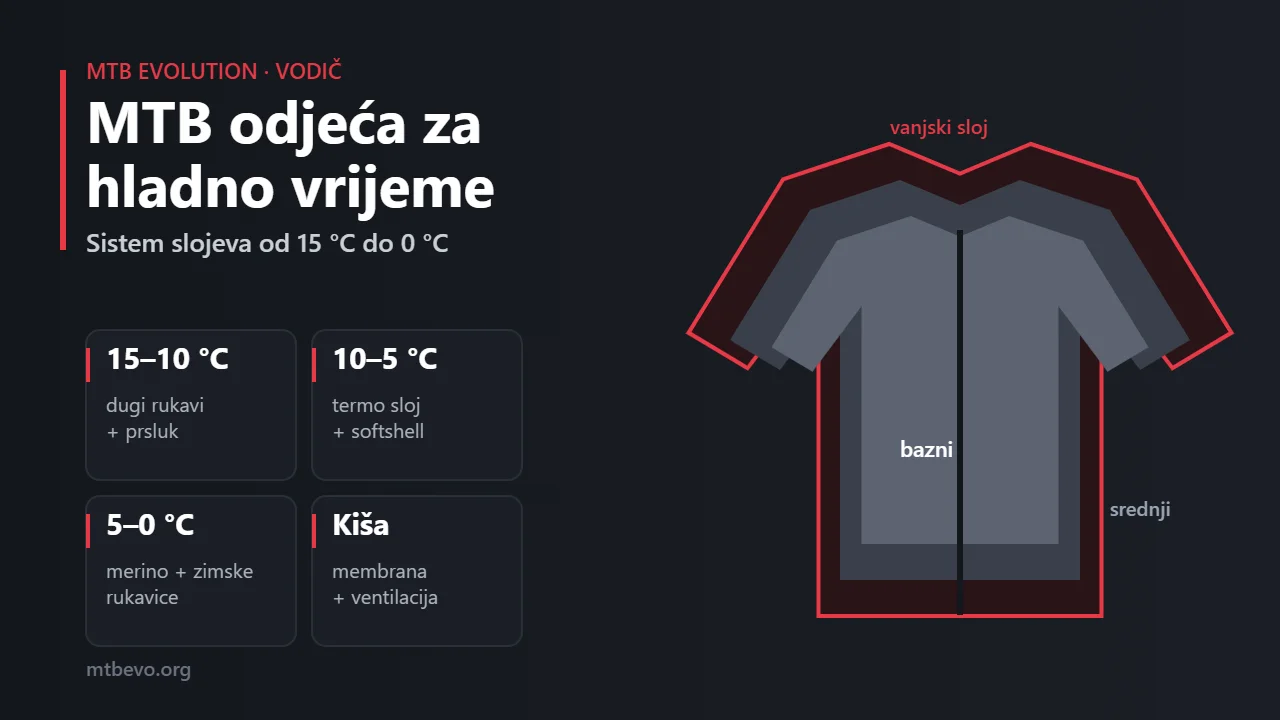
Every good cold weather MTB clothing setup is built from three layers, each with a different job. Once you understand what each one does, it's easy to put together a combination for any day. This mountain bike layering system works from 15 °C down to freezing.
Base Layer: Wicks Sweat
This is the layer next to your skin and the most important part of the whole system. Its job isn't to warm you but to move sweat away from your skin. Merino wool keeps you warm even when damp and doesn't hold odor, but it dries more slowly. Synthetics (polyester, polypropylene) dry faster and are cheaper. For short, intense rides synthetics work well, while merino is better for longer tours and days with a lot of standing around.
Mid Layer: Holds the Heat
A long-sleeve thermal jersey, a thin fleece or a vest. On the mountain bike the vest has proven the most useful: it warms your torso while your arms stay free and don't overheat on the climb. It's easy to take off and fits in a pocket or pack.
Outer Layer: Blocks Wind and Rain
A wind-blocking jacket (softshell) or a rain jacket (membrane). For MTB choose cuts that are longer in the back and have underarm vents. A fully waterproof jacket without ventilation gets soaked with sweat from the inside on a climb, so on dry days a softshell works better.
Table: What to Wear at Each Temperature
This is the framework for cold weather MTB clothing that has worked well for me as a starting point. Everyone feels the cold differently, so adjust the table to yourself after a few rides. Moisture and wind make it feel colder than the thermometer says.
| Temperature | Torso | Legs | Hands, head, feet |
|---|---|---|---|
| 15 to 10 °C | Short-sleeve base layer, long-sleeve jersey or arm warmers, vest in your pack | Shorts, knee warmers or pads | Thin long-finger gloves |
| 10 to 5 °C | Long-sleeve base layer, thermal jersey, softshell or vest | Long MTB pants or shorts with leg warmers | Gloves with light lining, headband over the ears |
| 5 to 0 °C | Merino base layer, thermal mid layer, softshell jacket | Thermal long pants | Winter gloves with a membrane, cap under the helmet, thick socks, shoe covers |
| Rain, any temperature | Base layer, waterproof jacket with ventilation | Waterproof pants or shorts over thermal tights | Waterproof gloves, a spare pair in your pack |
Hands, Feet and Head: Where Heat Escapes Fastest
When people talk about cold weather MTB clothing, everyone thinks of the jacket, yet cold fingers and wet feet are what most often ruin a ride.
Gloves
Cold hands mean poor control of the brakes and handlebar, which on a descent is a safety issue, not just a comfort one. Below 10 °C use long-finger gloves with light lining, and below 5 °C switch to winter MTB gloves with a windproof membrane. Gloves that are too thick reduce the feel at the brake levers, so two pairs of medium thickness are better than one that's too bulky.
Feet
On a descent your feet barely move, and ventilated summer shoes let in cold air and water. Shoe covers or winter MTB shoes solve most of the problem. Don't squeeze overly thick socks into a tight shoe: when the foot is compressed, blood flow drops and it gets cold faster.
Head and Ears
A thin cap or headband under the helmet must not shift the helmet or change how it sits on your head. If a cap forces you to loosen the helmet, choose a thinner one. A buff around your neck is a cheap and very useful item: pull it up over your face on the descent and drop it on the climb.
Climbing and Descending: Managing Heat During the Ride
Even the best cold weather MTB clothing doesn't help if you don't use it smartly during the ride.
- Before a long climb, unzip or take off the vest.
- At the top, before the descent, put on your wind jacket or dry layer right away, even if you don't feel cold. Your body cools within seconds of you stopping pedaling.
- Don't stand around at the top in wet clothes. Photo breaks are the coldest part of an autumn ride.
- Drink and eat even when you're not thirsty; dehydration and an empty stomach reduce your body's ability to produce heat.
In autumn, the one who freezes isn't the one who dressed lightest, but the one who sweated through the climb and had nothing dry to put on at the top.
— Marko Ristivojević
Bike and Gear for Autumn and Winter Rides
Cold weather MTB clothing is only half the story; the other half is the bike. Mud, leaves and lower temperatures change how tires and brakes behave. Drop your tire pressure slightly for better traction (our bike tire pressure guide gives a starting point), check your pads more often because mud speeds up wear (see the brake pads guide), and remember that shorter daylight means you need front and rear lights even for a ride that "won't take long." I cover this in detail in the guide preparing your MTB for winter, and if you train through the winter, take a look at winter MTB training and building your fitness base.
For essential protective gear such as helmet, glasses and pads, there's a separate guide, trail safety and essential MTB gear. If you do take a fall on a cold, slippery trail, read safety on MTB trails: risk assessment, crashes and first aid. For riding at dusk, the tips in the article on night riding in the bike park will also help.
What to Carry in Your Pack on an Autumn Ride
- a dry base layer or thin thermal jersey to change into at the top;
- a wind jacket or vest that fits in a pocket;
- spare gloves, especially if it's damp;
- a thermos with a hot drink on longer rides;
- lights, a charged phone and basic tools.
Cold Weather MTB Clothing at Bike Park Evolution
Bike Park Evolution on Ilinjača has free access 24/7, and for many riders autumn is the best part of the season: the trails are softer, the crowds are smaller and the forest provides shelter from the wind. The rhythm in a bike park is different from a tour: short descents and pushing or riding back uphill, so a vest over a base layer and gloves that don't get in the way of braking are most useful here. Before the muddy season, stop by and we'll check your brakes and suspension.
Getting your bike ready for autumn and winter rides? We'll check your brakes, tires and suspension.
Book an appointmentHow to Put Your Layers Together Before the First Ride
The best cold weather MTB clothing is the kind you can adjust during the ride. Before you leave, check the forecast, pack a spare layer and dress so that you feel slightly cold in the parking lot.
- For mornings of 5 to 10 °C, a long-sleeve base layer, a thin mid layer and a light wind jacket are enough.
- Below 5 °C, add a thicker mid layer and long-finger gloves, because your hands are the first test of your outfit.
- After the ride, change out of the wet base layer right away, since the body cools fastest at rest.
The same rule applies at every level: when you build your outfit in layers, autumn MTB riding is more comfortable and safer. Get your bike ready in time at the bike service, keep it clean with this guide to bike cleaning, lubing and winter prep, and for longer tours also read the guide to riding in rain and mud.
Frequently Asked Questions
What cold weather MTB clothing works at 5 °C?
A long-sleeve base layer, a thermal jersey or vest and a softshell jacket, long pants or shorts with leg warmers, long-finger gloves with lining and a headband over your ears under the helmet. You should feel slightly cold at the start.
Is merino better than synthetic for a base layer?
Merino keeps you warm even when damp and doesn't hold odor, so it's better for long rides and cold days. Synthetics dry faster and are cheaper, so they work well for shorter, intense rides.
How do I keep my hands from getting cold on descents?
Wear gloves with a windproof membrane below 5 °C, put on a wind jacket before the descent so your torso holds its heat, and carry a spare dry pair of gloves in your pack for damp days.