
Winter MTB training is the answer to the biggest challenge every serious rider faces. Cold, mud and shorter days push you into your comfort zone, and that is exactly what we want to avoid. This is not the time to lose fitness, but the time to commit to winter MTB training that builds your base. We will focus on how to stay faster and stronger, no matter the temperature.
In short, from this guide:
- Do most of your winter volume in Zone 2 (endurance), with one tempo session in Zone 3 each week.
- Train strength two to three times a week: squat, deadlift, overhead press and carries.
- A smart trainer, a virtual training app and a high-flow fan are the foundation of indoor training.
- A week has two to three indoor sessions, one to two strength sessions, a long ride on Saturday and one full rest day.
Why Winter MTB Training Starts With a Base
Summer is all about high intensity and race-specific endurance. Winter, however, is ideal for building a strong aerobic base. Without a solid base, your summer form will quickly collapse under load.
The main goals of the training process are resilience and maximum training volume. We don't want you to push your VO2 max now. We want your body to adapt to long, low-intensity work.
Pillar one: indoor training
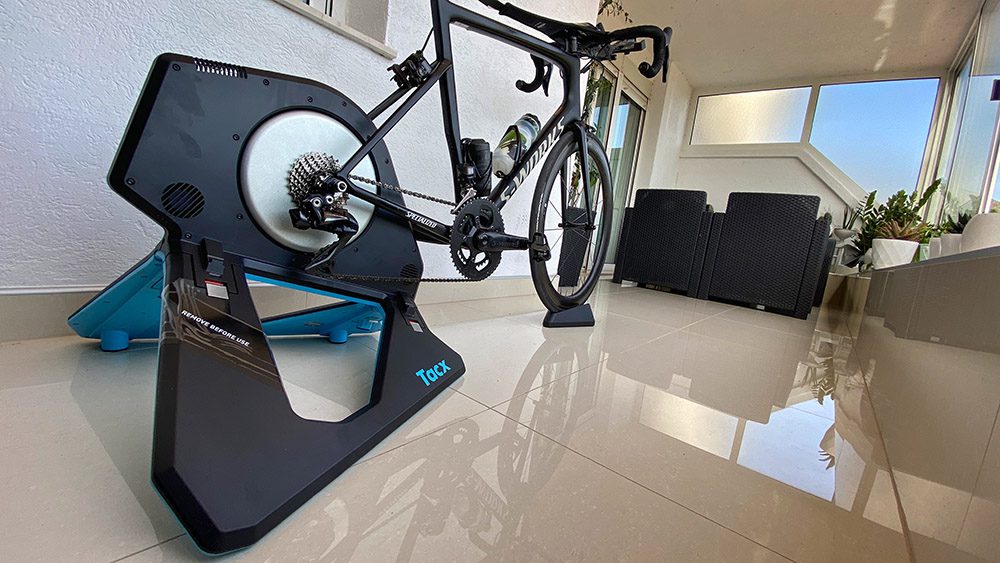
Smart trainers have become essential equipment for winter MTB training. They let you control every watt and complete a precisely structured session. Forget aimless pedalling – every session needs a clear purpose.
Equipment you need:
- Smart trainer (Garmin/Tacx, Wahoo Kickr, Saris H3, Tacx Neo).
- Virtual training app (Zwift, TrainerRoad, Wahoo SYSTM).
- High-flow fan (cooling is critical, trust me).
The most important thing is to focus on long sub-FTP power intervals. Good indoor trainer workouts stay in Zone 2 (endurance) and Zone 3 (tempo) to build metabolic efficiency. If you need help setting your zones, our cycling base training guide with an FTP test walks you through it.
Pillar two: strength and mobility training
MTB is not just cardio; it is a full-body sport that demands explosiveness and stability. The gym is your second home during the cold months. Winter form starts with lifting.
Skip isolation exercises and focus on compound movements. Strength training for cyclists should build power that transfers directly to the trail.
Exercises you must not skip:
- Squat: The foundation of leg and glute strength. Use a moderate to heavy load.
- Deadlift: For strength in your back, core and posterior chain. Essential for long descents.
- Overhead Press: Key for shoulder strength and upper-body stability.
- Carries: A kettlebell or dumbbell in one hand – brutally good for core stability and anti-rotation.

Nutrition and Recovery in Cold Conditions
Your body burns extra energy to maintain its temperature. That means your winter nutrition has to be precise, and fuelling matters just as much in winter MTB training as it does in summer. Don't fall for the “off-season” diet.
A steady intake of quality protein is key for muscle recovery. Don't forget hydration either, even when it feels like you aren't losing much fluid. Dehydration significantly reduces performance.
Preventing colds and injuries
Never start a workout when you are run down. In cold conditions, that can lead to serious respiratory problems. Proper layered clothing is a must for training outside.
Microcycle Structure
Here is what a good seven-day training microcycle looks like:
| Day | Activity | Intensity / Focus | Duration |
|---|---|---|---|
| Monday | Strength Training | Compound exercises, 5x5 system | 60-75 min |
| Tuesday | Indoor Training | Long base ride (Zone 2) | 90-120 min |
| Wednesday | Rest / Active Recovery | Easy walk, yoga | Optional |
| Thursday | Indoor Training | Tempo intervals (Zone 3) | 60-90 min |
| Friday | Strength Training | Explosiveness and core | 45-60 min |
| Saturday | MTB Trail (if possible) | Long ride with an emphasis on technique | 120+ min |
| Sunday | Full Rest | Recovery is just as important as training | 0 min |
With this structure, I guarantee you will start spring with an edge over the competition. Winter MTB training built on a solid base is your secret ingredient for winning. For more on the rest side of the equation, see our recovery protocol for recreational riders.
The most common winter mistake I see is pushing intensity too early. A base is built patiently: keep most of your sessions easy, and let the bike get a check of the chain, brakes and shifting before the season.
— Marko Ristivojević, Bosch eBike Expert and Master Bike Mechanic
Sample Week of Winter MTB Training
The plan below is a framework for a rider with four to five hours a week. Adjust it to your own experience and health.
- Monday: rest or 20 minutes of mobility work.
- Tuesday: indoor Zone 2 session, 60 to 75 minutes, steady effort.
- Wednesday: strength: squats, deadlifts and core, 30 to 40 minutes.
- Thursday: short intervals at moderate intensity or an easy ride.
- Saturday: longer outdoor ride in Zone 2 when conditions are safe.
- Sunday: active recovery or a walk.
Winter MTB training doesn't have to be complicated, but it has to be consistent. If you are starting from scratch, add just two sessions a week and bring in a third once your legs adapt. Prepare your bike for outdoor rides with cold weather MTB clothing and studded tires if there is ice. Heart rate and power zones are explained in the guide to training zones in cycling, and a bike service checks your bike before the season. If the drivetrain or brakes need attention, you can book a service online. If you have any health concerns, consult a doctor before increasing your training load.
Related Links and Resources
- Internal Guides:
- Winter Bike Preparation: Key Service and Maintenance
- Zwift: A Detailed Guide to Indoor Cycling
- Training Zones: The Key to Cycling Efficiency
- Smart Gear and Gadgets for Cyclists
- FOX GRIP2 Fork Setup: A Detailed Guide (Related to technical setup)
- MTB Suspension: A Detailed Guide to Forks and Shocks (Related to general service)
- Basic Bike Tools: A List for Every Rider
- External Resources:
Sources and Further Reading
- Interval training (Wikipedia) – principles of interval training
- Cycling power meter (Wikipedia) – measuring power on the trainer
Need a personalized training plan? If you need help structuring your plan or advice on indoor training gear, get in touch.
Request a personal planFrequently Asked Questions
Why is a fan essential for an effective indoor workout?
A high-flow fan is critical because it simulates wind and helps regulate your body temperature. Without proper cooling, your body overheats, performance drops and the workout loses much of its effectiveness.
What is the ideal balance of strength and mobility work in winter for MTB riders?
Ideally, devote 2-3 sessions a week to strength training. Focus on compound lifts (squat, deadlift) and core stability rather than isolation exercises, because that is the best way to build strength that carries over to the trail.
What is Zone 2 and why does it matter for winter MTB training?
Zone 2 (endurance) is a low-intensity zone where fat is the primary fuel. It matters in winter because it builds your aerobic base, improves metabolic efficiency and resilience, and it is essential for lasting endurance in spring.
How should I dress for an outdoor winter MTB ride to avoid injury?
The key is layering: a moisture-wicking base layer, an insulating mid layer and a wind- and water-resistant outer layer. Always protect your head, hands and feet, and don't skip a dynamic warm-up before heading out.