🛠️ Basic Bike Tools: What Do You REALLY Need in a Home Workshop?
Are your basic bike tools ready for action, or are you relying on luck? Picture this: it's Sunday morning, and you're ready for the ride of your life. During a quick check, you realize your stem has come loose.
You grab that cheap multi-tool you got as a gift, it slips and... crack. You didn't tighten the bolt. You just rounded off its head. The ride is over before it even started.
To avoid this scenario and become your own mechanic, you need to understand one thing: Tools are not an expense, tools are an investment. You don't have to buy the entire Park Tool catalog at once, but you do need a quality foundation.
This is the priority list for every serious MTB enthusiast who wants a "bulletproof" bike.
Picture this: it's Sunday morning, and you're ready for the ride of your life. During a quick check, you realize your stem has come loose. You grab that cheap multi-tool you got as a gift, it slips and... crack.
You didn't tighten the bolt. You just rounded off its head. The ride is over before it even started.
To avoid this scenario and become your own mechanic, you need to understand one thing: Tools are not an expense, tools are an investment. You don't have to buy the entire Park Tool catalog at once, but you do need a quality foundation.
This is the priority list for every serious MTB enthusiast who wants a "bulletproof" bike.
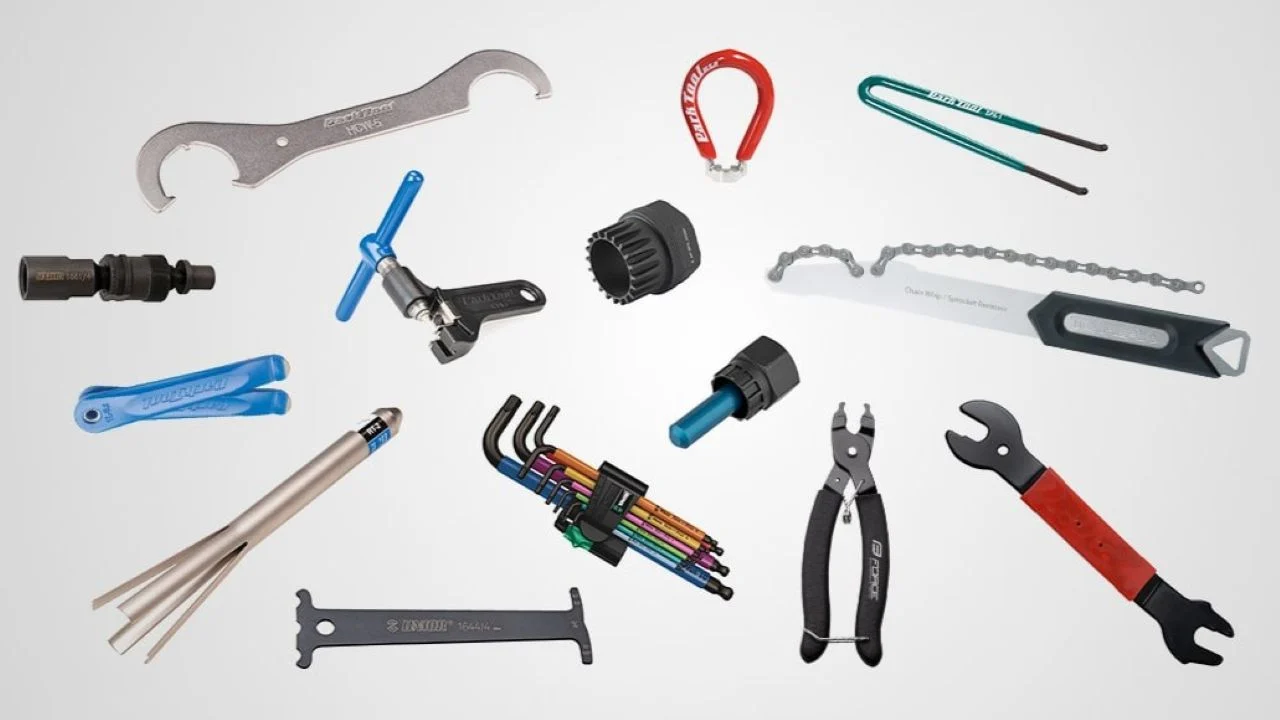
1. The Holy Trinity: Hex Keys, Torx and Steel Quality 🔧
Forget those L-keys that come with flat-pack furniture. Your bike needs precision. Modern MTBs are held together with hex bolts (2, 2.5, 3, 4, 5, 6, 8mm) and, more and more often, Torx bolts (T25, T30).
Why does quality matter?
Cheap bike repair tools have poor tolerances. They are a hair smaller than they should be. That creates play between the tool and the bolt head. The result is a ruined bolt that can only be removed by drilling.
- Recommendation: Look for sets from brands like Wera, Bondhus or Unior.
- Pro Tip: Get T-handle hex keys for bigger bolts (pedals, drivetrain) for better leverage, but be careful when tightening small bolts.
2. Torque Wrench: Guardian of Your Carbon 📏
If you ride a carbon frame, handlebar or seatpost, a torque wrench isn't optional – it's a must. But even with aluminum, precision is key.
Manufacturers don't print "5 Nm" or "Max 12 Nm" on components just for fun.
- Overtightened: Cracked carbon, threads pulled out of the magnesium fork lowers.
- Too loose: The component shifts while you ride, which can be fatal (for example, the handlebar rotating on a jump).
Get a small torque wrench that covers the range from 2 to 14 Nm. That covers 90% of the bolts on a bike (stem, brakes, seatpost, shifters).
3. Pump and Pressure: Your Best Friend 💨
A small frame pump is for emergencies in the woods. For the workshop you need a serious floor pump with a large, accurate gauge.
Tire pressure is the cheapest and most influential factor in how a bike rides. The difference between 1.6 bar and 1.9 bar on the front wheel changes grip drastically.
- What to look for: A metal body, a stable base and a head that supports both Presta and Schrader valves without complicated adapters.
4. Cable Cutters for Cables and Housing ✂️
This is a mistake many people make. They try to shorten a derailleur cable or housing with ordinary side cutters.
The result? Crushed housing that the cable can't pass through smoothly. The derailleur will never work precisely.
Dedicated cable cutters cut the housing cleanly, leaving a perfectly round opening. If you want crisp shifting, you need them.
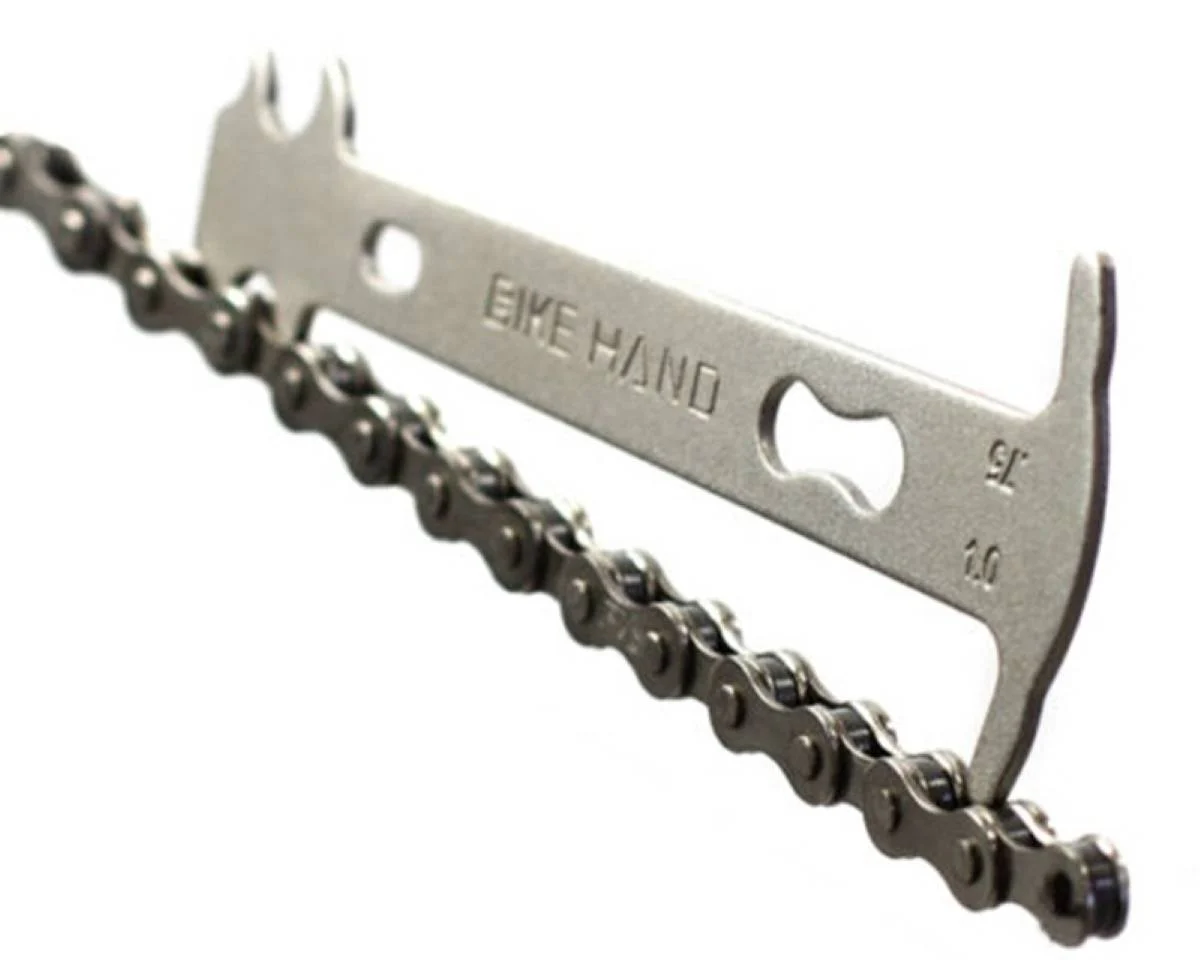
5. Chain Tool and Master Link Pliers ⛓️
Chains break. That's a fact. At home you need a tool to shorten a new chain to the exact length when replacing it. If you want the full picture, read our bike chain maintenance guide.
- Chain Breaker: It must have a replaceable pin, because it will bend over time too.
- Master Link Pliers: Many chains today use a "Quick Link". You can open one with improvisation, but these pliers cost little and save a lot of nerves and fingers.
6. Chemicals and Cleaning: The Silent Heroes 🛢️
A workshop without chemicals is just a room full of tools. Your bike needs some love in liquid form. Not sure which lubricant to pick? Check out how to choose bike grease and oil.
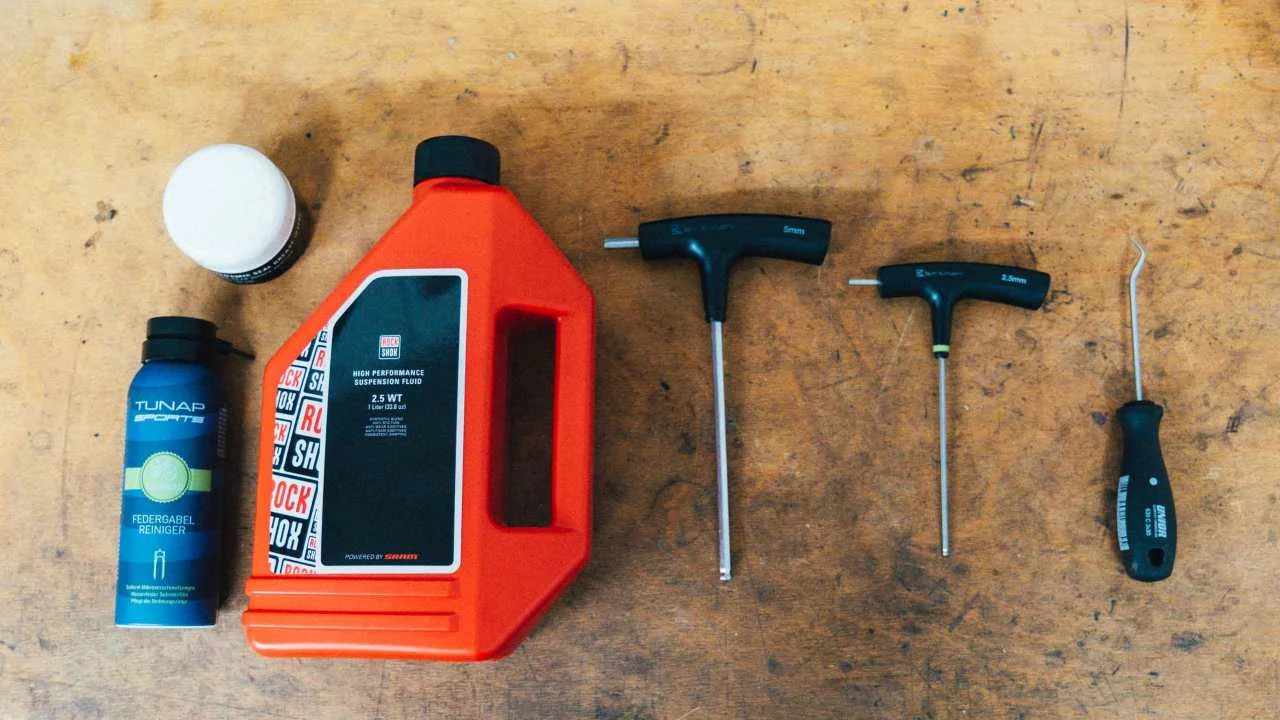
- Degreaser: Biodegradable, for washing the drivetrain. Don't use gasoline, it's aggressive on seals.
- Grease: A tube of quality waterproof grease (for example Park Tool PPL-1 or Shimano Premium). Anything with a thread that doesn't need Loctite needs grease. It prevents metal from "welding" to metal (cold welding).
- Chain oil: Depends on conditions (Dry for dry weather, Wet for mud).
7. Bonus: Repair Stand 🚲
It's not strictly a "tool", but trying to adjust a derailleur while holding the bike in the air with one hand is the definition of frustration.
The most basic stand that lifts the rear wheel off the ground will transform your service experience. It lets you spin the pedals, check the rotors and work like a gentleman instead of rolling around on the floor.
Conclusion: Start Slow, Buy Smart
Don't buy those giant 100-piece tool cases of questionable quality. Half of it you'll never need.
Go in order: a set of good hex keys, a pump, oil and cleaning products. Then add a torque wrench. As your knowledge grows, so will your collection. Starting with solid basic bike tools is the fastest way to a reliable home bike workshop, and our home bike workshop setup guide shows how to lay it all out.
Remember: A good mechanic only blames the tool if the tool is bad.
How to Build Your Basic Bike Tools Kit on a Budget
You don't have to buy everything at once. Start with what you use every month and add the rest as the need appears.
- Level one (the essentials): a set of hex and Torx keys, a pump with a gauge, inner tube repair tools and tire levers.
- Level two (regular maintenance): a torque wrench, cable and housing cutters, a chain wear gauge and master link pliers.
- Level three (advanced): a repair stand, a cassette and chainring tool, a brake bleed kit.
Mistakes When Buying Tools
- Overpriced kits full of tools you'll never use.
- Cheap hex keys made of soft steel that damage bolts.
- Tightening carbon parts without a torque wrench.
This kind of bike tool kit should let you make safe repairs, but for demanding jobs such as bleeding brakes or servicing a shock, it's better to use a professional workshop. Tire levers are covered in the article best tire levers, wear measurement in the guide component wear on a bike, and chain replacement in the guide replacing a chain on a mountain bike. For more complex repairs, get in touch with our bike service, or simply book your bike service online.
Sources and Further Reading
- Park Tool – tools and guides – bike repair tutorials
- Bicycle tools (Wikipedia) – an overview of tools
Frequently Asked Questions
Which tools should I buy first for a home workshop?
Start with a set of quality hex and Torx keys, a floor pump with a gauge, oil and cleaning products. Add a torque wrench next, then expand your collection as your knowledge grows.
Do I really need a torque wrench?
Yes, especially if you ride carbon parts. Overtightening can crack carbon or pull threads out of the fork lowers, while loose bolts let components shift while riding. A small wrench covering 2 to 14 Nm handles about 90% of the bolts on a bike.
Why shouldn't I use cheap hex keys?
Cheap keys have poor tolerances and are slightly undersized, which creates play in the bolt head. The bolt can get rounded off, and then it can often only be removed by drilling.
Can I cut bike cable housing with ordinary side cutters?
It's not recommended. Ordinary cutters crush the housing, so the cable can't pass smoothly and the derailleur won't work precisely. Dedicated cable cutters leave a perfectly round opening.
Which jobs are better left to a professional workshop?
Demanding jobs such as bleeding brakes or servicing a shock are better handled by a professional workshop, even if you have a good set of tools at home.