Studded bike tires for snow and ice can be the difference between a safe ride and a dangerous fall. Metal "spikes" set into the tread give you control where an ordinary tire gives up. But do you really need them, and what are the downsides?
In short:
- Tungsten carbide studs give you grip on ice that regular tires can't match, and rolling resistance stays close to that of regular tires.
- They cost about 20 to 30 percent more than the same tire without studs, and quality ones last roughly four seasons.
- Before riding on ice, break them in with about 40 km of asphalt at normal pressure and no hard braking.
- On ice and snow, lower pressure increases the contact patch, so more studs bite into the surface.

What are studded bike tires, really?
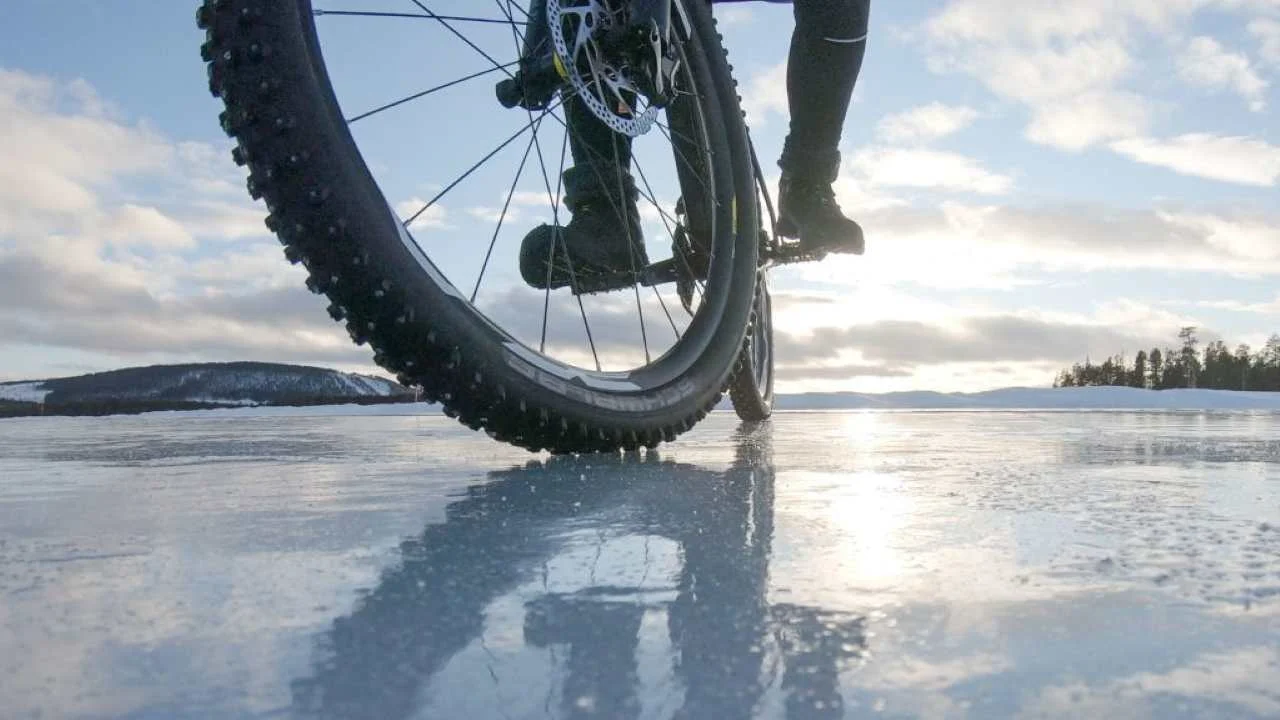
Riding on snow and ice can be hard, if not downright dangerous. Studded bike tires improve control and traction in icy conditions because they have metal spikes set right into the tread knobs.
We spoke with tire expert and former pro MTB rider Robert Mennen from Schwalbe to hear what the industry has to say on the subject.
The studs are usually made of metal, and Schwalbe uses a tungsten carbide tip to increase durability. Apart from that, a studded tire is built much like a normal tire, but it delivers a level of grip on ice that no other tire can match.
"Our biggest discipline for studded tires is the commuter market (people who ride to work), because they need an extra level of safety in the winter months."
— Robert Mennen, Schwalbe

Weight and Performance: Tank or Bike?
Although studded bike tires add a great level of grip on icy roads, they come with a weight "penalty", because all that extra metal adds up. This weight sits in the rotating mass of the wheel, which can make the bike feel sluggish when accelerating and slower on climbs.
However, Mennen says Schwalbe's studded tires aren't much slower than regular ones:
"When we tested the rolling resistance of our studded tires, they came out very similar to our Addix Ultra Soft compound that we use for downhill MTB tires," Mennen explains.
Another thing you'll notice is the sound. Metal on the road can make your bike sound a bit like a tank. Most tires have studs on the shoulders and in the middle of the tread, leaving the center (the crown) relatively clean for better rolling resistance and less noise on clear asphalt.
Price and Durability
Studded bike tires can be quite expensive because the manufacturing process is more complex. For example, the Schwalbe Marathon Winter costs about 20-30% more than its non-studded version. The Continental Contact Spike is similar.
However, Mennen says riders can expect roughly four seasons of use from quality studded tires, which makes them a good long-term investment.

Do you really need them?
Where you live decides whether you need studded bike tires. If you live in Sarajevo, on Romanija or in mountain areas where snow and ice stay for most of the winter, studs are a no-brainer. Riding without them can be hazardous.
On the other hand, if you live in a milder climate and see only a few icy days a year, the investment may not pay off. In that case, good winter MTB tires (with a softer compound) can be enough.
The DIY Option?
It isn't unusual for people to make their own "ice tires" by adding small screws to old, worn-out tires. These creations sit on the line between a clever hack and dangerous improvisation. It can be a cheap way to try riding on ice, but be extremely careful, especially with tubeless setups.
Studs pay off for people who ride on ice every day. If you ride in winter only occasionally and mostly on packed snow, it's better to invest in a quality winter tire and a brake check, and save the studs for weeks when the ice really sticks around.
— Marko Ristivojević, Bosch eBike Expert and Master Bike Mechanic
How to ride on studs: five tips for ice and snow
Studded bike tires reduce the risk of sliding, but they don't replace caution. Here are some winter cycling tips that help keep your ride safe.
- Lower the pressure: lower pressure increases the contact patch so the studs bite better; the limit depends on your weight and the tire width.
- Lean the bike, not your body: in a corner, keep your body upright and lean the bike, and avoid hard braking.
- Brake early: use the brakes gently and sooner than you would on dry ground.
- Keep your eyes up: look where you want to go, not at the ice in front of your wheel.
- Clean your tires after the ride: salt and mud speed up corrosion; wash and dry your bike.
Winter bike maintenance
In winter, the load on the drivetrain and brakes goes up, so lube the chain more often and check the brake pads before every season; our brake pad replacement guide shows how. Match your tire pressure to the tire pressure guide, and find details on preparing your bike for cold days in bike service and in our winter bike preparation guide. For clothing, read MTB clothing for cold weather. Studded bike tires aren't for everyone: if you only ride on packed snow or dry asphalt, winter tires with a good tread are enough.
Technique for riding on ice and frozen snow
Ice doesn't forgive mistakes, so technique matters more than the gear itself. Sit relaxed, keep your arms slightly bent and don't clamp the handlebar in a death grip. Look far ahead, not at the front wheel. Move smoothly: braking, turning and accelerating should be kept separate, because any sudden move can throw the bike off balance.
Braking and cornering
Brake gently and before the corner, not in the middle of it. Enter the corner at a lower speed and keep the bike more upright than usual, while your body stays slightly leaned. In frozen ruts, let the bike follow the line and don't try to change direction abruptly. Pedal pressure should be even, without jerks. Even on studded bike tires, riding on ice calls for smooth inputs.
Safety and gear
Besides a helmet, we recommend gloves, knee and elbow pads, and lights front and rear, because the day gets short quickly. Don't ride alone on remote trails; bring a phone, an extra layer of clothing and a hot drink. If you aren't sure how to prepare your bike for the cold, check out our bike service offer.
Sources and further reading
- Schwalbe – tire manufacturer – overview of winter tires
- Bicycle tire (Wikipedia) – tire types and construction
Ready for the winter season? If you aren't sure which tire suits your bike, visit our workshop for a consultation.
Book an AppointmentFrequently Asked Questions
Can I ride studded bike tires on dry asphalt?
Yes, you can. It won't ruin the tires if the studs are tungsten carbide, but the ride will be noisy and feel a bit “slower”. Higher pressure is recommended on asphalt so that only the center of the tire (often without studs) touches the ground.
What pressure should I use on ice?
The bigger the contact patch, the more grip you have. On ice and snow, lowering the pressure lets more studs “bite” into the surface at the same time, dramatically increasing stability.
Are these tires legal for e-bikes?
For standard e-bikes (up to 25km/h), they usually are. However, fast “S-Pedelec” bikes (which are registered as mopeds) often aren't legally allowed to use studded tires because they can damage the road surface, depending on local laws.