Trail Vs Enduro Vs Downhill
Choosing between trail vs enduro vs downhill always starts with the same question: Which type of bike suits the way I ride?
While a trail bike is a versatile all-rounder for full-day rides, Enduro is the ideal balance — aggressive on the descents, yet capable of proper pedaling. Downhill (DH) is a specialized machine built purely for the toughest descents and bike parks. If you want one bike for everything, enduro is the most common “sweet spot”, while DH only makes sense when you spend most of your time on lifts and steep tracks.
1. 🆚 Key Differences: Geometry, Suspension and Purpose
To truly understand these three categories, we need to look at the elements that shape the character of a ride the most — suspension travel and the head angle. All three are full suspension bikes, and you can read more about models and prices in our guide to full suspension bikes.
Category comparison table
| Feature | Trail 🌲 | Enduro ⚖️ | Downhill 🛑 |
|---|---|---|---|
| Suspension (Travel) | 120–160 mm | 160–180 mm | 180–220 mm |
| Head Angle | 65°–67° (steeper) | 63.5°–65° (slacker) | 62°–64° (extremely slack) |
| Primary purpose | All-around riding | Aggressive descending + climbing | Descending only |
| Weight | 13–16 kg | 14–17 kg | 17–20 kg |

What does a “slack head angle” actually mean?
A smaller angle (for example 62°) means the front wheel is pushed further out in front of the rider.
Pros: huge stability at high speed, confidence on steep terrain and better impact absorption.
Cons: the bike becomes less nimble, harder to climb and needs more room in the corners.
2. 🌲 Trail Bike: The Master of Versatility
Trail models are the “Swiss army knife” of the MTB world. They are designed for full-day rides, a mix of climbs and descents, flowy singletrack and light technical sections.
Advantages of a trail bike:
excellent pedaling efficiency — ideal for long climbs
nimble and light, especially in corners
suspension that soaks up small bumps without wasting energy
the best choice for beginners and recreational riders who want a bit of everything
If enjoying nature, full-day outings and a balance between climbing and descending is what you are after — the trail category is for you.
3. ⚖️ Enduro Bike: Aggression with Climbing Ability
Enduro was born from one idea: DH performance without the shuttle.
In other words, a bike that can get you to the top of the mountain and bring you down almost like a DH machine.
Who is enduro for?
Aggressive riders: If you love speed, drops and rougher terrain.
Bike park visitors: It offers enough travel and durability for park weekends, yet you can still pedal during the week.
Racers: Enduro races around the world are ridden on exactly this kind of machine.
That is why enduro is seen as the “missing link” between the trail and DH segments — versatile enough, brutal enough.
4. 🚨 Downhill Bike: Pure Gravity Power
A DH bike exists with one mission: the fastest possible descent down the hardest possible terrain.
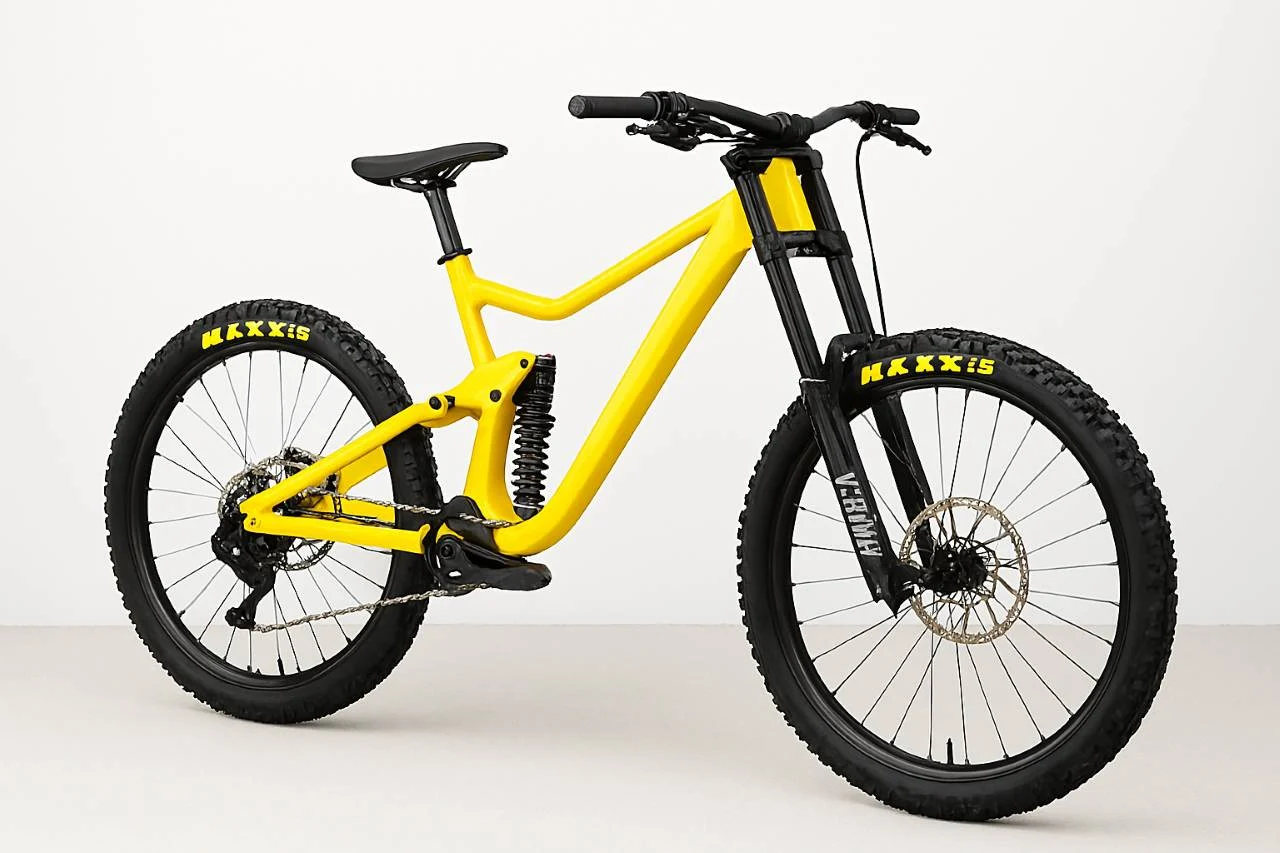
It does not care about climbing, agility at low speed or efficiency — everything is subordinate to stability and safe riding at huge speeds. If you want to see what that feels like, check out the Evolution Downhill Trail.
Key features of a DH bike:
Dual crown fork with 200+ mm of travel
Massive tires with soft compounds for maximum traction
7–10 speeds focused on tough shifts for control on the descent
Robust frames and huge stability
If you don't use a lift or shuttle — DH makes no sense.

5. 💥 The Risk of Choosing Wrong
The wrong bike can ruin the riding experience:
DH bike on a trail ride:
Heavy, slow, inefficient — climbs are practically impossible.Trail bike on a DH track:
Too much stress on the components, frequent “bottom-out” moments and a real risk of injury.
6. 🚀 Quick Decision Table
| Criterion | Trail 🌲 | Enduro ⚖️ | Downhill 🚨 |
|---|---|---|---|
| Importance of climbing | High | Medium | Low |
| Terrain | Flowy trails, singletrack | Technical, steep, rocky | Bike park, extreme descents |
| Lift/Shuttle | Rarely | Occasionally | Always |
| Budget | Most affordable | Mid to high | Most expensive |
How to Decide: trail vs enduro vs downhill in Five Questions
Comparing trail vs enduro vs downhill on paper helps, but your own riding makes the decision. Answer the following questions honestly.
- How much time do you spend climbing? If most of your ride is uphill, a trail bike is the smarter choice. An enduro bike still climbs, but with more effort.
- Do you ride bike parks and lifts? For shuttles and bike parks, enduro or downhill gives you more confidence at high speeds.
- What is your skill level? More travel forgives mistakes, but it does not replace technique.
- What is your budget? A downhill bike is specialized and needs more maintenance, so it only pays off if you really ride it often.
- Do you have only one bike? Then a trail or lighter enduro bike is the most practical, because it covers the most terrain.
Service and Maintenance for All Three Bikes
The more suspension travel you have, the more important shock service becomes. Bikes built for more aggressive riding wear out brake pads, chain and bearings faster, so they need to be checked more often. For suspension setup, read our MTB suspension tuning guide, and for picking a bike, read full suspension vs hardtail. If you are still torn between trail vs enduro vs downhill, take a look at MTB mountain biking as well. Try the trails at Bike Park Evolution, and get your bike ready at our bike service. Fork and shock care is handled by our suspension service, and you can reserve a slot through bike service booking.
Why the Wrong Choice Is Expensive
A wrong choice costs you twice: first in the price of the bike, then in rides that are no fun. A bike that is too big for your trails is heavy to climb, and a bike that is too small holds you back on the descent. So don't settle trail vs enduro vs downhill by specifications alone — settle it by the trails you actually ride. That is the best way to choose the right mountain bike.
Gear and Protection by Bike Type
The more demanding the terrain and the higher the speeds, the more important protection becomes. For technical rides, a helmet with extended rear coverage, gloves, glasses and knee pads are enough. For parks and steep descents, we recommend a full-face helmet, a back protector, elbow and knee pads and sturdy shoes with good grip. Gear is not an expense, it is insurance against injuries that could keep you out of the saddle for months.
Wheels, Tires and Brakes
Tire width and tread, wheel size and braking power are adapted to the intended use. Wider tires with an aggressive tread give more grip on loose terrain, but they are heavier and slower on climbs. Brakes with larger rotors and more pistons handle long, steep descents better, while smaller rotors are enough for light rides.
How Many Kilometers and Meters of Elevation to Expect
Realistic expectations help you pick the right bike. If you spend most of your time climbing and on long rides, you need a bike that climbs easily and is not overly heavy. If you mostly ride parks with a lift or shuttle, strength and stability at high speeds come first. For everything in between, what matters is that the bike still feels lively and you don't run out of energy halfway.
- Easy ride up to 40 kilometers: lighter bike, less shock travel.
- Long ride with lots of climbing: efficient drivetrain and good climbing geometry.
- Park descents: longer travel, stronger brakes and a stable frame.
Sources and Further Reading
- Mountain biking (Wikipedia) – disciplines: trail, enduro, downhill
- Bicycle suspension (Wikipedia) – travel and types of suspension
Frequently Asked Questions (FAQ) About Trail, Enduro and DH Bikes
What is the main difference between an enduro and a trail bike?
The main difference is suspension travel and geometry. Trail bikes have up to 160 mm of travel and geometry made for easier climbing. Enduro bikes have 160 mm to 180 mm of travel and slacker geometry, focusing on aggressive descents while keeping just enough pedaling efficiency.
Can I use a downhill bike for regular trail riding?
It is not recommended. Downhill bikes are too heavy, their geometry is too slack and they are inefficient for pedaling uphill or on flat terrain. Riding a DH bike outside a bike park is extremely exhausting and impractical.
Is an enduro bike good for a beginner?
An enduro bike can be a good fit for aggressive beginners who know they will progress quickly to technically demanding trails. For absolute beginners, however, a trail bike is the better choice because it is more agile, easier to control and easier to climb while they learn the basics.
What is “bottom out” and why does it matter?
“Bottom out” happens when the suspension compresses fully and has no travel left. If your trail or enduro bike regularly bottoms out on descents or jumps, it is a sign that you need a bike with more travel (moving up to enduro or DH) or that your suspension is not set up properly (SAG).
Which category is the most expensive?
Downhill bikes are usually the most expensive because of their specialized, extremely robust components and premium suspension (often a dual crown fork). Enduro and trail bikes vary in price but are generally more affordable, although enduro models with premium components can get close to the price of a DH bike.