Enduro mountain biking is by far the most popular and exciting discipline of mountain biking today, perfectly combining technically demanding descents (Downhill) with physically challenging climbs (Cross Country). This style of riding demands exceptional endurance, technical skill and a deep knowledge of the terrain. If you are looking for the ultimate mix of adrenaline and fitness, you are in the right place.
The race format in this discipline includes several special stages (timed descents), while the "transfers" (climbs between stages) are required and have a time limit, but the climbing time itself is not measured. It is exactly this dynamic that has drawn so many recreational riders who simply want to conquer the mountain and then enjoy a fast, aggressive descent. Not sure how it differs from other styles? Read our comparison of trail vs enduro vs downhill bikes.
Enduro Gear: What Do You Need?
To enjoy enduro mountain biking to the fullest and stay safe, you need the right equipment. Your old hardtail might survive the climb, but serious enduro terrain calls for a specific machine.

Enduro Bike (Geometry and Components)
An enduro bike is a piece of engineering designed for extreme conditions:
- Suspension: Front and rear travel from 140 mm up to 180 mm for brutal impact absorption.
- Geometry: An aggressive "slack" head angle (around 64-65 degrees) that offers stability at high speeds and better handling on steep sections.
- Brakes: Powerful 4-piston hydraulic disc brakes with 200 mm or 220 mm rotors.
- Wheels and tires: Usually 27.5” or 29” wheels with wide, reinforced tires ("DoubleDown" or similar casings) for maximum traction and puncture resistance.
Protective Gear (Trail Armor)
- Helmet: A full-face helmet is the standard today, although many riders also use open-face models with extra rear-head protection on easier trails.
- Knee and elbow pads: Absolutely essential for staying safe in crashes on rocky ground.
- Gloves and goggles: Gloves improve grip on the handlebar, while goggles protect you from dust, mud and branches.
- Backpack or hip pack: A hydration pack that carries water, room for basic tools and a spare tube.
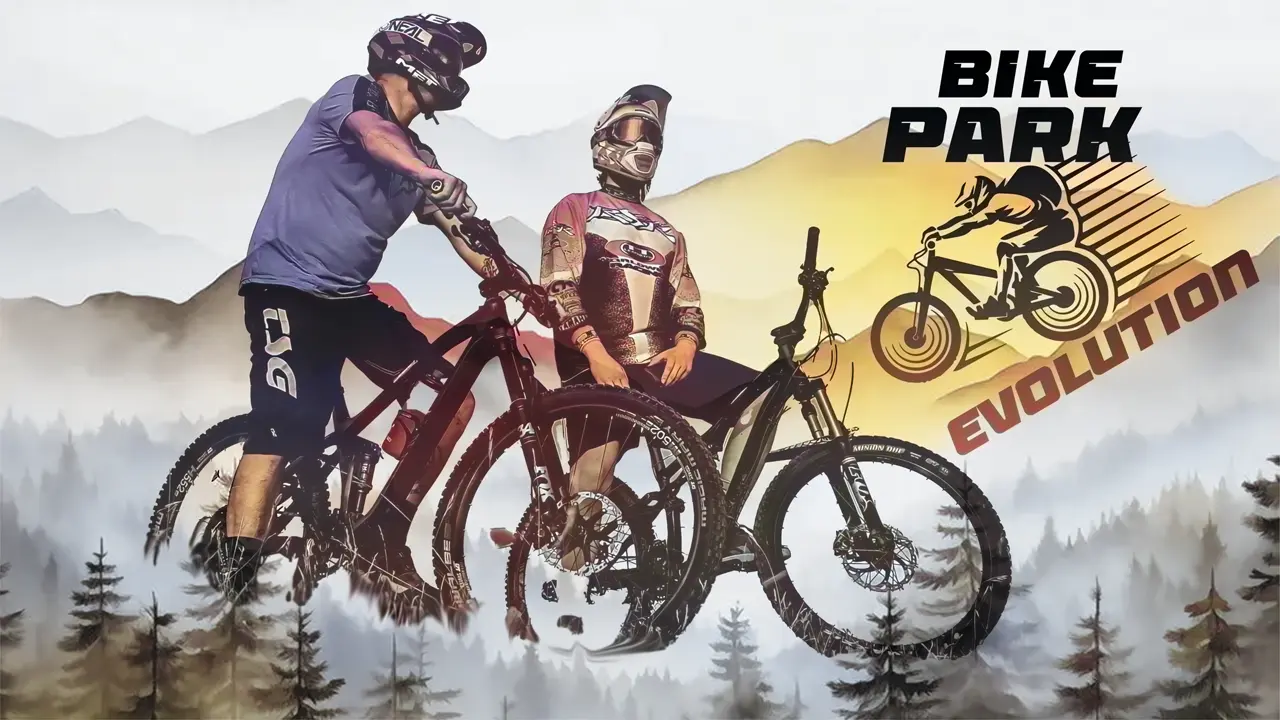
Riding Technique: How to Master Enduro Mountain Biking
Technique is what saves you on the trail. All the gear in the world means nothing if you don't know how to position yourself on the bike.
🏔️ Descending and Body Position
For a fast and safe descent, you need to keep your center of gravity low and centered. As we explained in detail in our guide to the Attack Position, your elbows must be bent, your heels dropped and your eyes always looking far ahead. Use both brakes in a controlled way and let the bike "dance" beneath you.

⛰️ Climbing and Saving Energy
Enduro mountain biking demands smart power management. Find a good rhythm and use the lower gears. Distribute your body weight by shifting toward the tip of the saddle so you avoid spinning out the rear wheel or lifting the front one.
🌀 Taking Corners
You take corners by leaning the bike while keeping your body relatively upright. Look straight at the corner exit. Your inside foot must be raised, while the outside foot presses hard on the pedal so the tires "bite" into the ground.
PRO TIP: Marko Ristivojević
"The biggest mistake recreational riders make in enduro is overinflating their tires and getting the suspension 'sag' wrong. Unlike XC, in enduro you need maximum traction over roots and rocks. Drop your tire pressure (tubeless is a must!) to around 1.4 to 1.6 bar, depending on your weight, and be sure to add protective 'inserts'. Set your suspension to 25-30% sag so the bike 'sticks' to the ground instead of bouncing like a ping-pong ball over Ilinjača."
🛠️ Maintaining Your Enduro Bike
Rough terrain destroys mechanical parts. Check your tire pressure regularly (tubeless systems are a must, and our guide shows how to set up tubeless tires). Keep your brakes in good condition and inspect the suspension often, using our MTB suspension tuning guide as a reference. The chain suffers the most on rides like these, so clean it regularly and find out when it is time for replacing the chain on a mountain bike to avoid a break in the woods.
🏁 The Best Enduro Trails in Bike Park Evolution
Bike Park Evolution on Ilinjača offers trails perfectly suited to enduro mountain biking, from beginners to professionals:
- Green lines (Beginners): Ideal for learning basic techniques, the Attack position and pumping the terrain.
- Blue and Red lines (Intermediate and Advanced): A perfect mix of technical rock garden sections, roots and fast flow descents.
- Black lines (Experts): Challenging routes with big jumps, steep sections and exposed technical parts.
How to Prepare for Your First Enduro Race
If you are curious about the competitive side, your first enduro race is a great test of knowledge and fitness. These are the steps I recommend for race preparation.
- Try the trails in advance. At many races you are allowed to inspect the course, so memorizing the lines is a big part of success.
- Prepare your bike a week early. Fresh pads, working suspension and tubeless tires that don't leak save you nerves at the start. If it needs a check, book a bike service in time.
- Practice the transfers. The climbs between stages have a time limit, so you need to keep a steady rhythm without exhausting yourself before the descent.
- Carry tools and food. A mini pump, tubeless plugs, a chain link and something to eat are mandatory.
- Ride at 90 percent. Speed matters, but a crash on the first stage costs more than a few lost seconds.
Fitness for Enduro
Many people think enduro mountain biking is just the descent, but in reality you spend the whole day riding around the mountain. That is why you need a base of endurance, leg strength for steep climbs and a strong core and arms to control the bike on the descent. Squats, lunges and core exercises complement your riding well.
Tire Pressure and Suspension Setup
On an enduro bike, pressure, SAG and rebound all matter. A softer tire grips better, but one that is too soft suffers on rocks. Find starting values in our guide to bike tire pressure, and set up your suspension with the suspension calculator. For a pre-season check, use our bike service. That makes enduro mountain biking safer and more fun.
Sources and Further Reading
- Enduro (mountain biking) (Wikipedia) – race format, stages and transfers
- Trailforks – trail maps and difficulty descriptions
Frequently Asked Questions (FAQ)
Unlike Downhill, where riders get to the top of the mountain by lift or shuttle and only ride down, enduro requires the rider to pedal the climb to the start of the trail using their own strength.
Although you can ride easier trails on a Cross Country (XC) bike, real enduro terrain and safety call for a bike with suitable geometry, stronger brakes and suspension with at least 140 mm of travel.
Marko Ristivojević recommends tubeless tires at around 1.4 to 1.6 bar, depending on your weight, with protective inserts added. He also suggests setting the suspension to 25-30% sag for maximum traction over roots and rocks.
A full-face helmet is the standard, although some riders use open-face models with extra rear-head protection on easier trails. You should also wear knee and elbow pads, gloves and goggles, and carry water and basic tools in a backpack or hip pack.
Ready to Test Your Limits?
Enduro mountain biking is an exciting sport that offers the perfect blend of adrenaline and physical fitness. Join our club, explore Ilinjača and take your skills to the next level.
Become part of the MTB Evolution team