Tech tips · Brakes
SRAM brake service:
a step-by-step guide
A spongy lever, brakes that fade on a long descent, or dark fluid in the reservoir all mean it's time for SRAM brake service. This guide shows you how to do a basic service and bleed SRAM brakes with DOT 5.1 brake fluid at home, and when it's better to leave the job to the Evolution bike workshop in Istočno Sarajevo.
By Marko Ristivojević, Master Bike Mechanic
In short
SRAM brake service means bleeding the system with DOT 5.1 brake fluid and a bleed kit, cleaning the caliper and rotor, checking lever feel and pads, and finishing with a test. SRAM brakes take DOT 5.1 only, never mineral oil.
Fluid
Genuine DOT 5.1, never mineral oil
Duration
30 to 60 minutes for a basic service at home
Interval
At least once a year, more often in harsh conditions
Take it to the shop
When you're unsure or don't have a bleed kit
Author: Marko Ristivojević, Master Bike Mechanic · BK MTB Evolution, Istočno Sarajevo
How to service SRAM hydraulic brakes at home
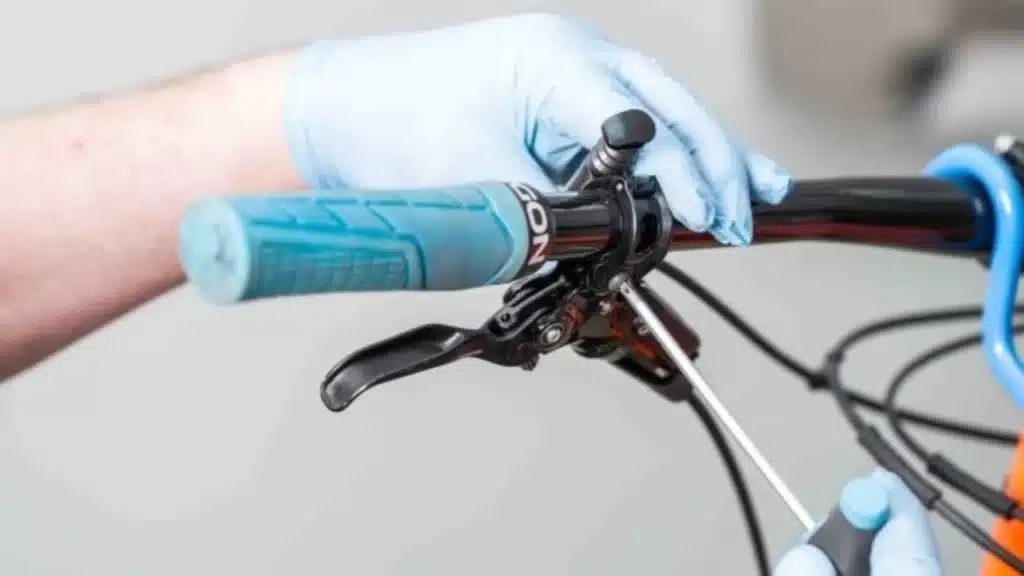
Hydraulic brakes are a key safety component on MTB, E-MTB and gravel bikes. If the lever "drops" to the bar, feels spongy, or you notice a loss of braking power, it's time for a service.
This guide applies to SRAM Guide brakes, SRAM Code and HRD systems on XC, trail, enduro, E-MTB, gravel, freeride and downhill bikes. The procedure differs from model to model, so always check the details in the official SRAM documentation.
How to do SRAM brake service: tools and materials
Bleed kit. SRAM Bleeding Edge set with syringes and a bleed block.
DOT 5.1 fluid. Genuine, from a sealed bottle.
Wrenches. For the caliper and brake lever.
Rotor cleaner. Isopropyl alcohol or a cleaner recommended by SRAM.
Rags and a container. For catching the old fluid.
Gloves and eye protection. DOT fluid is harsh on skin and paint.
Warning: SRAM uses DOT 5.1 fluid, while Shimano uses mineral oil. Never mix them, because the wrong fluid ruins the seals. Use only genuine parts and fluid to keep the system safe and performing well. If you ride Shimano, see the guide to bleeding Shimano brakes.
Step 1: Prepare the bike
Wheel. Remove the wheel, and the rotor only if necessary.
Bleed block. Insert the bleed block into the caliper.
Workspace. Clean your workspace and have rags and a container for the fluid ready.
Step 2: Bleed the system
Syringe. Fill the syringe with DOT 5.1 fluid and connect it to the system.
Position and sequence. Hold the lever and caliper in the correct position and go through all the bleeding steps in the official SRAM instructions for your model.
Pro tip: Fluid must not get on the rotor or pads. If it does, clean the rotor with brake cleaner and replace the pads.
Step 3: Clean the caliper and rotor
Cleaner. Use isopropyl alcohol or a cleaner recommended by SRAM.
Contamination. Remove dust, oil and traces of old fluid from the caliper and rotor.
Pads. Pads contaminated with fluid or oil can't be cleaned, so replace them.
Step 4: Lever, pads and final test
Lever feel. The lever must not "drop" or feel spongy; it should be firm and precise.
Pads. Check pad thickness and wear, and fit new genuine pads if needed. For help choosing, see our guide which brake pads to choose.
Final test. Test the brakes in place before riding, and check that there are no fluid leaks anywhere.
Signs it's time for SRAM brake service
Spongy lever feel. There is usually air in the system.
Lever "drops" to the bar. Braking is weak and the bite point keeps moving.
Loss of power on a longer descent. The brake fades as the system heats up.
Squealing or oil contamination. A dirty rotor or pads; more in our guide squealing bike brakes.
Dark or cloudy fluid. DOT fluid absorbs moisture, and a leak around the lever, hose or caliper means you shouldn't ride until the cause is fixed.
More than 12 months since the last service. Regular servicing is the key to safety, and you can also check pad condition with our guide bike component wear.
SRAM brake service FAQ
How often should SRAM hydraulic brakes be serviced?
At least once a year, and more often if you ride in harsh conditions, in mud, and on long descents.
Can this guide be applied to Shimano brakes too?
The bleeding principle is similar, but the procedure and the fluid differ: Shimano uses mineral oil, while SRAM uses DOT 5.1. For Shimano, follow the guide to bleeding Shimano brakes.
How long does SRAM brake service take at home?
A basic service takes 30 to 60 minutes. Replacing pads or more detailed work takes longer.
Which fluid goes into SRAM hydraulic brakes?
Genuine DOT 5.1 fluid, never mineral oil. DOT fluid absorbs moisture and loses its properties over time, so dark or cloudy fluid in the reservoir is a sign it's time for a service.
How long does SRAM brake service take at the Evolution workshop?
A quick service is usually done the same day, while more detailed work depends on how busy the workshop is and which parts are needed. The workshop is in Vojkovići, Istočna Ilidža. Book a slot through bike service booking or call 066 902 418. Read more about the service on the hydraulic brake service page.