Mountain biking for beginners can seem intimidating – all that unfamiliar gear, trail jargon and fast riding on rough terrain. But don't worry: getting started is easier than you think. Whether you're looking for a fun way to explore nature, escape traffic or test your skills, MTB has something for everyone.
In short, from this guide:
- A hardtail is the most common recommendation for beginners because it is cheaper, lighter and simpler to maintain.
- A quality entry-level hardtail costs roughly 600 to 1,000 EUR; avoid the cheapest supermarket bikes.
- A helmet is a must, and long-finger gloves and a bottle or hydration pack are strongly recommended.
- Plan your first six rides gradually, from a flat forest trail to your first easy trail in a bike park.


What exactly is mountain biking?
Let's start with the obvious: for many of us, the term "mountain biking" is a bit of a misnomer – you don't have to be high up in the mountains to ride.
At its core, it's a way of exploring roads and trails far from paved streets and cars. For some people that means a relaxed ride through the forest, while for others it means jumping off ledges and riding at incredible speeds.

Wherever you land on that spectrum, mountain biking is a fantastic sport for all ages, and it is becoming more accessible all the time.
Your adventure tool: the bike
A beginner mountain bike is purpose-built for off-road riding, with wide knobby tyres for grip, suspension to absorb impacts and a strong frame. The geometry puts the rider in a position that encourages controlled, comfortable and safe riding off the road.
Basically, mountain bikes fall into two main categories: Hardtail and Full-Suspension.


1. Hardtail (front suspension only)
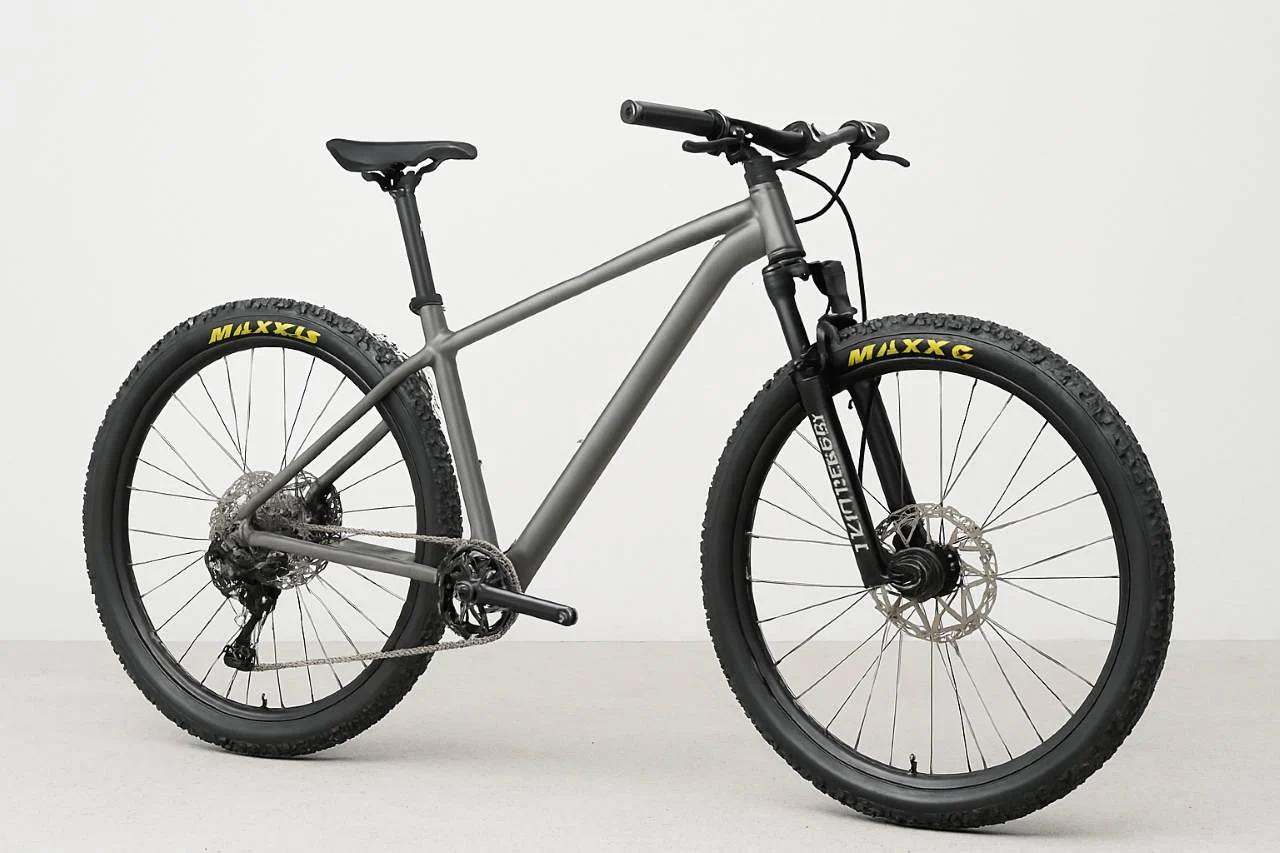
A hardtail is a mountain bike with a suspension fork at the front and a classic rigid frame at the back. Thanks to their simplicity, they are generally cheaper and easier to maintain.
That simplicity makes them a popular choice for newcomers. Fewer moving parts means less servicing, which is great if you're just getting into the sport.

2. Full-Suspension (front and rear shock)
These bikes have suspension at both ends. The rear part of the frame moves, and a shock controls that movement. They are undeniably more comfortable – the "extra softness" reduces strain on your joints and gives you better control on rocky terrain.
However, they are heavier, more expensive and need regular specialist servicing. If you're weighing hardtail vs full suspension for your first mountain bike, that extra cost and upkeep is the main trade-off.
"Many beginners want a full-suspension bike straight away because it looks more powerful. My advice? Start with a quality hardtail. It will force you to learn how to pick a line and use your legs as suspension. If you learn to ride a hardtail fast, you'll fly on a full-suspension bike."
— Marko Ristivojević, Bosch eBike Expert and Master Bike Mechanic
Gear: what do you really need?
There's a whole world of MTB-specific clothing, but don't let it overwhelm you. When it comes to MTB gear for beginners, the one essential item besides the bike is a helmet.

- Helmet: A must. Try on several to find one that fits you perfectly.
- Gloves: We recommend long-finger MTB gloves. They offer better grip and protect your palms in a fall.
- Water: Mountain biking is a serious workout. A bottle cage or a hydration pack is essential.
Where to ride?
If you're lucky, you may have local trails nearby. For mountain biking for beginners, places like Trebević (Sarajevo) or purpose-built bike parks are ideal for getting started because they offer trails of different difficulty levels.
Trails are often colour-coded, much like ski slopes:
- 🟢 Green: Easy, family-friendly riding.
- 🔵 Blue: For beginners with a little experience, with small roots and rocks.
- 🔴 Red: For advanced riders, more technically demanding.
- ⚫ Black: Expert level, big jumps and steep terrain.

Community and learning
Meeting people is a big part of this sport. Joining a club or riding with more experienced friends can help you progress faster.
Also, a few hours with an MTB coach is a great investment – a cycling school can help you understand basic skills like braking and cornering, which will save you plenty of crashes down the road.
Plan for your first six rides: mountain biking for beginners step by step
The biggest problem for beginners isn't fitness but expectations. Here is the plan we recommend for the first month.
- Rides 1–2: a flat forest trail or gravel road, 45 to 60 minutes; the goal is to get used to the bike and the brakes.
- Ride 3: gentle climbs and descents; practise standing on the pedals and looking ahead.
- Ride 4: corners, and braking before the corner, not in it.
- Rides 5–6: your first easy trail in a bike park or with a more experienced rider.
Mistakes beginners make most often
- Tyre pressure that is too low or too high; find the right values in our tyre pressure guide.
- Braking with only the rear brake; learn to use both.
- Riding without a helmet and gloves.
- Wrong frame size; check it with our bike frame size guide.
- Too fast a pace on the first rides and injuries caused by fatigue.
Mountain biking for beginners is fun once the basics are covered. To choose a bike type, see full suspension vs hardtail, for a check-up see bike service, and for practice head to Bike Park Evolution. Read all about the disciplines in our MTB mountain biking guide.
Sources and further reading
- Mountain biking (Wikipedia) – an overview of the sport and equipment
- Bicycle helmet (Wikipedia) – why a helmet matters
Ready for your first ride? Need advice on choosing your first bike or gear? Drop by our workshop for a chat.
Contact UsFrequently Asked Questions
How much money should I spend on my first bike?
You don't have to spend a fortune. A quality 'entry-level' hardtail costs between 600 and 1000 EUR. Avoid the cheapest supermarket bikes because they aren't safe for real terrain.
Do I need special shoes for cycling?
To start with, sturdy shoes with a flat sole (like skate shoes) are enough. Later we recommend dedicated “flat” MTB shoes that “stick” to the pedals.
Is cycling dangerous?
Like any outdoor sport, it carries risks. However, if you ride within your limits, wear a helmet and build your skills gradually, the risk of serious injury is low.