Knowing how to lube a bike chain is a five-minute habit that reduces friction, slows down sprocket wear and saves you from an expensive drivetrain replacement. The chain directly affects power transfer, shifting precision and the lifespan of the whole drivetrain, so the right technique and the right lube for your riding conditions give you a quiet, smooth ride.
In short:
- Lube the chain after every rainy or muddy ride and every 100–200 km in dry conditions.
- Apply the lube to the inside of a clean, dry chain and always wipe off the excess.
- Dry lube is for dry weather, wet lube for rain and mud, and wax for the cleanest and quietest running.
- Regular WD-40 is not a lubricant, it is a cleaning product.
When Is It Time to Lube Your Chain
Lube the chain:
- after every rainy or muddy ride,
- when it starts to squeak or feels dry to the touch,
- after 100–200 km in dry conditions,
- if you see rust or dust drying it out.
The rule: a little and often beats a lot and rarely. A dry, noisy drivetrain is also one of the usual suspects when your MTB creaks.
How to Lube a Bike Chain Step by Step
1. Clean the chain
Clean the chain with a brush and degreaser.
2. Dry the chain
Let the degreaser and water evaporate completely.
3. Apply the lube
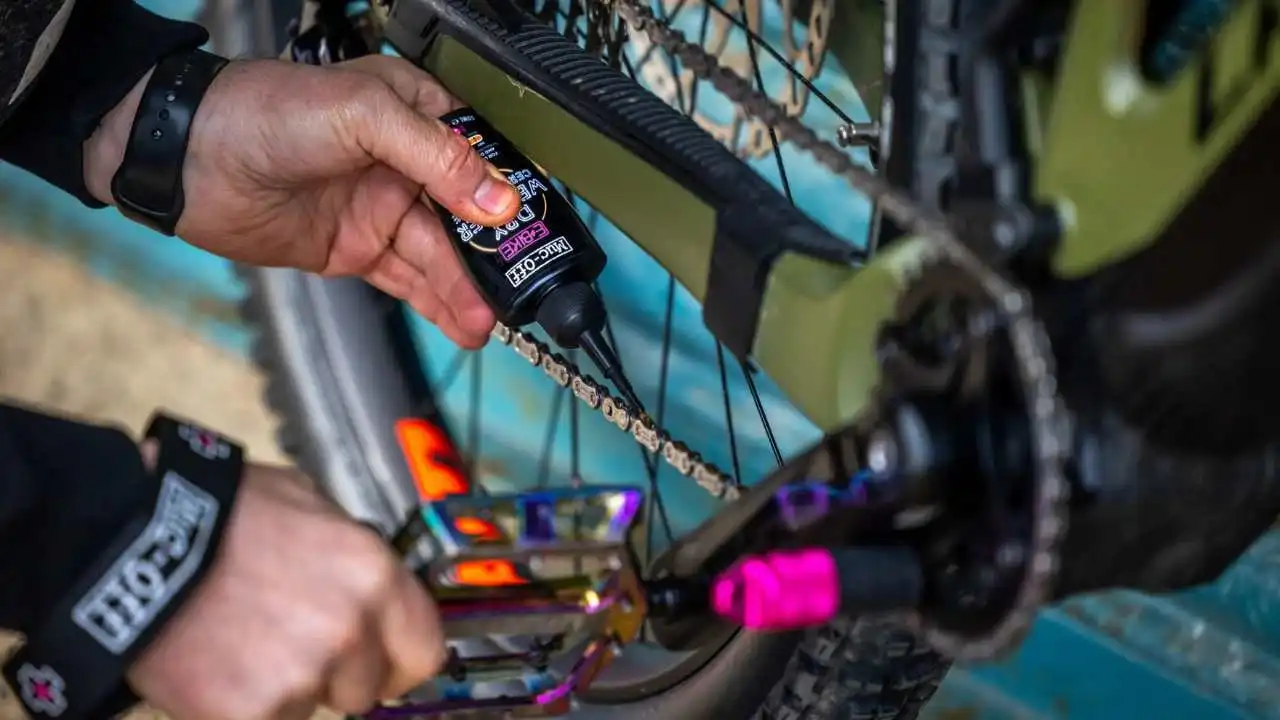
Apply the lube to the inside of the chain, one drop on each link.
4. Work the lube in
Turn the pedals backwards for 30–60 seconds so the lube gets into the links.
5. Wipe off the excess
Always wipe off the excess with a rag, because excess lube attracts dirt.
Which Bike Chain Lube to Use
| Type | Pros | Cons | Best for |
|---|---|---|---|
| Dry lube | Doesn't attract dust | Doesn't last as long, needs more frequent application | MTB in summer, road riding |
| Wet lube | Lasts longer, protects against corrosion | Attracts dirt | Winter, rain, mud |
| Wax | Cleanest and quietest running | Longer drying time after application | Advanced MTB and road riders |
The chemistry and properties of individual lubricants are tested in detail by independent labs, for example Zero Friction Cycling. If you want to go deeper into the differences, see our guide to bike grease and oil.
WD-40 on a Bike Chain: Yes or No
Don't use regular WD-40 as your only lubricant, because it mainly degreases. You can use it to clean the chain before lubing, but for a quiet, smooth ride you need a dedicated chain lube.
Consequences of Poor Chain Lubrication
| Problem | Cause | Consequence |
|---|---|---|
| Squeaking | Dry chain | Lower efficiency |
| Black grime | Too much oil | Faster wear |
| Chain "skipping" | Worn sprockets | Expensive drivetrain replacement |
| Rust | Water without protection | Shorter drivetrain life |
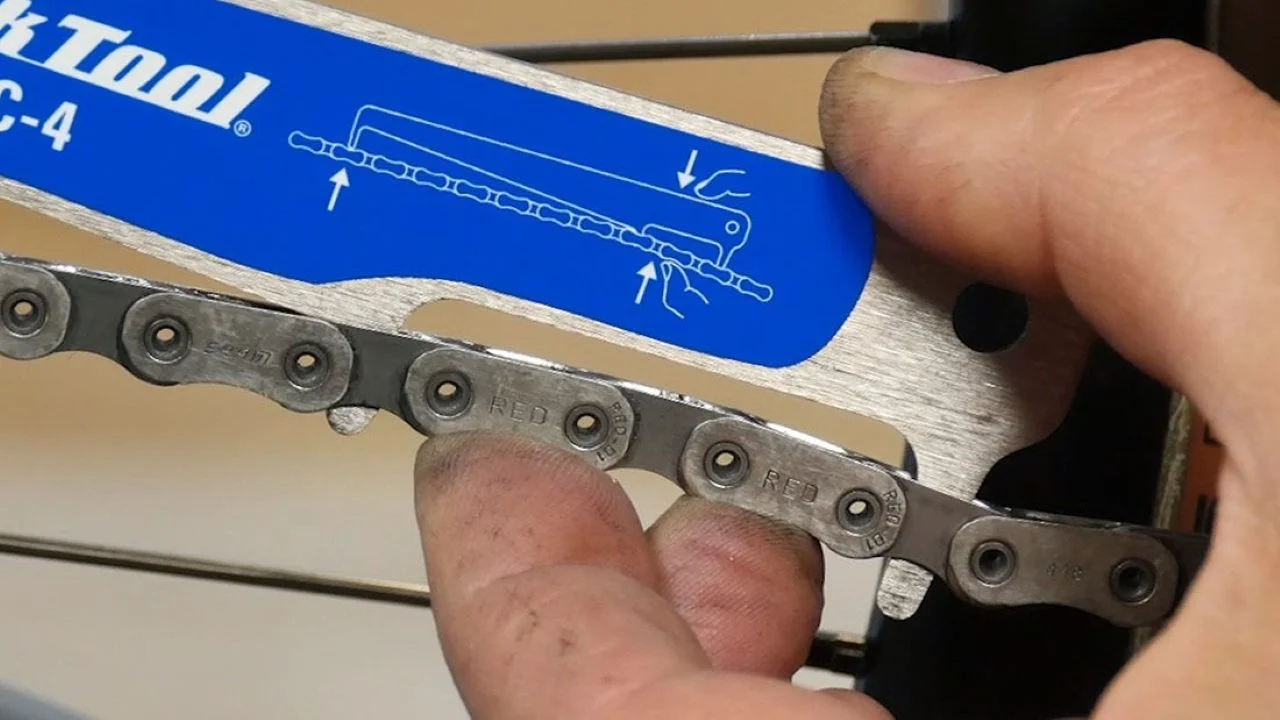
We explained when and how to measure chain stretch and when to replace the chain in our article on the bike chain. You can also read when the chain and cassette need replacing as a pair.
Pro Tips
- Always clean the chain before lubing.
- Apply oil only to the links, not to the cassette.
- Always wipe off the excess.
- Choose your lube based on the trail and the weather.

Conclusion
Learning to lube a bike chain gives you a simple habit that extends the life of your bike, saves money and improves performance. Invest five minutes after every muddy ride and you'll get a quiet, efficient drivetrain. If you'd rather leave it to the professionals, check out our chain and cassette service.
Drivetrain still squeaking and skipping after lubing? It might be time to replace the chain and cassette.
Book a drivetrain serviceFrequently Asked Questions
How often should you lube a bike chain?
After every muddy or rainy ride and every 100–200 km in dry conditions.
Which lube should I use on my bike chain?
Dry lube for dry weather, wet lube for rain and mud, and wax for the cleanest and quietest running.
Can WD-40 replace chain lube?
No. Regular WD-40 is used for cleaning; for lubrication you need a dedicated chain oil.