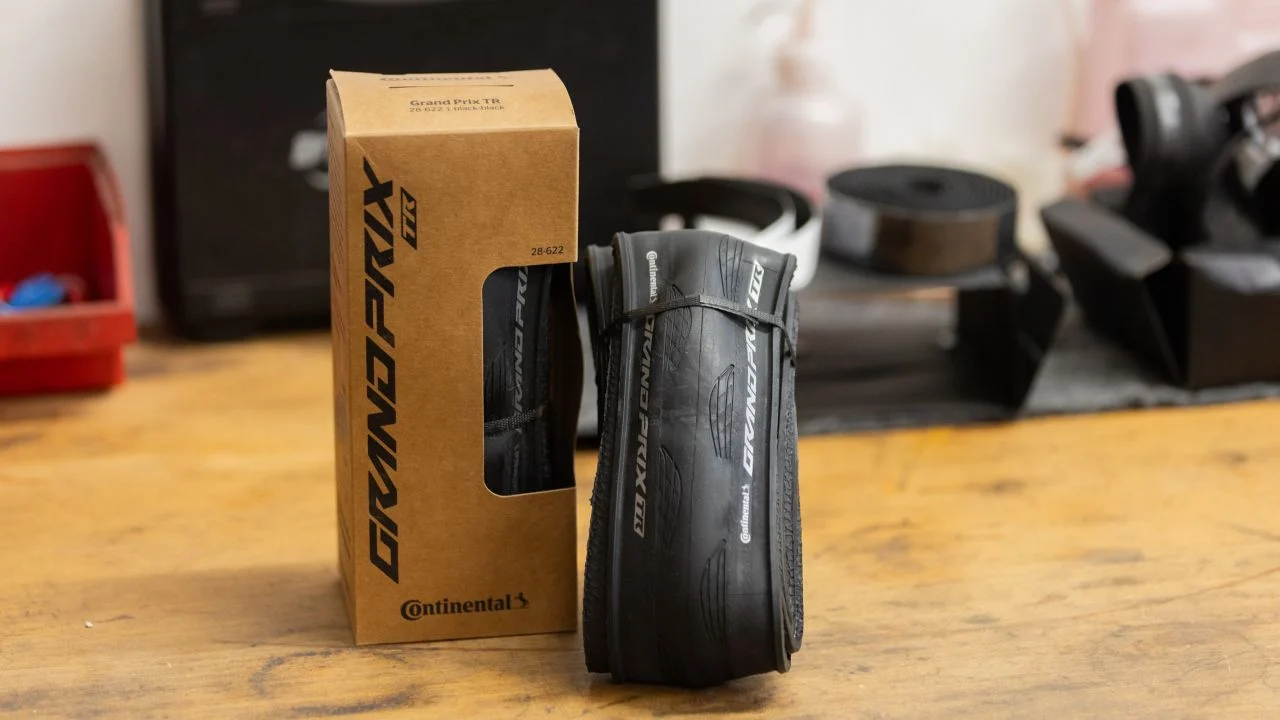
This Continental Grand Prix TR review looks at a tire that carries a legendary name and promises the "sweet spot" of the tubeless world. Is it possible to get top performance without blowing your budget? We tested it to the limit.
In short:
- The tire has a four-ply construction, offers comfort and good puncture protection, and costs less than the GP5000 range.
- Lab rolling resistance is 13.7 W per tire, and the pricier GP5000 S TR saves only about 4 W.
- In 28 mm width it weighs about 340 g, which is more than its racing rivals.
- It shows earlier signs of wear in the centre of the tread, so keep an eye on durability.

Continental Grand Prix TR review: where does it fit?
The Continental Grand Prix TR grabs attention because it wears the famous "Grand Prix" name. It aims to be the perfect tubeless option that fills the gap between the WorldTour-spec Grand Prix 5000 S TR and the nearly indestructible Grand Prix 4 Season clincher.
In reality, this tire has the most in common with the Grand Prix 5000 AS TR (All-Season), thanks to its four-ply construction. Here, the "extra" fourth layer does the job of a dedicated puncture-protection belt.
"In theory, this construction improves ride smoothness compared with a stiff protective belt, while still giving you the essential protection you need on our roads."
— Marko Ristivojević, Bosch eBike Expert and Master Bike Mechanic

Road feel: comfort over feedback
In practice, the story has layers. With a weave density of 60 TPI (threads per inch), the casing has the lowest thread count of all the tires we tested in this category. Because of that, the Grand Prix TR doesn't relay information from the surface in as much detail as tires with a higher TPI.
Still, it is tactile enough to let you push the bike through corners and down descents with great confidence – probably because Continental left out the stiff protective belt.
The Grand Prix TR smooths out road imperfections extremely well. My digital calipers recorded a width of 29.1mm at 5.5 bar (80psi) on Hunt test rims (22mm internal width). The ride is best described as "calm".
BlackChili: grip you can trust
The famous BlackChili compound is a proven performer and delivers class-leading grip right from the start. Together with the lack of harsh vibrations, it makes up for the missing "fine feel". I could trust the tire to hold its line as well as some of the best race tires, without being bombarded with too much sensory information through the handlebars.


Lab data: faster than you think
The tire feels fast, and independent lab tests (bicyclerollingresistance.com) back that up. They found it "burns" 13.7W when rolling. That is 0.1W better than the impressive Michelin Pro5 Competition Line, and a full 2.6W more efficient than the 32mm-wide Grand Prix 5000 AS TR.
For context, moving up to the much more expensive, race-focused GP5000 S TR saves only about 4 watts per tire. That makes the Continental Grand Prix TR review numbers hard to ignore for anyone shopping for tubeless road tires.
Durability and verdict
Some riders may be put off by the 340g weight. It is heavy compared with its rivals, but competitive rolling resistance matters just as much.
I'm not convinced the Grand Prix TR will last as long as its rivals, given that it shows early signs of wear in the centre of the tread. That is an issue affecting other latest-generation tires with the BlackChili compound too.

Although it isn't perfect, the Continental Grand Prix TR offers an appealing alternative to its pricier 5000-series cousins, without the high price tag. It does so with relatively few real-world drawbacks, which makes it a class leader. That is the bottom line of this Continental Grand Prix TR review.
How to install and maintain the Grand Prix TR
Tubeless road tires need careful installation, because the beads are tight and tolerances are small. Here is the routine we use in the workshop, and no Continental Grand Prix TR review would be complete without it.
- Check the rim: the rim must be tubeless compatible and clean, with the tape properly applied.
- Mounting the tire: use a soapy solution and tire levers without sharp edges so you don't damage the bead.
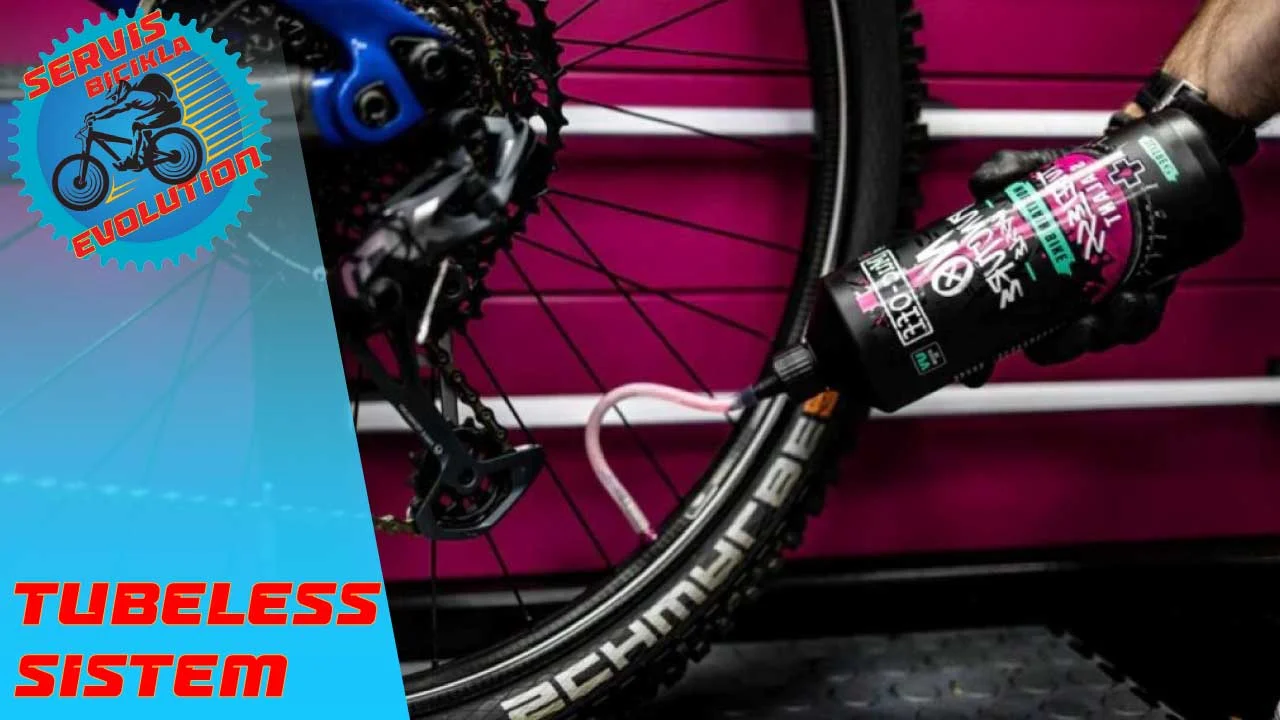
- Sealant: add the recommended amount and spin the wheel to spread it.
- Pressure: choose road pressure based on your weight and tire width, with lower pressure for more comfort and grip.
- Check: after a day or two, check whether the tire is leaking, and top up the sealant according to the manufacturer's instructions.
Who is the Continental Grand Prix TR for
This tire suits riders who want tubeless benefits without the top price: fewer punctures, the option of low pressure and a comfortable ride. For race-day speed or the lowest weight, lighter models exist. Set your pressure using the guide tire pressure for bicycles, and for installation and maintenance get in touch with our bike service. The installation tools are covered in the article best tire levers. Not sure which tire suits your bike? Our guide to choosing bike tires will help, and you can book a service when you are ready.
Sources and further reading
- Bicycle tire (Wikipedia) – tire types and construction
- Bicycle wheel (Wikipedia) – rim and wheel
Want more reviews and tips? Explore our knowledge base on maintenance and gear.
Visit the Small WorkshopFrequently Asked Questions
Is the Continental Grand Prix TR tubeless ready?
Yes, this tire is fully compatible with tubeless systems (TR - Tubeless Ready) and is designed to work optimally with sealant.
What is the difference between the Grand Prix TR and the GP5000 S TR?
The GP5000 S TR is a pure race tire, lighter and faster (it saves about 4W), but more expensive. The Grand Prix TR is a more durable 'all-rounder' tire with a slightly lower TPI, better for everyday training.
How much does the Continental Grand Prix TR tire weigh?
In 28mm width, the tire weighs about 340g, which makes it slightly heavier than race models, but in return it offers better puncture protection and more comfort.