E-MTB geometry is not the same as on a conventional mountain bike. Every e-MTB is a carefully balanced compromise between stability on the descent and efficiency on the climb, and the motor and battery change the rules of the game. Once you understand how weight, frame angles and suspension kinematics affect the ride, you can choose and set up your next machine far more precisely.
In short, from this guide:
- The motor and battery add 6–10 kg, but the low centre of gravity gives an e-MTB extra stability.
- A steeper seat tube angle (76°–78°) keeps your weight over the mid-drive on steep climbs.
- A longer chainstay (445 mm+) adds stability and rear-wheel traction under motor torque.
- A slack head angle (64°–65°) and a longer reach give you confidence on descents.

E-MTB Geometry and Weight: Why Mass Is Your Ally
The first rule of e-MTB geometry: forget the mantra that less weight is always better. On an e-MTB, the extra weight of the motor and battery can actually work in your favour, as long as it is distributed properly.
The motor and battery sit low and central, which creates an exceptionally low centre of gravity.
- Benefit 1 - Incredible stability: The bike stays calm at high speeds.
- Benefit 2 - "Glued" to the ground: The extra mass gives a feeling of better grip in fast, open corners.
- Benefit 3 - Soaking up terrain: Less bouncing on technical, rocky sections (the "monster truck" effect).
Read more: The Ultimate Guide to E-Bike Battery Maintenance: Extend Battery Life and Maximize Range (Yes, weight depends on the battery too!)
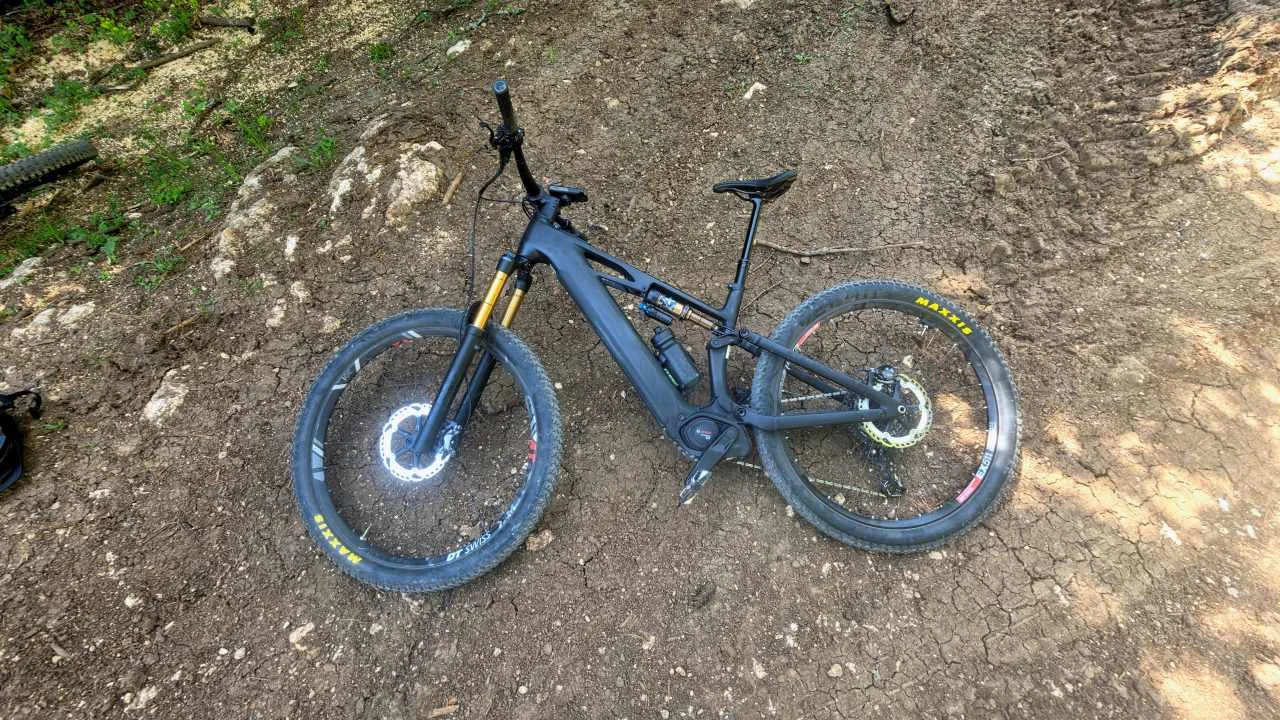
Climbing: Seat Tube Angle and Chainstay Length
Good e-MTB geometry has to strike a perfect balance. The bike must swallow descents, but also climb up walls. The key lies in two parameters that govern your position over the motor. If you want a deeper look at the theory, read our guide to the seat tube angle, damping and MTB kinematics.
Steeper seat tube angle
E-MTBs usually have a steeper angle (76°-78°) than conventional MTBs. This moves your weight forward, directly over the bottom bracket (BB), which stops the front wheel from lifting on extremely steep climbs.
Longer chainstay (the rear triangle)
Most e-MTBs have a longer chainstay (445 mm+) to fit the motor and house the battery. Although this slightly reduces agility, it significantly increases the bike's stability and helps keep the rear wheel tracking under strong motor torque.
Descending Control: Head Angle and Reach
On the descent, e-MTB geometry shows its biggest advantage. When you drop in, you want to feel secure, as if nothing can throw you off balance. This is where head angle and reach come in.
Slack Head Angle: The smaller this angle is (for example 64°-65°), the more "laid back" the fork becomes. The result is better impact absorption and stability at high speeds. The bike feels less nervous.
Longer Reach: Reach (the horizontal distance from the BB to the head tube) is longer than it used to be. This gives you more room to move around the bike, letting you position yourself better on descents.
Conventional MTB vs Modern E-MTB
| Parameter | Conventional MTB (Trail) | Modern E-MTB (Trail/Enduro) | Effect on the Trail |
|---|---|---|---|
| Head Angle | ~66° | ~64.5° - 65.5° | More stability on descents. |
| Seat Tube Angle | ~74° - 75° | ~76° - 78° | Better position for steep climbs. |
| Chainstay Length | ~435 mm | ~445 mm + | Traction and stability under motor power. |
Not sure which category suits you? Our comparison of trail, enduro and downhill bikes shows how these numbers change with riding style.
Related: Winter Storage: Preparing Your E-MTB for the Off-Season (The geometry stays the same, but performance depends on maintenance)
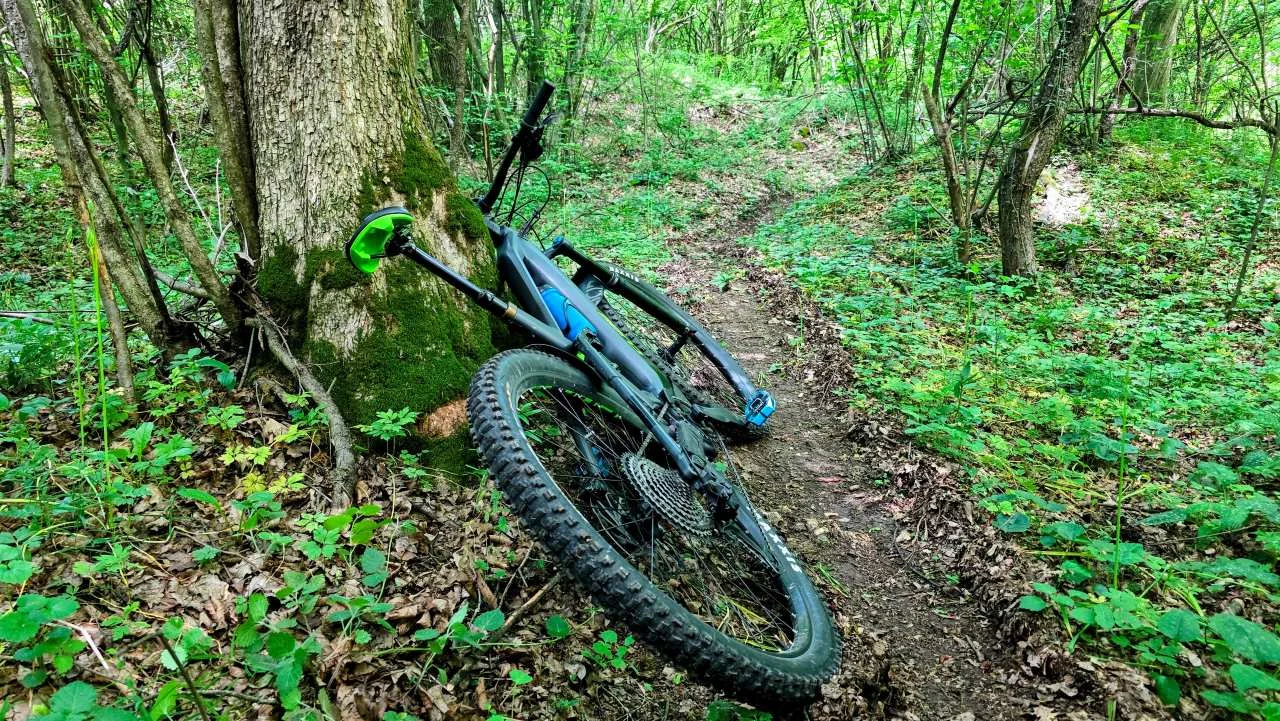
Suspension Kinematics: How an E-Bike "Swallows" the Trail
Because of the extra weight and power, the kinematics (how the suspension moves) on an e-MTB are often tuned differently. Designers want the suspension to be:
- Supportive: It has to carry the extra weight and constant pedalling without sinking too much.
- Less Progressive: Some manufacturers use slightly less progressive suspension curves, because the bike's extra weight already provides a natural "progression" on big hits.
Angle figures vary from model to model, so always check the manufacturer's geometry chart. Pinkbike publishes a good introduction to technical geometry analysis, and how to turn geometry numbers into the right size is explained in our article on bike frame size. Once you've picked a bike, our MTB suspension tuning guide helps you set SAG, rebound and compression.
Not sure your bike is set up properly? Geometry is only half the story: the suspension has to be tuned to your weight and riding style. Book a setup at our suspension service.
Book a setupFrequently Asked Questions
Why are e-bikes heavier than regular bikes?
The motor and battery together add between 6 and 10 kg, and the frames are additionally reinforced to withstand the higher forces and motor torque.
Is a longer chainstay bad for handling?
A longer chainstay makes the bike slightly less playful in tight corners, but on an e-MTB it matters because it prevents the front wheel from lifting on steep climbs at full motor power.
Can I change the geometry of my e-bike?
Many modern e-bikes have a flip chip that slightly changes the head angle and bottom bracket height, so you can tune the bike more towards descending or climbing.