If you finish a ride and your Garmin Edge or smartwatch hasn't automatically synced your data, the Strava app is where the famous question comes up: did the ride even happen? It has revolutionized the way we track mountain biking and road riding, analyze telemetry and talk to each other.
In short, from this guide:
- The Strava app as a tool: It offers top-notch analytics, motivation and route discovery through tools such as Heatmaps and segments.
- The dark side: Obsessing over KOMs (King of the Mountain) can lead to dangerous riding, "digital doping" (faking GPX files) and privacy problems.
- The e-bike problem: Recording e-bike rides as "regular cycling" ruins the integrity of climbing segment leaderboards.
- Premium (Pro) version: The paid version offers more detailed progress and route analysis, but the free one stays enough for most recreational riders.
Strava App: A Double-Edged Sword – From Motivation to Digital Doping
It has become the ultimate social network for athletes. But like any powerful tool for two-wheelers that you bring to our bike service, it has its bright and dark sides. From incredible motivation to a toxic hunt for seconds and so-called "digital doping", here is what riding under the watchful eye of this platform really brings.

The Pros: Why Do Riders Love Strava?
- Progress tracking and analytics: Whether you ride fast XC, technical enduro or swallow up kilometers on the road, the Strava app gives you a detailed view of your form. Tracking heart rate, elevation gain, cadence and power allows serious training analysis.
- Plenty of motivation: Watching friends and clubmates from the Cycling Club East Sarajevo rack up kilometers is a great push to lace up your shoes, get on the bike and train, even when you don't feel like leaving the house.
- Discovering new trails: Through Heatmaps and segments, Strava is a great tool for finding new routes and unexplored forest singletracks in your area. If you want ready-made tracks, check our MTB trail maps and GPX downloads.
- Segments as a personal challenge: Comparing your time on a particular climb or descent with your previous rides (PR – Personal Record) is a fantastic way to measure your own progress.
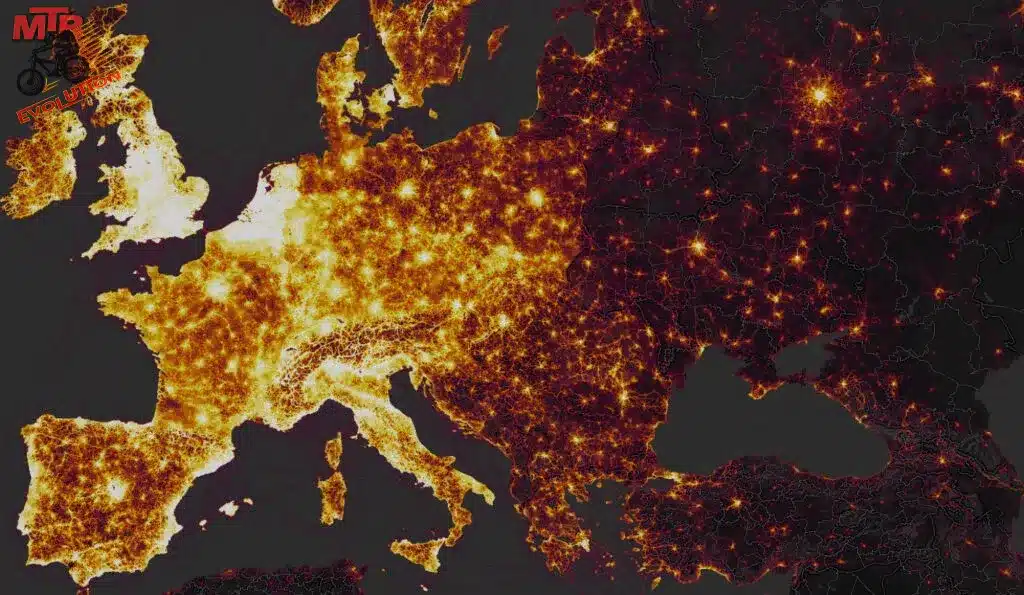
Personally, one of the most useful things on the platform is the Strava Global Heatmap. It clearly shows the real situation on the ground – for example, how much the trails in our Bike Park Evolution are actually ridden. Unlike marketing-inflated projects and so-called "MTB City Road" parks, the Strava Heatmap can't be faked or "pumped" like a regular KOM. The Heatmap shows the plain truth about where tires really touch the ground.
The Cons: The Dark Side of the App
- Obsession with numbers: It's easy to fall into the trap where riding stops being about enjoying nature and the trail and becomes purely a hunt for average speed and watts. Staring at the screen instead of the line ahead ruins the essence of mountain biking.
- Privacy risks: If you don't set up Privacy Zones, anyone can see exactly where you live, work and start your rides, which bike thieves have exploited in the past.
- Community pressure: An unrealistic picture sometimes forms because people mostly post their best rides, epic routes and fastest times, which can make others feel inadequate.
The KOM Phenomenon and "Digital Doping"
KOM (King of the Mountain) and QOM (Queen of the Mountain for women) are the crown of this ecosystem. Being the fastest on a segment brings a specific kind of digital fame. Because of KOMs, riders plan tactics, wait for the perfect tailwind and time their form.
However, hunting for a Strava KOM has its price. On popular, shared trails with hikers or other recreational users, blindly chasing a fleeting time for a virtual crown leads to dangerous situations and incidents. Riders sometimes risk their own and others' safety by cutting blind corners just to shave off a few seconds.
The Era of Result Manipulation
As the Strava app grew, so did the methods of manipulation:
- Accidental "doping" (the forgetful rider): A classic. You finish your ride, throw the bike in the trunk and drive home, forgetting to stop recording. Suddenly you're smashing every KOM on the highway at 80 km/h. This is easily fixed with the Crop option, but many forget.
- E-bikes on "acoustic" segments: Currently the biggest problem in the MTB community. E-bike riders (deliberately or by accident) record rides as regular cycling. The system ranks them against riders on muscle power, destroying the integrity of the leaderboards. For a fair look at the bikes themselves, see our e-bike pros and cons.
- Digital manipulation (GPX editing): For extreme "glory hunters", there are tools for manipulating raw GPX files. Timestamps get shortened or fake heart rate data is inserted.
- Drafting and riding behind vehicles: On the road, riders deliberately ride in the slipstream of trucks to reach unrealistic speeds on flat segments.
The paid version (Premium/Subscription) offers advanced tools: detailed heart rate and power zone analysis, a Route Builder, Live Segments and personal Heatmaps. Is it worth the money? If you race, train seriously with a power meter or often explore unfamiliar territory by creating routes, Premium pays off. However, for the 90% of recreational riders who use Strava as a ride diary and social network, the free version is still more than enough and offers the core of what makes the platform great.
All in all, the Strava app is one of the best tools we have for cycling today. It helps us map routes, track progress and even plan when it's time for a bike service booking (by tracking component mileage, which our bike component wear guide helps you interpret). But at the end of the day, the Strava app should serve you, not the other way around. The best rides, the ones we write about in our Small Workshop, are often those where we forget about the seconds and simply enjoy the sound of tires on the ground.
How much does this app dictate your pace on the trail, and have you ever had to "flag" a suspicious KOM on your favorite local segment?
Five Rules for Smart and Safe Strava Use
The Strava app is most useful when you treat it as a training diary, not as a competition with strangers. These are the rules I recommend to every rider in our community.
- Hide the start and end of your ride. In the privacy settings, the Strava app offers privacy zones, so your home address and the place where you keep your bike stay hidden.
- Don't chase a KOM at all costs. A segment on a public road or on a descent with hikers is not a record-setting trail. Save your speed for closed and marked trails.
- Label the activity type correctly. An e-bike ride is recorded as an e-bike ride, not as regular cycling, so the climb rankings don't get distorted.
- Check syncing before you set off. Your Garmin, Wahoo or smartwatch must be connected to the Strava app so the ride doesn't get lost. Not sure which device to buy? See our cycling gadgets guide.
- Follow the trend, not a single ride. The weekly and monthly overview in the Strava app says more about your progress than one good segment.
When the Strava app works as motivation and not as pressure, it gives the best results. If you doubt the accuracy of the data from your device, bring it along with your bike to our bike service and we'll check the sensors together.
Sources and Further Reading
- Strava (Wikipedia) – overview of the platform, segments and features
- Strava app – official website – privacy settings and subscriptions