How to choose an MTB helmet that really protects your head, and not just satisfies the rule at the park entrance? The answer lies in three things: your riding style, the certification and how the helmet sits on your head. Price and design come later. This guide goes step by step, from helmet types and standards to MIPS, size and lifespan, so you know exactly what to look for before you buy.
In short:
- How to choose an MTB helmet: first define your riding style (XC, trail, enduro or downhill), then pick the model and colour.
- Look for the EN 1078 (Europe) or CPSC 1203 (USA) label; for downhill and bike park, take a full face helmet with ASTM F1952 certification.
- Fit matters more than price: the front edge sits 1 to 2 fingers above the eyebrows, and the helmet moves no more than about 10 mm on your head.
- MIPS reduces rotational forces in laboratory tests, but it does not guarantee that a concussion will not happen.
- Replace the helmet after every crash with a head impact, and otherwise every 3 to 5 years with frequent riding.
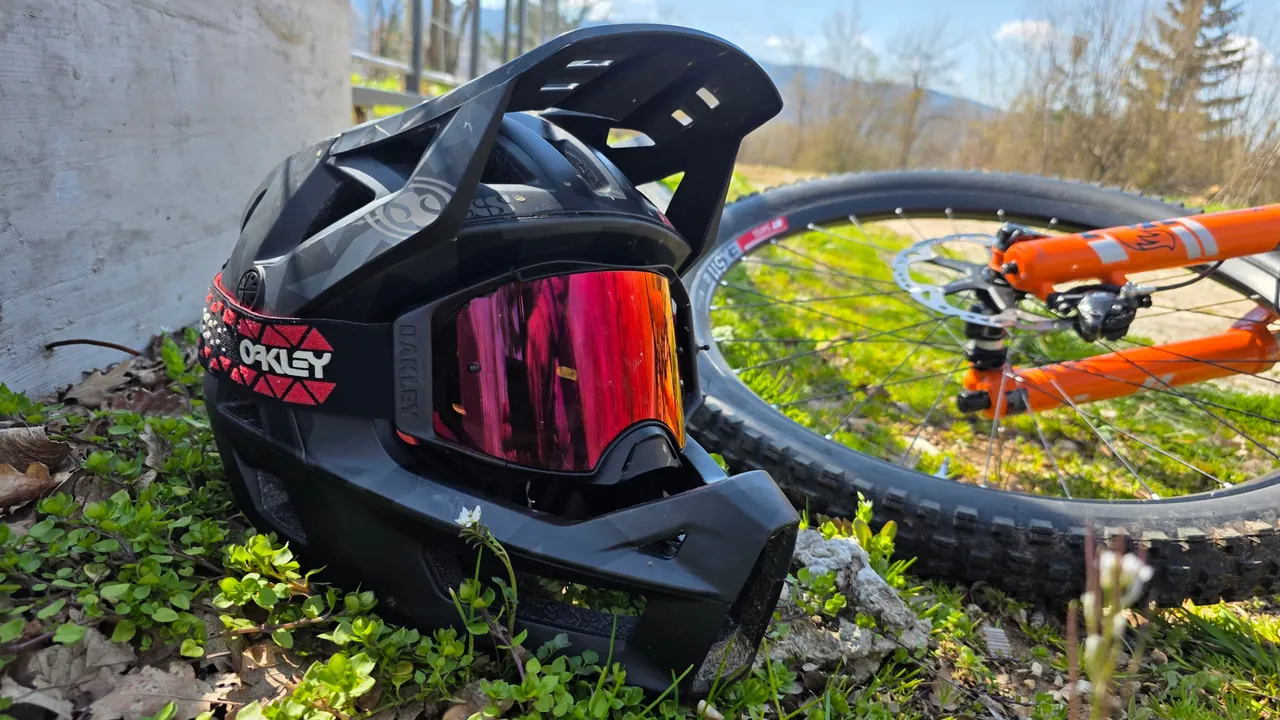
How to choose an MTB helmet: types and what they are for
MTB helmets fall into four basic groups. The difference is not marketing but the amount of head covered, ventilation and weight. When you think about how to choose an MTB helmet, first ask where you ride most, and only then how much you can spend.
| Helmet type | Best for | Advantages | Drawbacks |
|---|---|---|---|
| Cross-country (XC) | Fast climbing, long rides | Light, lots of vents | Less rear and temple coverage |
| Trail | All-round helmet for most riders | Good balance of weight, ventilation and protection | Not meant for aggressive descents |
| Enduro | Steep descents with climbs | Extended rear coverage, often with MIPS | Heavier and warmer than trail models |
| Full face | Downhill, bike park, jumps | Face and chin protection, maximum coverage | Weight and weaker ventilation |
For most recreational and club riders a trail helmet is the most sensible choice, and how to choose an MTB helmet among several similar models is explained in the sections below. If you ride both climbs and technical descents, consider an enduro model with extended rear coverage, which often offers better temple protection as well.
Construction and materials: what you actually pay for
Most modern helmets use in-mold construction: a thin plastic shell is fused with expanded polystyrene (EPS) foam directly in the mould. The result is a lighter helmet and a stronger bond between shell and foam. Cheaper models often use a separate shell, which is heavier and bulkier. That is why, when you work out how to choose an MTB helmet, it pays to look at construction and not only at price and colour.
Ventilation is the second big factor. More vents mean better cooling but less foam in those zones, so manufacturers balance this with channels inside the foam. Higher-end helmets also bring a washable liner, a visor adjustable in several positions and a holder for goggles or glasses. These are small details you feel on every ride, especially in summer and on long climbs.
Standards and labels: EN 1078, CPSC 1203 and ASTM F1952
Every serious MTB helmet must have a standard label inside the shell. In Europe this is EN 1078 (CE mark), in the USA CPSC 1203, and in Australia and New Zealand AS/NZS 2063. These standards test impact absorption, strap strength and whether the helmet stays on your head. You can read the official description of the US standard on the CPSC bicycle helmet page.
For downhill, ASTM F1952 is especially important. It is the standard for downhill helmets, and full face models are also tested for a chin-bar impact. The certificate applies to a specific model, so check that the label is really on the helmet you are buying, and not only in the shop description.
MIPS and similar systems: what they really do
A MIPS helmet has a thin slip layer between the foam and your head. In an oblique impact the layer lets the helmet rotate slightly relative to the head, which reduces the rotational acceleration passed to the brain. Depending on the test and model, laboratory reductions in rotational forces range roughly from 10 to 30 percent. Such a helmet is usually 10 to 30 grams heavier and more expensive.
Keep your expectations realistic: MIPS does not guarantee that a concussion will not occur, and some manufacturers have their own alternatives, for example slip or deformable layers inside the shell. If you are choosing between two helmets of similar quality, take the one with rotational protection. You can read more about the technology on the official MIPS website.
MTB helmet size and adjustment: how to check the fit
The most expensive helmet is worthless if it slides around on your head. MTB helmet size is determined by head circumference, measured with a tape around the forehead, about a finger above the eyebrows. Manufacturers give a range in centimetres, and the S, M and L labels differ from brand to brand, so always try a helmet on in person.
Fit check in five steps
- Place the helmet level on your head; the front edge should sit 1 to 2 fingers above the eyebrows.
- Tighten the dial at the back until the helmet sits firmly, without painful pressure.
- The straps form a V under the ears, and the buckle must not touch your jaw.
- Tighten the chin strap so that at most one finger fits between the strap and your chin.
- Shake your head forward and back and left and right; the helmet must not move more than about 10 mm.
If you wear glasses or goggles, take them with you to the fitting. The goggle strap must sit over the helmet without pressing on the straps, and the visor must not touch the frame of your glasses.
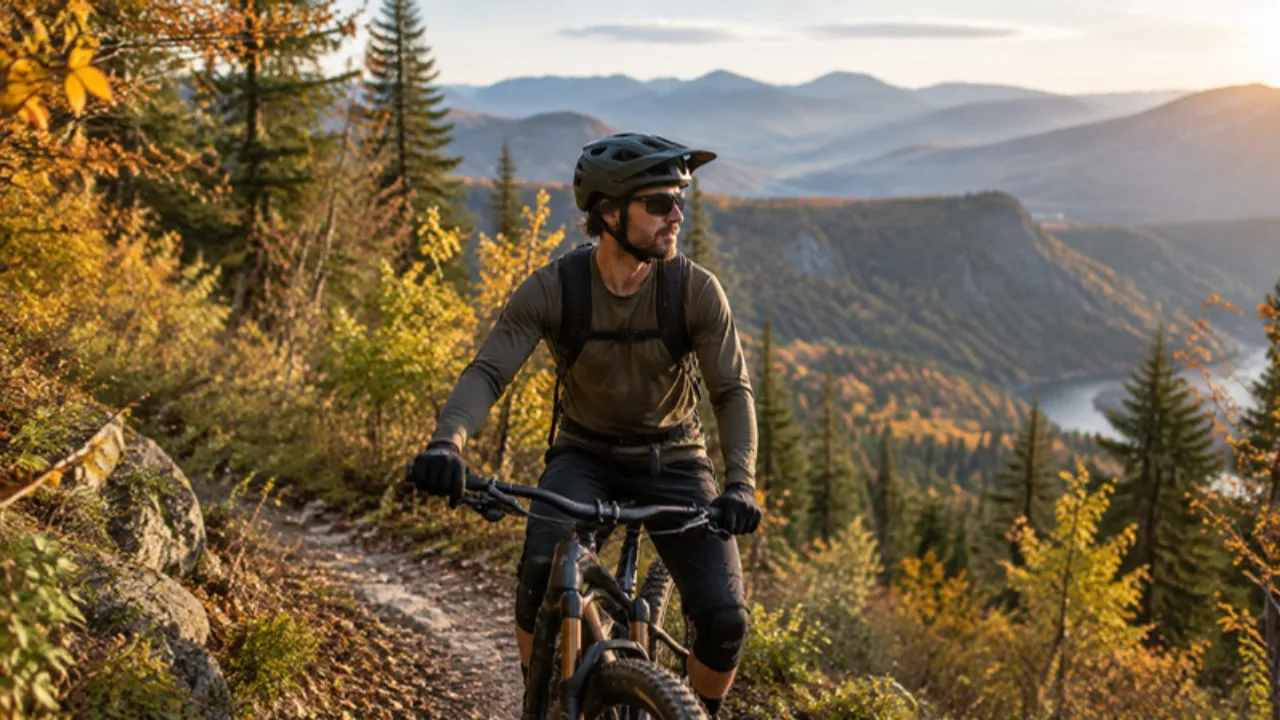
How to choose an MTB helmet by riding style
How to choose an MTB helmet for cross-country and recreational rides
On long climbs ventilation is the main criterion. Take a light trail or XC helmet with large vents, an adjustable visor and an insect mesh. A weight of 250 to 350 grams is realistic for a good model.
How to choose an MTB helmet for trail and enduro
If you descend technical trails, a helmet with longer rear coverage and deeper temple protection is better. A magnetic or sturdy buckle and a visor that lifts above your goggles make it practical on climbs. Trails like these can be found on Jahorina, Bjelasnica and Igman.
How to choose an MTB helmet for bike park and downhill
On downhill tracks and jumps a full face helmet is the smart choice, because it protects the face, chin and teeth, which are among the most commonly injured parts in crashes. Check the ASTM F1952 label and make sure the visor and vents allow enough airflow. Read more about rules and equipment in the Bike Park Evolution guide.
Common mistakes when buying an MTB helmet
The most common mistake is buying by price or looks without trying the helmet on. The second is a helmet that is too big "to be more comfortable", which can slip in a crash and leave the forehead exposed. The third is inheriting an old helmet without checking its age and previous crashes. Anyone asking how to choose an MTB helmet for a child should remember that the helmet must fit the current head, not the one the child will "grow into".
Do not forget the seemingly small things: straps stretch slightly, and sweat and sun degrade the foam. Store the helmet in a cool, dry place, do not leave it in a hot car, and clean it with mild soap and water, without solvents. When deciding how to choose an MTB helmet, the best guide is a combination of the standard, a fitting on your head and an honest answer to how fast and where you ride.
When to replace a helmet
The foam in a helmet is designed to crush once and absorb the impact. That is why the rule is: after every crash where your head hit the ground, a tree or a rock, the helmet goes in the bin, even if it looks undamaged. Cracks inside the foam are often invisible to the naked eye.
With no impact, the common recommendation is 3 to 5 years for frequent or sun-exposed use and 5 to 6 years for occasional use, and never more than 10. Plastic fades, straps stretch and adhesives age. Check children's helmets once a year, because the child grows and the helmet must still fit correctly. For other gear, see also the guide to MTB trail safety.
Kids and junior MTB helmets
Children have proportionally larger heads and weaker necks, so a proper fit is even more important than for adults. How to choose an MTB helmet for the little ones? Look for a children's model with an EN 1078 label, light construction and a rear dial that can be adjusted with one hand. A helmet must not be handed down from an older sibling if it has been in a crash. Before buying, measure the head circumference and try the helmet on with the straps tightened the way they will really be worn.
For young riders moving to technical trails and bike park, a full face helmet in a junior size is a good investment. For a bike of the right size, see also our guide on how to choose a kids bike.
Law and rules: is a helmet mandatory
According to the 2017 amendments to the state Law on the Basics of Road Traffic Safety in Bosnia and Herzegovina, cyclists are exempt from the helmet requirement, while a reflective vest remains mandatory at dusk and at night. Regulations change and differ, so check the current situation for your entity or canton. Regardless of the law, the reason for a helmet on the trail is not a fine but physics.
At Bike Park Evolution a helmet is mandatory for all park users. Before the season you can have your bike and equipment checked at the Evolution bicycle service.
How to choose an MTB helmet: checklist before you buy
- Define your riding style and pick the type: XC, trail, enduro or full face.
- Check the standard label (EN 1078, CPSC 1203, or ASTM F1952 for downhill).
- Measure your head circumference and try the helmet on in person, with goggles or glasses.
- If the budget allows, take a model with MIPS or a similar system.
- Check the visor, ventilation and the dial adjustment at the back.
- Note the purchase date and replace the helmet after any crash with a head impact.
Once you know how to choose an MTB helmet, the decision comes down to two or three models that you simply try on. If you would like company on the trail, fill in the club membership form and ride with us, and follow the rides in the Evolution HUB club app.
Check your bike and gear in the workshop before the season.
Book a slotFrequently asked questions about choosing an MTB helmet
How to choose an MTB helmet for casual riding?
For casual riding on forest trails, a trail helmet with an EN 1078 label, good rear coverage and an easy-to-adjust retention system is enough. Try several models and pick the one that does not press or slide, because an uncomfortable helmet usually ends up at home.
Is MIPS necessary on an MTB helmet?
It is not required, but it is a useful extra. MIPS and similar systems reduce rotational forces in oblique impacts, which is the typical crash scenario on a trail. It does not guarantee protection from concussion, so a correct fit still matters more than the label on the box.
When should I replace an MTB helmet?
Immediately after any crash where your head hit the ground or an obstacle, even if no damage is visible. With no impact, the common advice is every 3 to 5 years for frequent riding and 10 years at the very most, because foam and straps degrade over time.
Do I need a full face helmet for a bike park?
For downhill tracks and jumps, a full face helmet is the recommended option, and at Bike Park Evolution a helmet is mandatory for every user. For more aggressive tracks look for a model with the ASTM F1952 downhill certification.