Cassette or Freewheel – How Do You Tell, and Which Is Better?
Cassette vs freewheel is one of the most common dilemmas among cyclists – how do you know which system you have, and which is the better choice for your bike?
When it's time for a rear wheel service or a sprocket replacement, one of the first questions is: does your bike use a cassette or a freewheel?
Although they look similar at first glance, the two systems are mechanically completely different, and knowing the difference is key to correct servicing, choosing the right parts and making your components last.
 The basic difference between a cassette and a freewheel
 The basic difference between a cassette and a freewheel
The main difference when comparing cassette vs freewheel systems is where the ratchet mechanism sits:
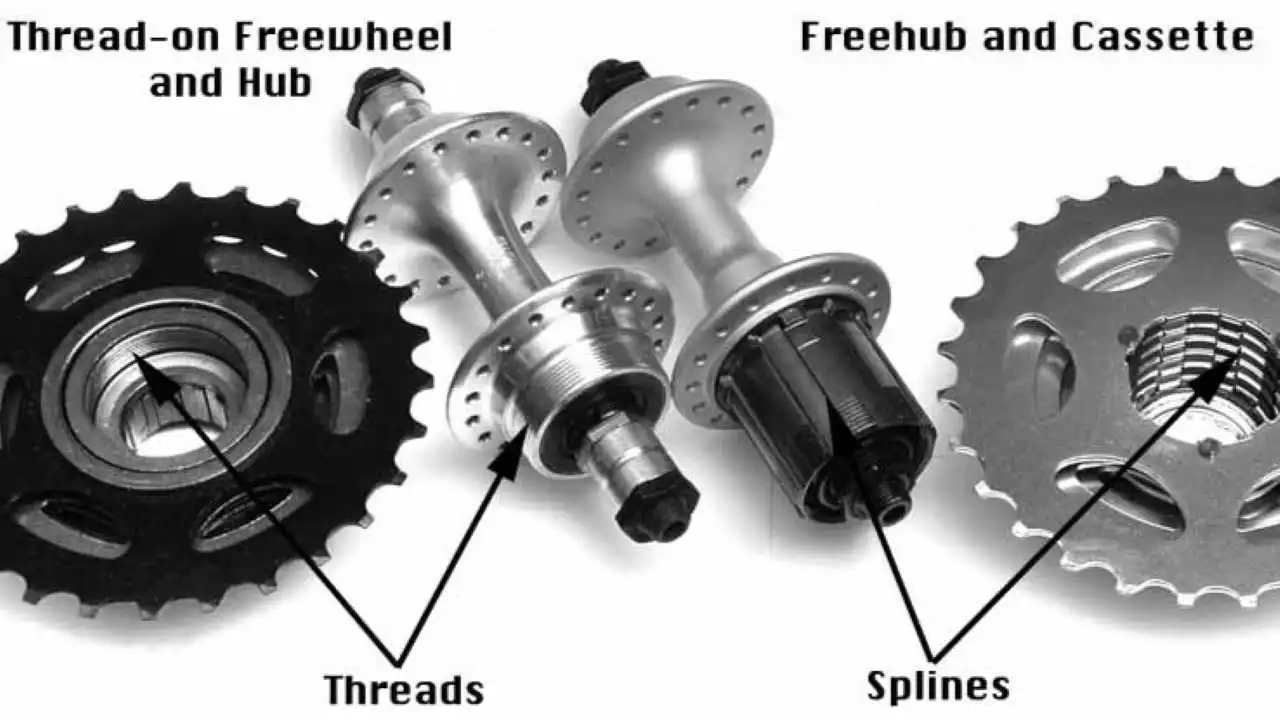
Cassette is a system in which the sprockets are mounted on the freehub body – a separate part of the rear hub that has a built-in ratchet mechanism.
The cassette slides onto the freehub and is secured with a lockring. The ratchet mechanism is located in the hub, not in the cassette.Freewheel is a single unit that contains both the sprockets and the ratchet mechanism.
It screws directly onto the hub threads. The ratchet mechanism is located inside the sprocket assembly itself.
How to identify whether your bike has a cassette or a freewheel
 How to identify whether your bike has a cassette or a freewheel
Remove the rear wheel from the bike.
Turn the sprockets backwards:
If the sprockets and the body they are mounted on turn together – you have a cassette.
If only the sprockets turn while the hub body stays still – you have a freewheel.
Look at the center of the sprockets:
If you see a lockring with notches for a tool – it's a cassette.
If you see a large threaded opening – it's a freewheel.
 Examples:
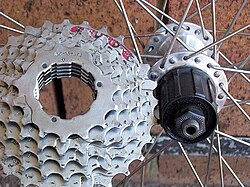
Cassette on the freehub body of a rear hub

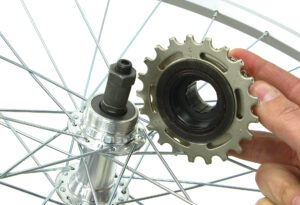
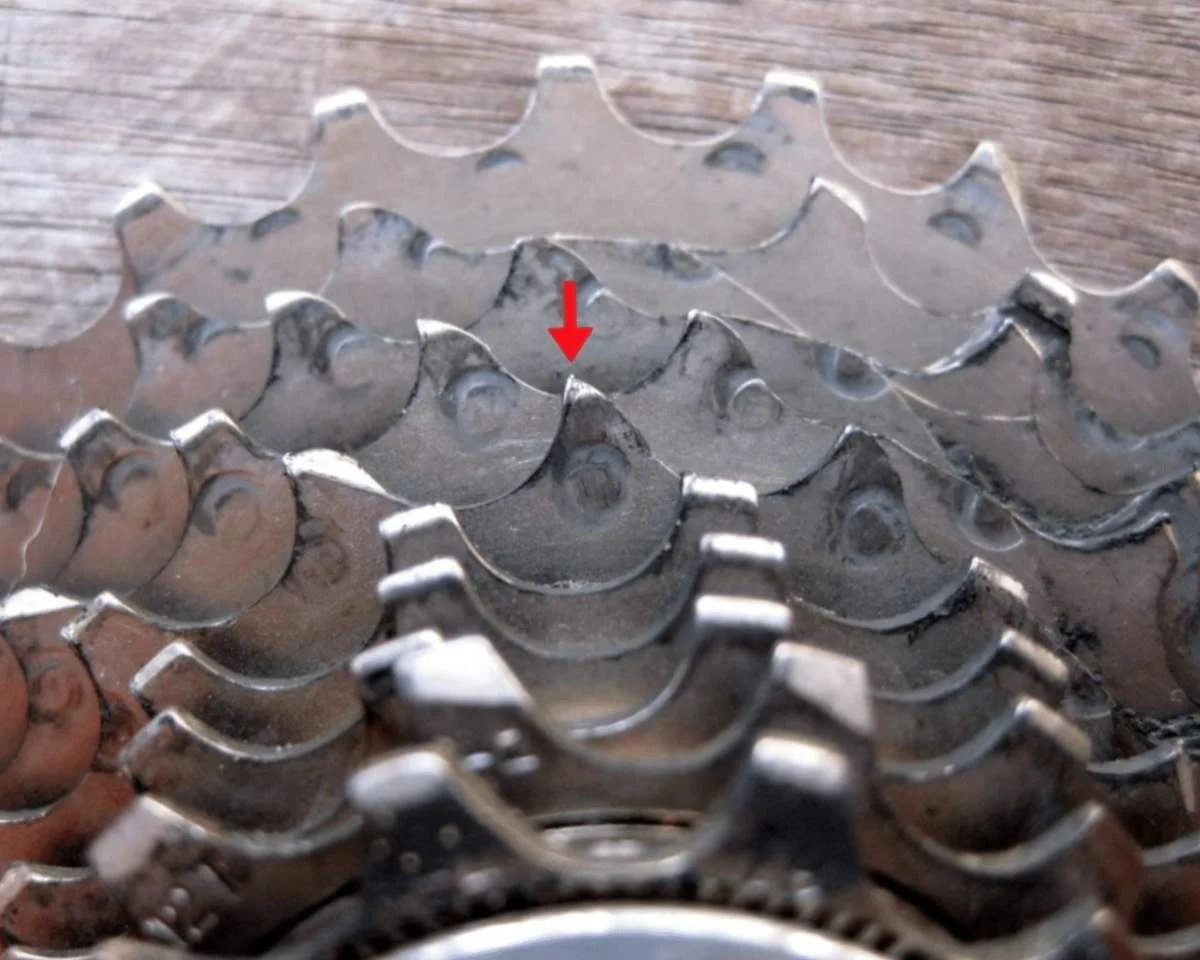
Freewheel system screwed onto the hub threads

The difference between a cassette and a freewheel system

Pros and cons of both systems
 Pros and cons of both systems
Cassette – pros
 Cassette – pros
Easier sprocket replacement (no need to remove the whole mechanism).
Greater reliability and longevity of the freehub system.
Wider choice of gearing (more speeds – 8, 9, 10, 11 and even 12).
Better sealing and resistance to water and dirt.
Lighter, more efficient power transfer.
Cassette – cons
 Cassette – cons
Higher price for the system and replacement parts.
It can't be mounted on older hubs without a freehub body.
Freewheel – pros
Simpler construction and lower price.
Compatible with older bikes.
No need for a specialized freehub body.
Freewheel – cons
Heavier, bulkier construction.
Harder to remove, with a greater chance of damaging the threads during service.
Greater load on the rear hub axle (axle breakage is more common on older bikes).
Smaller choice of gearing (usually up to 7 speeds).
When you compare cassette vs freewheel, the cassette offers more speeds and lower weight.
Service and maintenance tips
 Service and maintenance tips
At Bicycle Service Evolution in Vojkovići, we always check the type of rear drivetrain first, before any replacement or cleaning.
We have professional Park Tool tools – a chain whip, a lockring tool and a freewheel remover tool set. For a cassette swap or full chain and cassette service, we have everything on hand.
Before every service we document the drivetrain type with a photo, so we can order the exact spare parts and get you back on the bike faster.
If you're not sure which system your bike has, drop by – we'll check it for free and explain the difference in person.
Conclusion
 Conclusion
If you ride a modern MTB, gravel or road bike, you almost certainly have a cassette.
If you have an older bike with 5–7 speeds, it's most likely a freewheel.
Whether you ride an MTB, gravel or road bike, knowing the cassette vs freewheel difference will help you maintain your drivetrain properly.
Cassette vs freewheel: what to know before replacing parts
When replacing parts, the wrong system means the wrong tool and wasted money. So check a few things before you buy.
- Identify the system: if the sprockets sit on a separate carrier with the mechanism built in, it's a freewheel; if the sprockets slide onto splined grooves on the hub, it's a cassette.
- Choose the right tool: a cassette needs a lockring tool and a chain whip, while a freewheel needs a special remover that matches its splined profile.
- Number of speeds: the cassette and chain must have the same number of speeds, and the derailleur must be compatible.
- Chain condition: a new cassette on a stretched chain will skip, so replace the chain together with the cassette.
Why the choice isn't only about quality
The cassette is the standard today on most higher-quality bikes because the hub bearings are better supported and swapping sprockets is easier. Freewheels are found on older or cheaper bikes. If you have a freewheel, replacing it is usually cheap, but upgrading to more speeds typically requires a new wheel as well. Chain and cassette compatibility is covered in the article best chains and cassettes 2026, and drivetrain condition in the guide wear of bike components. You can also read when to swap parts in our guide to drivetrain wear, or learn more in the bike chain maintenance guide. For a cassette or freewheel replacement, get in touch with our bike service or use bike service booking to reserve a slot.
Sources and further reading
- Freewheel (Wikipedia) – the principle of the freewheel mechanism
- Bicycle gearing (Wikipedia) – transmission and sprockets