🚲 Bike Tire Replacement: When Is the Right Time? (Wear Guide)
Timely bike tire replacement is crucial, because tires are the only contact point between your bike and the ground. Many riders spend hundreds of euros on suspension, brakes and drivetrain, then forget that all of those components become useless if the tires have no traction. Riding on worn bike tires doesn't just ruin performance, it puts your safety at risk.
The 4 Main Signs You Need New Tires
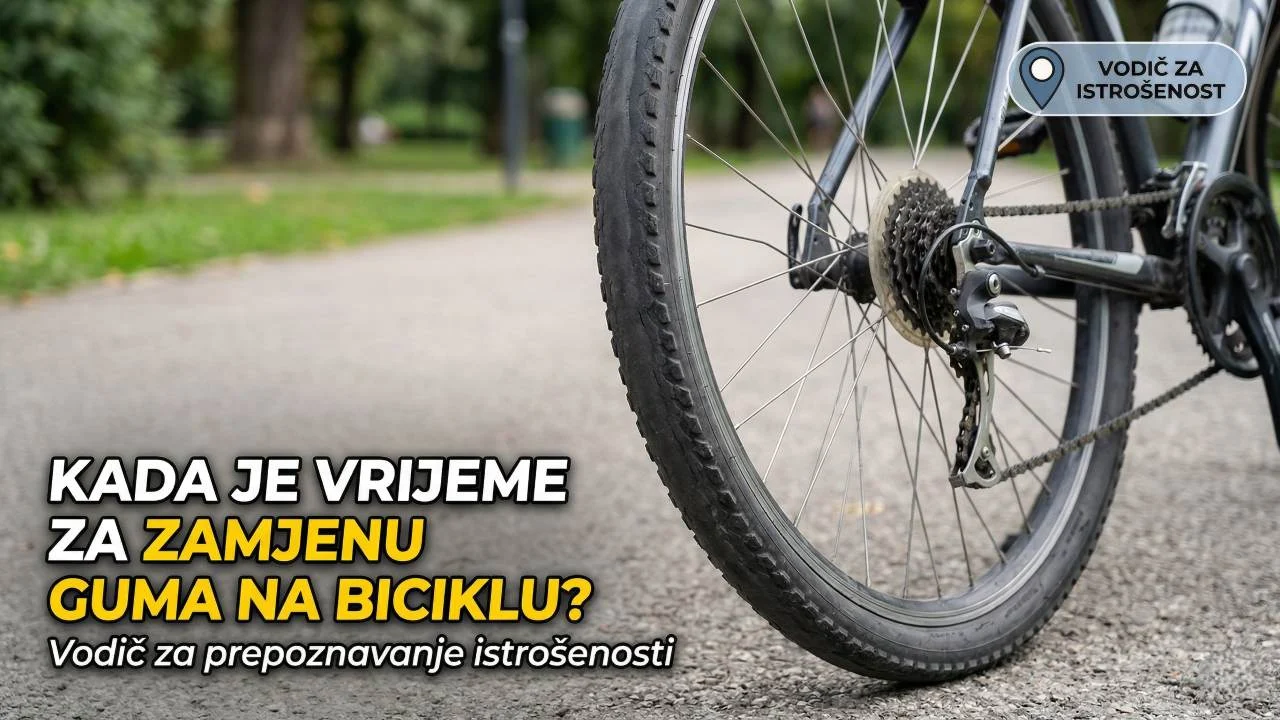
- 1. Worn knobs (tread): This is the easiest sign to spot. If the center of the tire has turned flat and "squared off", you've lost braking power and climbing traction. On MTB tires, look at the side knobs too: if they've started to crack or tear off at the base, it's time for the trash can, because you'll lose control in corners.
- 2. Cracks and "dry rot": A tire ages even when your bike sits in the garage. UV rays, ozone and temperature swings dry out the rubber compound. If you see tiny cracks resembling a spider web on the sidewalls (the casing), the tire has lost its flexibility and can suddenly fail under pressure.
- 3. Frequent punctures: If you've noticed you're getting a flat nearly every other ride lately, it isn't bad luck. The center tread layer has become so thin that it no longer protects you from small stones and thorns. (Note: before you blame the tire, check that you're riding at the correct tire pressure, because pressure that's too low causes so-called "snake bites".)
- 4. Deformations and bulges ("balloons"): If the tire is no longer perfectly round and has bulges, the inner fibers (the casing) have broken. This often happens after hard hits on a rock or a curb. A tire like this is a ticking time bomb.
Specific Signs of Wear by Bike Type
🚵 MTB (Mountain Bikes)
On an MTB, a tire rarely wears out until it's completely "bald". What usually happens is that the side knobs round off or start folding under the tire in corners ("tearing"). If you notice that the tire no longer "bites" on slopes and the front wheel often washes out (understeer), the tire has done its job and you need a quick bike tire replacement, no matter how much center tread is left.
If you're changing tires anyway, it's the perfect moment to ditch the inner tubes and switch to a tubeless system. Forget "snake bite" flats and enjoy better traction. Check out our step-by-step Tubeless conversion guide.
🚴♂️ Road Bikes
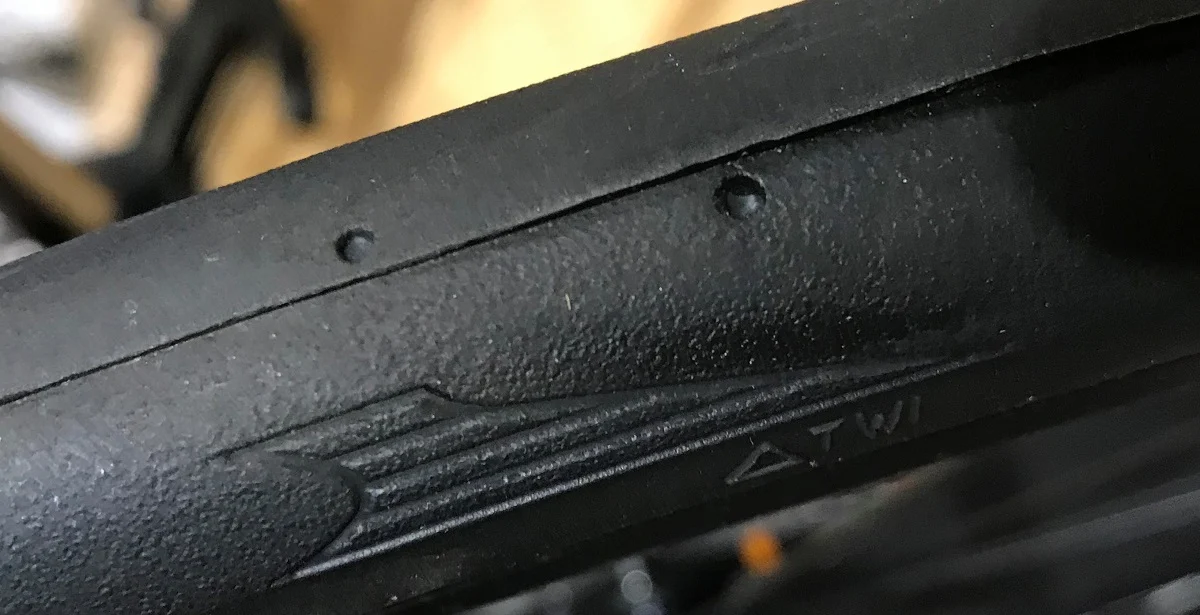
Most modern road tires have a TWI (Tread Wear Indicator). These are tiny dimples in the center of the tire. When the tire wears down so far that the dimples disappear completely and sit flush with the tire surface, it's time to replace it. Also, if you start to see a "squared-off" profile on the rear tire instead of a round one, you're seriously hurting aerodynamics and cornering handling, so a prompt swap is the only solution.
🚴♀️ Gravel and City Bikes
These bikes often use tires with built-in puncture protection layers (for example Kevlar or a thicker casing). When the tire wears down so much that this layer (often a different color, such as blue or green) starts to show through, that's the absolute sign you've waited too long.
The most common reason for premature wear and ruined tires is riding at the wrong pressure. Overinflated tires wear only down the middle, while underinflated ones destroy the sidewalls.
CALCULATE YOUR IDEAL PRESSURE »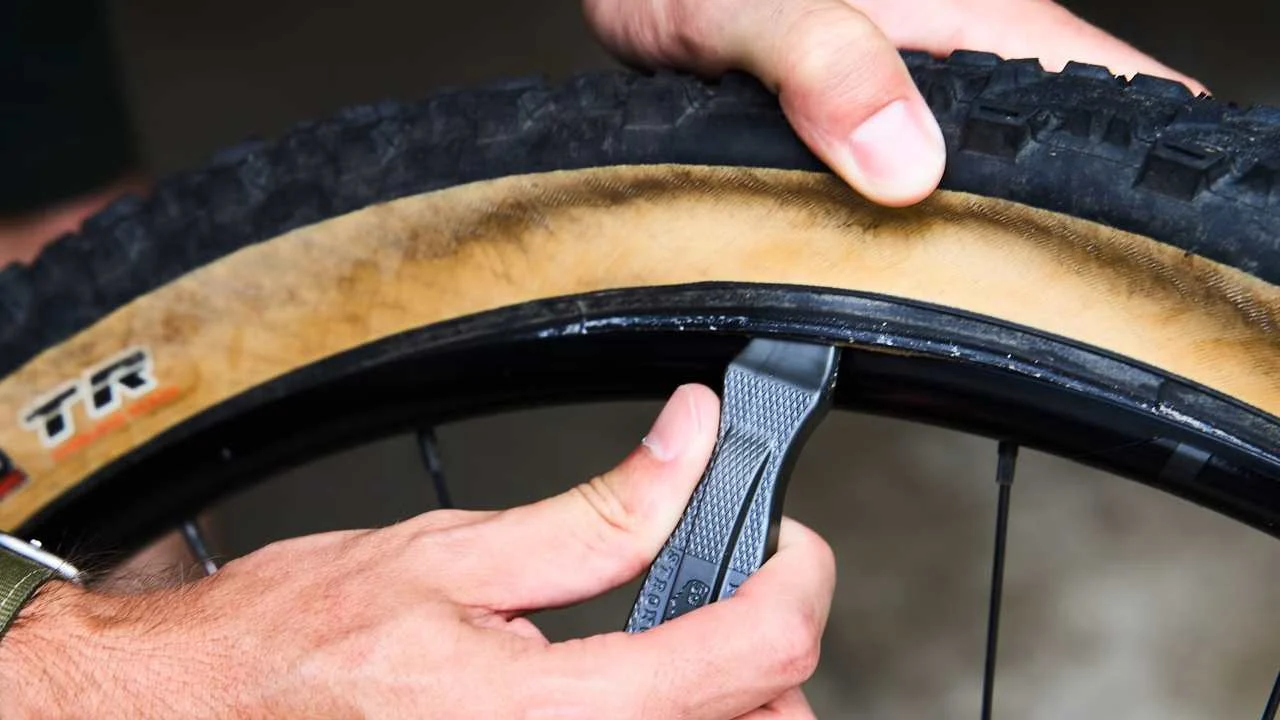
❓ Frequently Asked Questions (FAQ)
How many years can a bike tire last?
Even if you don't ride often, the tire compound loses its properties after 3 to 5 years. The tire becomes hard, dry and drastically loses traction, so replacement is recommended regardless of tread depth.
Is it smart to move the front tire to the back?
Yes! The rear tire wears much faster than the front (because it carries most of the weight and takes the force of pedaling). A good practice is to put the new tire on the front (where traction matters most for survival) and move the old front tire to the rear. Never put a badly worn tire on the front!
Can I patch a large cut in a tire?
Small thorn holes can be fixed with tubeless sealant or a patch. However, if you have a sidewall tear longer than 5-6 mm that shows the casing, that tire is structurally damaged. You can temporarily repair it with a special thick patch on the inside to get home, but for serious riding the tire needs to be replaced.
✅ Conclusion: Check your tires before every ride. A visual inspection takes only 10 seconds, and a timely bike tire replacement can save you a long walk home with your bike or, even worse, a crash at high speed caused by lost traction.
Bike Tire Replacement in 6 Steps
- Let out all the air and loosen the valve nut.
- Remove the tire from the rim using tire levers, starting on the side opposite the valve.
- Inspect the rim and rim tape. Check for sharp edges or leftover glass.
- Mount the new tire in the rotation direction marked by the arrow on the tire sidewall.
- Make sure the tire has seated evenly on both sides before inflating.
- Inflate to the recommended pressure you'll find in our guide to bike tire pressure.
Changing a tire takes about half an hour when you have good levers, and our step-by-step guide to changing a bike tire covers every detail. If the tire is hard to remove or you're doing a tubeless conversion, leave the job to a bike service, where your bike tire replacement will be done properly and without damaging the rim. You can also check our tire replacement service and book your slot online.
Sources and Further Reading
- Bicycle tire (Wikipedia) – tire construction and valve types
- Tubeless tire (Wikipedia) – differences between tubeless systems