Protocol: Cornering Technique
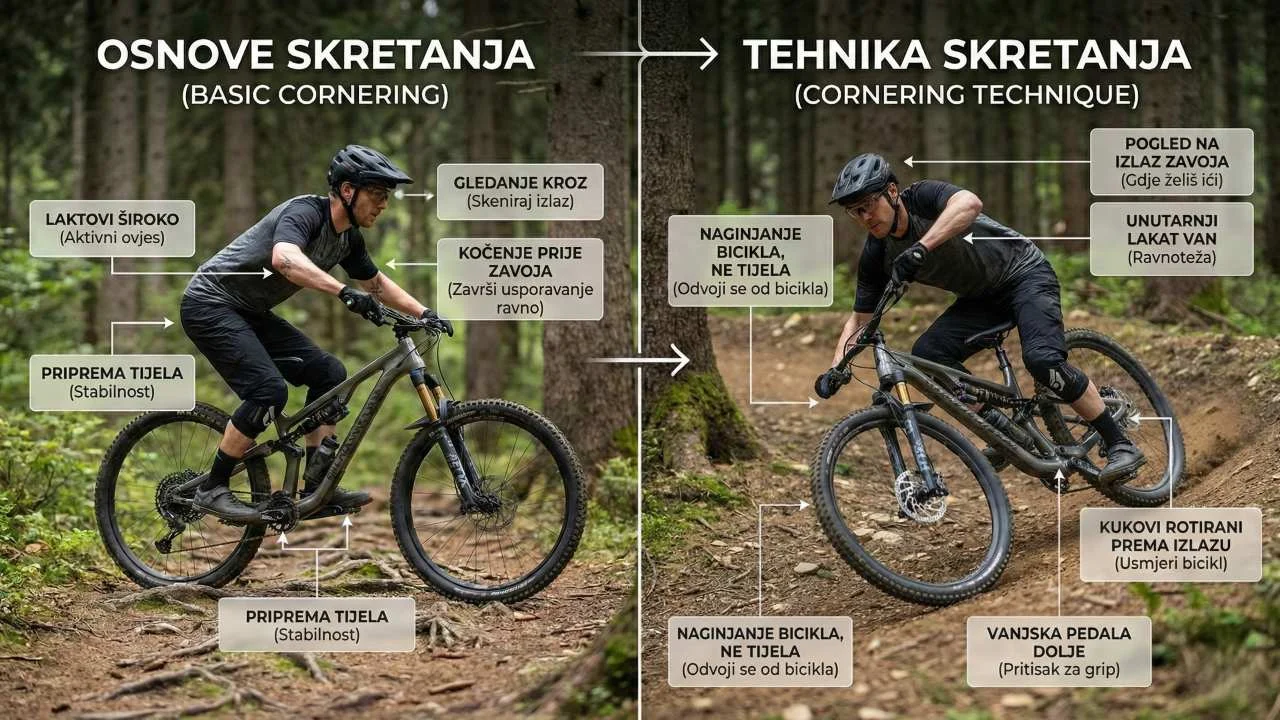
Goal: Better cornering technique means maximizing exit speed and keeping maximum traction through biomechanical manipulation of your center of gravity.
Most recreational riders lose speed in corners. This cornering technique protocol teaches you how to use "Bike-Body Separation" and the forces of physics to get through a turn faster and more safely.
Glossary of Key Terms
1. The Biomechanical Phases of a Corner
A turn doesn't happen in the corner itself. It starts much earlier. Proper cornering technique follows four phases:
| Phase | Action | Biomechanical goal |
|---|---|---|
| 1. Entry | Finish braking while the bike is still upright. Look at the apex. | Stabilize the suspension; prepare for the lean. |
| 2. Transition | Bike-Body Separation: Tip the bike under you while your torso stays more upright. | Reach a sharp tire angle for grip without losing balance. |
| 3. Apex | The outside pedal is fully down (6 o'clock) with maximum pressure through the foot. | Press the tire knobs into the ground for traction. |
| 4. Exit | Look at the exit point. Gradually bring the bike upright and start pedaling. | Turn momentum into acceleration. |
2. Key Elements of Control
- Inside arm: Extended, pushing the inside of the handlebar down.
- Outside arm: Bent ("High Elbow"), holding tension and controlling direction.
- Hips: Rotated toward the corner exit. "Where your hips point, the bike goes."
- Front wheel: Keep light pressure on the handlebar so the front tire doesn't wash out (understeer).
- Outside Pedal Down: All your weight goes onto the outside foot. This drastically increases friction.
3. Training Plan: Cornering Drills
| Drill | Goal |
|---|---|
| Figure 8 | Develop Bike-Body Separation mechanics through quick changes of lean angle. |
| The Tripod | Build confidence when the rear wheel slides (by taking the inside foot off). |
| No-Brake Cornering | Maintain momentum and choose the right line without braking. |
Nutrition and Cognition
Cornering demands fast processing of visual information. A tired brain makes errors in judgment.
- Fueling: Take in 60g of carbohydrates per hour in liquid form.
- Electrolytes: Sodium (500-700mg/l) is essential for nerve impulse transmission, allowing a fast reaction when traction is lost.
Berm Checklist:
5. Most Common Mistakes: Why Isn't Your Cornering Working?
Even experienced riders make mistakes that kill speed. Analyzing these errors is key to refining your cornering technique.
If you look 1 meter ahead, your brain has no time to process the corner. This leads to sudden braking and "boxy" turns. Lift your chin and look at the exit.
Braking mid-corner stands the bike up (stand-up effect) and pushes you off the ideal line. All speed control must be done before you enter.
If you lean together with the bike (like on a road bike), you lose traction on loose ground. On dirt, good cornering technique requires you to push the bike under you (Bike-Body Separation).
A classic beginner mistake that leads to pedal strikes and getting catapulted. Keep the outside pedal pressed down for stability.