Professional e-bike diagnostics and maintenance are the foundation of safe, long-lasting riding on any modern mountain bike. When you ride an e-MTB with a drive unit like Bosch Smart System or Shimano EP8, your bike is no longer just a set of gears and cables – it is a highly integrated electro-mechanical machine run by a sensitive controller and factory software.
⚡ In short: what to know (TL;DR)
- Software & hardware: Classic mechanical tools cannot detect faults in CAN-bus communication, torque sensors or cell degradation.
- Certified protocols: Official diagnostics show the motor's operating hours and the battery's real charge cycles, and allow firmware updates.
- Proper storage: Li-Ion batteries should never be left 100% full or empty during the off-season – the ideal level is between 30% and 60% at room temperature.
- Service intervals: A recommended software inspection is done every 1,000 to 1,500 km, or at least once a year before the season starts.
Why E-Bike Diagnostics and Maintenance Are Essential for a Modern e-MTB
The traditional approach to a bike meant basic mechanical adjustment of the drivetrain, wheel truing and brake bleeding. Modern electric drive systems, however, demand a completely new level of expertise. That is why regular e-bike diagnostics solve problems that mechanics without dedicated equipment cannot even see: cadence sensor issues, voltage drop under load or communication errors with the battery.
When a fault code appears on the controller or the motor starts delivering power unevenly on a climb, the cause is usually digital. A complete bike service in the MTB Evolution workshop includes advanced digital protocols so that every electronic component works in perfect harmony.

The Digital "Health Check": What Does an Official System Check Include?
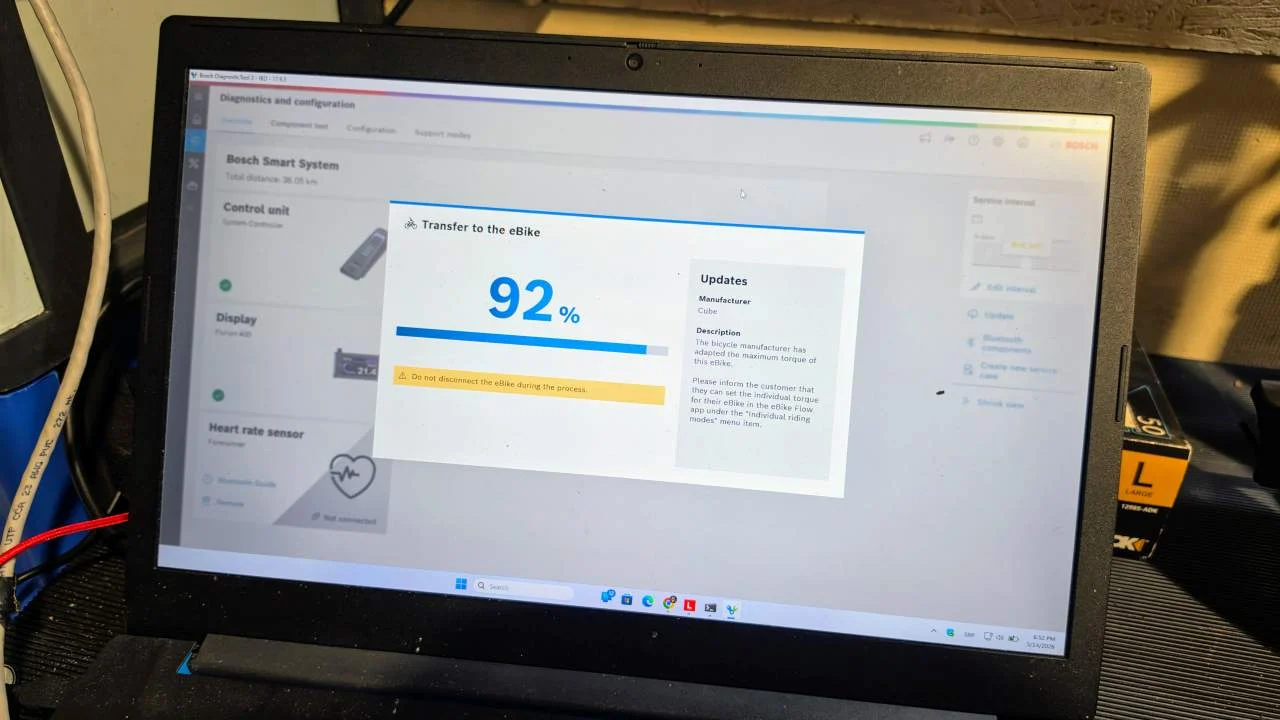
By connecting your e-bike to a licensed computer interface, we get a complete diagnostic report that covers:
- Error history (Error Log): A detailed view of current and recorded faults in the motor, sensors and display.
- Battery health (State of Health – SoH): The exact percentage of cell capacity, temperature ranges and the number of full charge cycles.
- Software updates (Firmware Updates): Official upgrades that optimize consumption, improve torque and fix system bugs.
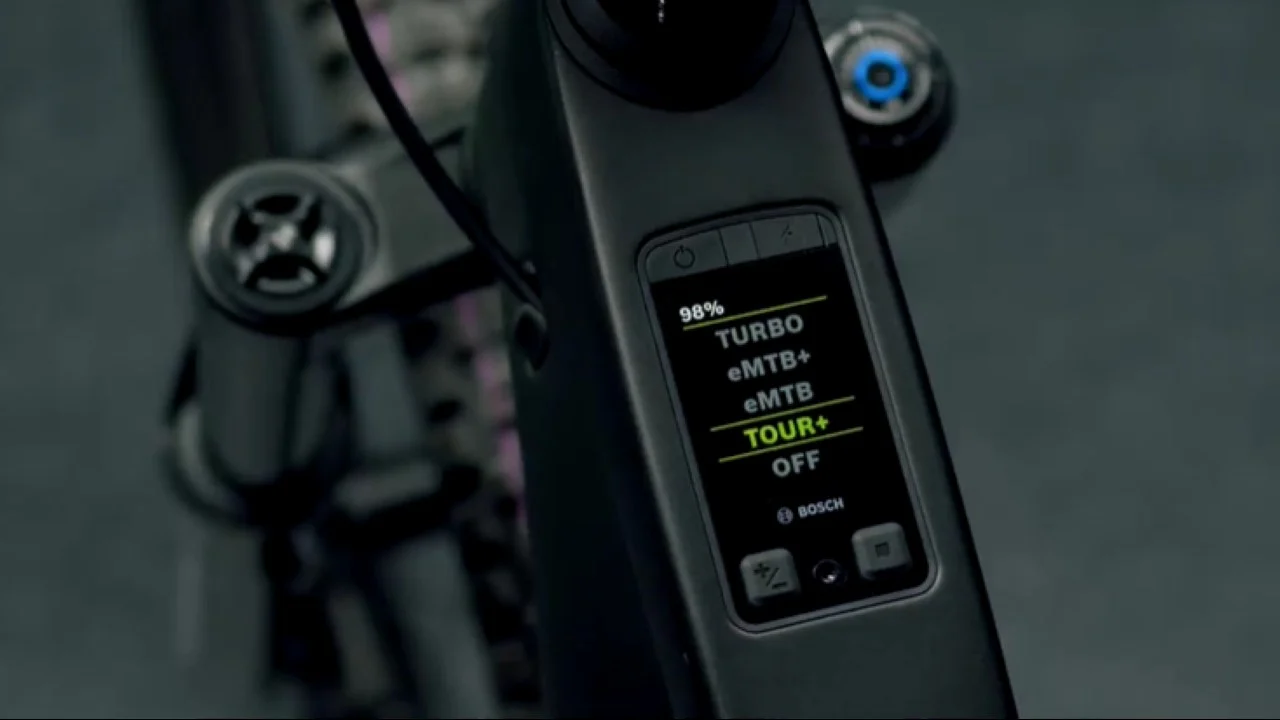
- Parameter configuration: Precise setting of service intervals, wheel circumference calibration and power delivery modes.
Official Diagnostic Tools: The Bosch and Shimano Ecosystems
Every leading e-bike drive manufacturer develops proprietary diagnostic software and hardware adapters that only licensed service centers can access.
For riders with Bosch motors (from the Classic line to the latest Smart System), our workshop uses the licensed professional Bosch diagnostic tool. This system allows in-depth testing of communication between the drive unit, the PowerTube battery and the controller, and issues an official certificate of the bike's condition. You can read more about our Bosch ebike service.
For riders of Shimano Steps and EP systems, we use the Shimano E-Tube Project Professional hardware interface, which allows fine-tuning of the power curve, testing of Di2 shifting and checking the electrical wiring inside the frame. See also our Shimano STEPS diagnostics page. All of these processes make sure your e-bike diagnostics are done to the highest factory standards.
Golden Rules for Storing and Extending the Life of Your e-Bike Battery
The battery is the most expensive component of an e-bike, and proper battery care together with regular e-bike diagnostics gives your Li-Ion cells the maximum number of seasons without losing range. For a deeper dive, read our full guide to e-bike battery maintenance.
- Optimal charge level for storage: If you won't ride for more than a few weeks, keep the battery at 30% to 60% capacity (2 to 3 LED lights). Never leave it completely empty or sitting on the charger at 100%.
- Temperature range: Store the battery in a dry room at a temperature between 10°C and 20°C. Avoid damp and freezing rooms.
- Charging after a ride: After a cold ride, wait for the battery to warm up to room temperature before you plug it into the charger.
- Contact maintenance: Clean the terminals and the slots on the frame with dielectric spray to prevent oxidation.
When Is It Time for a Professional Service?
Besides regular mechanical care of the chain, chainrings and suspension, expert e-bike diagnostics are recommended in the following situations:
- Before the start and at the end of the season: To install new firmware and check the health of the battery cells.
- When buying or selling a used e-bike: An official diagnostic report is the only proof of the real mileage and the condition of the motor and battery.
- Jerky assistance or unusual noises: This signals a need to calibrate the torque sensor or clean the internal contacts. Our list of signs your e-bike needs service covers other warnings you shouldn't ignore.
Book Expert Diagnostics and Service
Secure maximum performance, safety and longevity for your Bosch or Shimano e-bike with official diagnostic protocols at the MTB Evolution workshop.
Book a service appointmentWhat Gets Checked During a Workshop Visit
In the workshop, e-bike diagnostics don't end with a check of the chain and brakes. Every service includes five things a rider cannot check alone:
- Error memory: the system also remembers faults that never appeared on the display, and the diagnostic software shows them.
- Battery condition: the number of charge cycles and the real capacity tell you more than the indicator on the display.
- Software versions: the motor, battery and display each have separate versions, and an outdated version can cause odd assistance behavior.
- Sensors and cables: the speed sensor, the wheel magnet, connectors and seals wherever moisture can get in.
- Drivetrain mechanics: the chain, chainring and cassette wear out faster on an e-bike, so they should be measured more often.
How to Prepare Your Bike for a Check
Before you come in, wash the bike with plain water and a cloth, without a strong jet aimed at the motor and connectors. Bring your charger and describe the symptom: when the error appears, in which riding mode and on what kind of terrain. The more precise your description, the shorter the whole e-bike maintenance visit. You can book an appointment through the bike service booking page, and you can read everything about our offer on the bike service page.
Sources and Further Reading
- Bosch eBike Systems – official information about drive systems and the app
- Electric bicycle (Wikipedia) – an overview of types, motors and batteries
Frequently Asked Questions
How often are e-bike diagnostics and software updates recommended?
We recommend an update and system check at least once a year, or every 1,000 to 1,500 km. Bosch and Shimano regularly release updates that improve energy efficiency and sensor performance and bring new options.
Can a diagnostic tool show the real condition of the battery (SoH)?
Yes. Official diagnostics read the battery's State of Health (SoH), the exact number of charge cycles, the maximum recorded operating temperatures and discharge profiles, giving you a precise view of its condition.
Can I do the diagnostics myself using a mobile app?
Mobile apps only offer basic settings for users. Detailed reading of internal errors, sensor calibration and advanced hardware testing require authorized service devices and licensed software.
How should I store an e-bike battery during the off-season?
Keep it at 30% to 60% charge (2 to 3 LED lights) in a dry room at 10°C to 20°C. Never leave it completely empty or sitting on the charger at 100%.